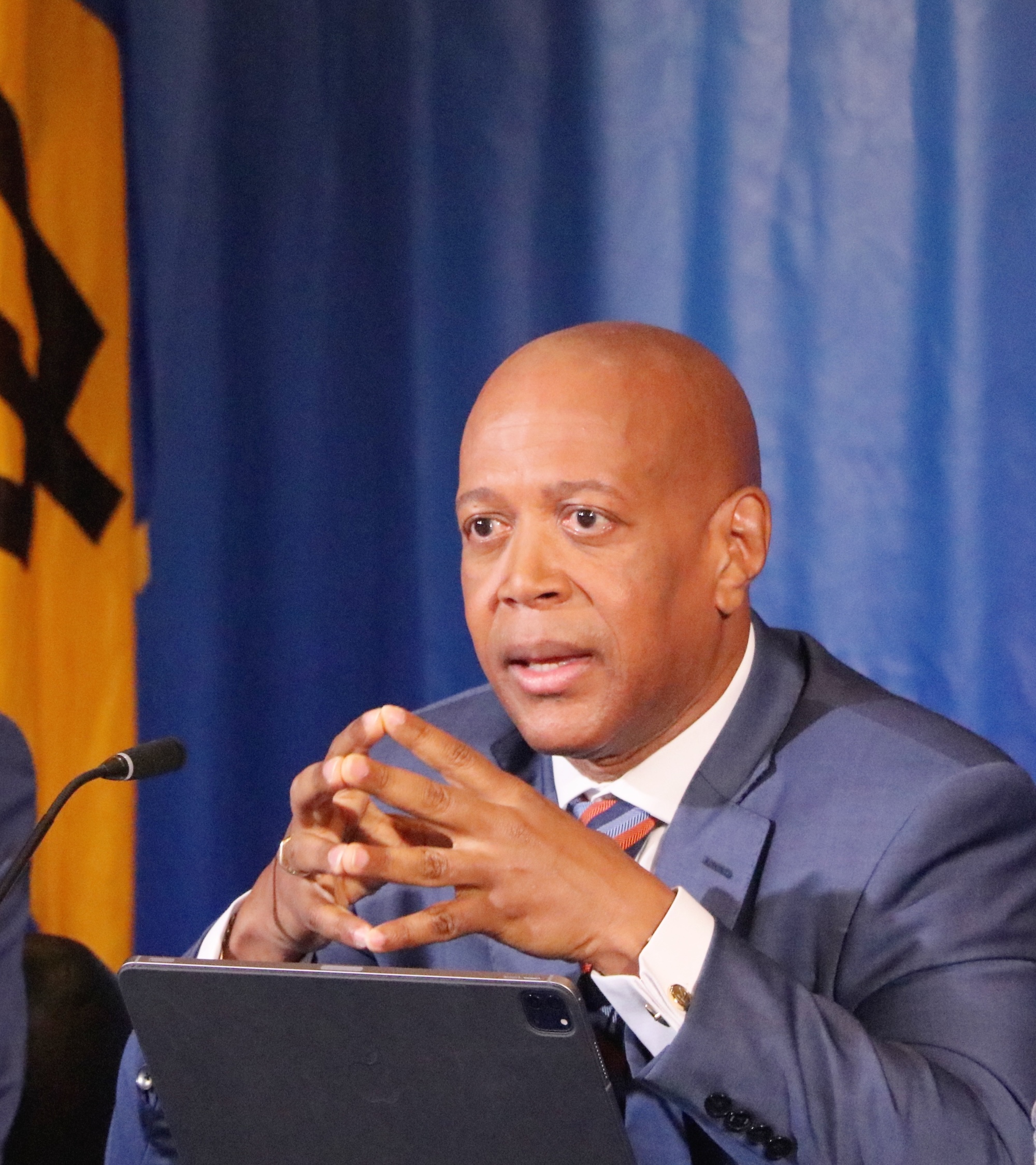
Against a backdrop of shifting global economic tides, the head of Barbados’ central bank has moved to reassure stakeholders that the island nation is well-equipped to navigate ongoing international headwinds, even as its breakneck post-pandemic expansion settles into a steadier, more sustainable growth trajectory. On Tuesday, Central Bank Governor Dr. Kevin Greenidge pushed back against growing market anxiety over Barbados’ economic outlook, aligning the institution’s assessment with a recent analysis from the African Export-Import Bank (Afreximbank) that paints a picture of steady, if modest, expansion in the coming years.
In an interview with local outlet Barbados TODAY, Greenidge emphasized that both Afreximbank and the Central Bank share a core consensus: the Barbadian economy has retained its resilience, built up robust macroeconomic buffers, and stands on a solid foundation of ongoing structural reform. The rapid bounceback that followed COVID-19 lockdowns has run its course, he confirmed, and the country has now entered a phase of normalized, long-term growth.
Afreximbank’s projection of 1.9% GDP growth for 2026 aligns almost exactly with the Central Bank’s own forecast of roughly 2%, Greenidge noted. The central bank’s mid-year assessment found the economy expanded by 1.4% in the first half of 2026, with domestic sectors—including business services, other professional services, and wholesale and retail trade—leading the expansion. While tourism remains a foundational pillar of the national economy, performance has come in below initial projections, dragged down by shorter average visitor stays, elevated airfares, and reduced airline capacity in key source markets.
On the fiscal side, Greenidge said the two institutions’ assessments are also broadly aligned, noting that Barbados has consistently maintained strong primary budget surpluses and that total public debt continues to trend downward. The minor discrepancy between the two reports’ debt-to-GDP figures stems only from differing data cut-off dates: Afreximbank’s cited 96% ratio reflects data through the end of March, while the central bank’s updated June estimate puts gross public sector debt at 93.7% of GDP.
Greenidge also clarified the government’s long-term fiscal targets, explaining that the program mandates a 3.5% primary surplus as a share of GDP for fiscal years 2026/27 and 2027/28, with a current baseline projection of a 4.1% surplus in subsequent years. This trajectory is designed to put Barbados on track to hit its target of reducing debt to 60% of GDP by fiscal year 2035/36.
This fiscal framework sets the context for the new 257 million U.S. dollar Stand-By Arrangement with the International Monetary Fund (IMF), Greenidge explained. The original IMF-backed Barbados Economic Recovery and Transformation (BERT) programme launched in 2022 concluded successfully, and the new BERT 2026 initiative is now a fully domestically led transformation effort. The new Stand-By Arrangement is a precautionary measure, he stressed, providing an extra safety net against unforeseen external shocks to support the next phase of structural reform, rather than emergency financing that Barbados currently needs to draw down on.
While acknowledging that significant risks remain, Greenidge pointed out that Barbados’ status as a small open economy leaves it inherently exposed to a range of external pressures: global geopolitical tensions, persistent trade uncertainty, elevated freight and energy costs, high international interest rates, and slowing demand in core tourism markets. Climate-related shocks and natural disasters also continue to pose a constant threat to the island’s economy. Domestically, policymakers face pressing challenges including speeding up the execution of planned infrastructure investments, boosting labor productivity, addressing skills gaps and demographic headwinds, and improving the competitiveness of Barbadian exports in global markets.
“What is important, however, is that Barbados is approaching those risks from a much stronger position than in the past,” Greenidge noted. He highlighted that international reserves remain stable at around 3.1 billion U.S. dollars, the domestic financial system is well-capitalized and liquid, fiscal accounts remain robust, and public debt is firmly on a downward path.
Looking ahead, Greenidge identified new growth drivers beyond the traditional tourism sector. A robust pipeline of investments, including tourism-related real estate and hospitality development as well as major infrastructure projects targeting roads, water access, renewable energy, and housing, is expected to become an increasingly important engine of expansion. “Faster execution of those projects, together with stronger construction activity, improved productivity and more competitive exports, will be important to sustaining growth and broadening its base,” he said.
Greenidge framed Afreximbank’s modest growth projections as a sign of a maturing economic cycle, not weakness. “I would interpret the Afreximbank projections as showing an economy that is no longer relying on post-COVID rebound growth, but is entering the harder phase of generating sustained growth through investment, productivity and diversification,” he explained. “Growth of around two per cent should not be read as economic weakness or contraction. The real test now is whether we can use the stability and buffers we have rebuilt to lift Barbados’ medium-term growth potential and ensure that the gains are broad-based and durable.”
Last Friday, University of the West Indies economist Dr. Ankie Scott Joseph echoed Greenidge’s assessment, noting that Afreximbank’s latest Barbados Country Brief closely matches the Central Bank’s projections, with both institutions forecasting modest growth, stable public finances, and falling debt. The only notable discrepancy between the two reports relates to tourism performance, which stems again from differing data cut-offs: Afreximbank’s analysis only includes data through the end of March, while the Central Bank’s assessment extends to June. In the first quarter of 2026, tourism earnings were 3.7% higher year-on-year, but earnings from April to June fell below 2025 levels, pulling the first half’s total year-on-year increase to just 10.9 million dollars and marking a sharp slowdown in the sector’s expansion.