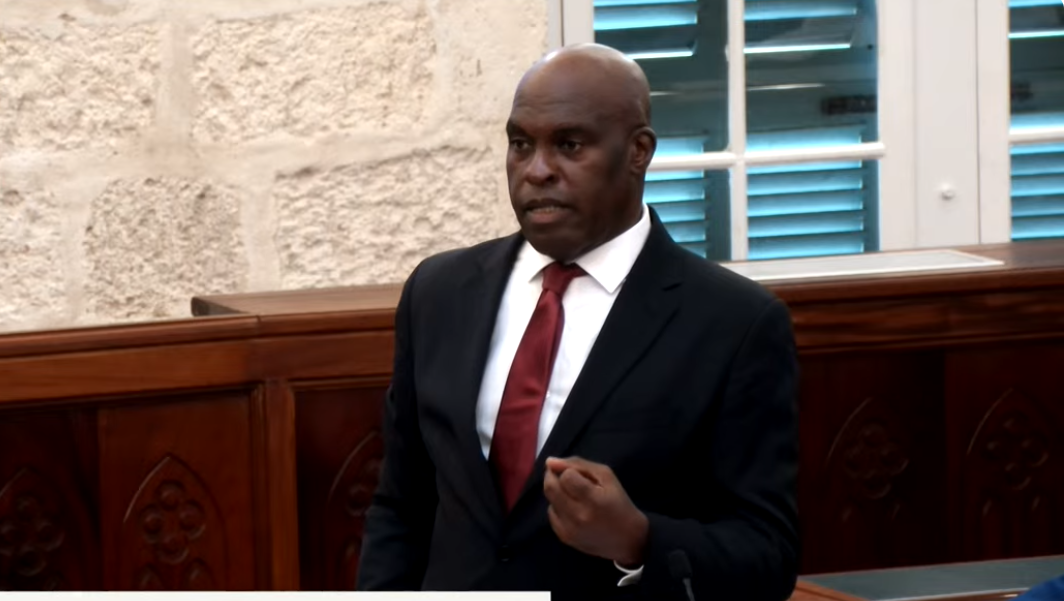
On Tuesday, sweeping legislative reforms targeting long-standing case backlogs in the lower judiciary were tabled before Barbados’ Parliament, centered on two transformative changes: the introduction of virtual court hearings and provisions to allow ongoing trials to continue when a presiding magistrate leaves office. Legal Affairs and Criminal Justice Minister Michael Lashley presented the Magistrates’ Court Amendment Bill for its second reading before the House of Assembly, framing the proposed updates as a radical overhaul of what he calls “the people’s court” — the magistrate court system that handles the majority of summary criminal matters, domestic violence cases, and lower-value civil disputes for ordinary citizens.
The core amendments directly address two long-standing systemic flaws that have slowed judicial proceedings for decades. First, they embed new institutional flexibility around judicial continuity. Under existing rules, if a sitting magistrate was promoted to the High Court, retired, or left the bench temporarily for any reason, all active cases overseen by that magistrate had to be restarted from scratch, wasting thousands of hours of scarce judicial resources and stretching out case timelines for years. The new legislation grants authority to the Chief Justice or Chief Magistrate to reassign unfinished matters to another sitting judicial officer, allowing proceedings to continue seamlessly without a full restart.
Second, the bill formalizes the adoption of virtual hearings, a shift intended to eliminate long-standing delays caused by physical courtroom constraints. For decades, limited shared court facilities — most notably at District ‘C’ Magistrates Court — have created persistent scheduling backlogs, transport logjams for prison transfer buses, and extended wait times for litigants. Lashley noted that virtual proceedings will eliminate the need for high-risk, costly physical transfers of prisoners for routine bail applications and preliminary case management, cutting down on both security risks and scheduling delays.
The legislative package also paves the way for broader digital modernization of the court system. Among the planned digital upgrades is an automated system to generate immediate audiovisual transcripts of court proceedings, a change that will dramatically reduce waiting times for criminal appeals that have historically faced months of delays just to obtain trial records. Infrastructure preparation for the shift to virtual hearings is already well advanced: Lashley confirmed that District ‘A’ Magistrates Court is approximately 95% outfitted for remote proceedings, and will begin hearing virtual cases within a matter of weeks.
To further reduce the burden on overcrowded court dockets, the government is rolling out an electronic traffic ticketing system to replace traditional court summonses for minor driving offenses. Under the new system, a police officer who catches a motorist speeding or committing another minor infraction will issue an immediate ticket directly to the driver, who can resolve the matter by paying the fine without ever appearing in court. “Matter closed. So the traffic court is no longer clogged up with traffic matters,” Lashley explained, noting this change alone will clear hundreds of low-stakes cases from the court schedule annually.
While the full modernization push carries an estimated price tag of around $400,000 for infrastructure and equipment upgrades, the minister emphasized that access to justice will not be limited by socioeconomic status. To ensure low-income citizens without access to personal digital devices can still participate in virtual proceedings, the government plans to partner with local community centres to set up secure, private virtual access rooms for vulnerable witnesses, complainants, and defendants.
Lashley added that key stakeholders, including senior criminal defence attorneys and sitting magistrates, have already been consulted on the reforms, and the proposals have earned broad support from the justice community. The overarching goal of the package, he stressed, is to address the long-standing injustice of delayed justice: “This is what we are seeking to do: to alleviate the delay of justice.”