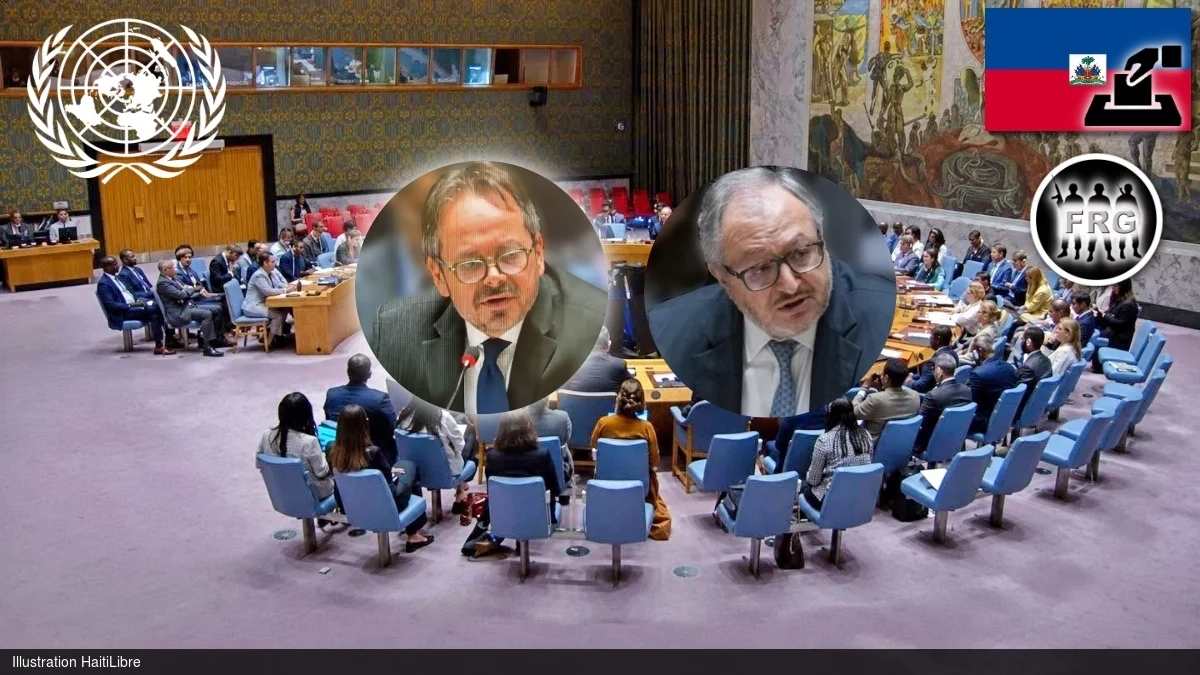
In a landmark briefing to the United Nations Security Council during its 10,246th meeting on October 19, 2026, top United Nations and international security officials outlined pressing challenges facing Haiti, as the Caribbean nation grapples with spiraling gang violence and a long-awaited electoral process.
Carlos Ruiz Massieu, the UN Special Representative and head of the UN Integrated Office in Haiti (BINUH), delivered a stark caution against the risks of pushing forward with unvetted electoral schedules. He emphasized that setting arbitrary, unrealistic election dates without a thorough, grounded assessment of on-the-ground security and logistical conditions threatens to erode public trust in Haiti’s fragile state institutions at a time when institutional legitimacy is already deeply fragile.
Despite this warning, Massieu acknowledged a historic milestone in Haiti’s democratic journey: the electoral process has advanced further than it has in over 10 years. Following a national presidential decree issued on October 6, more than 3,500 individual candidates and over 35 distinct political blocs have formally joined the electoral process. Any adjustments to the current electoral calendar, Massieu stressed, must be rooted in a transparent, realistic evaluation of both logistical preparedness and prevailing security conditions to avoid derailing the fragile progress made to date.
Jack Christofides, special representative for the international Gang Suppression Force (GSF), updated the council on the deployment of the multinational security mission tasked with quelling Haiti’s gang crisis. Over the past weekend, the total number of deployed international troops from six contributing nations surpassed the 2,000-person mark. Daniela Kroslak, head of the UN Office in Haiti, confirmed that the deployed force has doubled in size since July 2026, a growth driven by the recent arrival of additional military units from Bangladesh, Chad, Guatemala and Sri Lanka.
Even with this expansion, Christofides outlined critical barriers that are holding back effective anti-gang operations. The mission is currently crippled by severe shortages of core logistics and essential equipment, including military transport, tactical communications systems, operational vehicles, and advanced intelligence and surveillance capabilities that are critical to tracking and disrupting armed gang activity.
Christofides also noted a sharp uptick in direct engagements between GSF troops and gang fighters: the number of monthly clashes has skyrocketed from just two to 15 in the span of 30 days, indicating a significant intensification of counter-gang operations. Compounding these challenges, he added, is a persistent breakdown in Haiti’s domestic justice system: of the 26 gang suspects recently taken into custody by the mission, 18 have already been released due to systemic dysfunctions within local judicial institutions, undermining the impact of operational gains against criminal groups.