Forty-one years have passed since the turbulent days of October 1983 that shattered Grenada’s young revolutionary government and left an indelible, contentious mark on the island nation’s collective identity. What began as a promising period of reform after the 1979 People’s Revolutionary Government takeover unraveled into bitter internal division, escalating to a violent political crisis that would change Grenada forever.
By October 1983, festering ideological and leadership rifts within the revolutionary ruling circle had reached a breaking point. On October 19, supporters of then-prime minister Maurice Bishop, who had been placed under house arrest amid the factional infighting, broke through to free him. The confrontation moved to Fort Rupert, where a bloody military clash left Bishop dead alongside multiple cabinet ministers, trade union leaders, and ordinary civilians. The entire nation was immediately thrown into a state of stunned grief and pervasive fear. Six days later, a U.S.-led military intervention backed by Caribbean coalition forces entered the country to restore stability, but the incursion sparked long-running global and domestic debates over Grenadian national sovereignty that still echo in public discourse today.
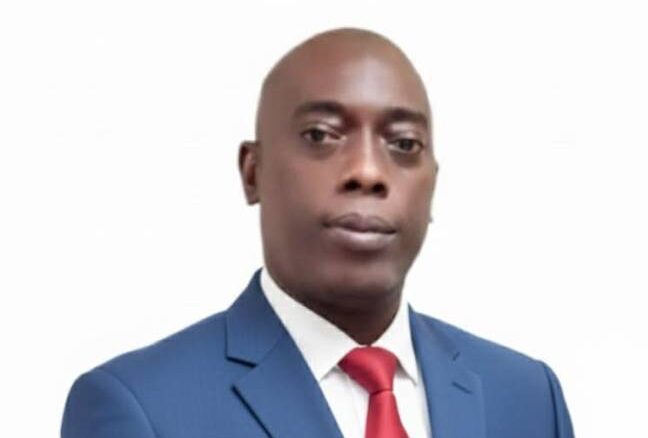
Unlike most historical accounts that frame these events only through political and military lenses, this analysis from Grenadian public theologian Rev. Vonnie E James, JP, centers the long-neglected human cost of the crisis: a collective and intergenerational trauma that continues to shape Grenadian life decades later. Trauma, as defined by the American Psychiatric Association, describes the profound psychological, emotional, social and spiritual harm caused by events that overwhelm a community or individual’s ability to cope. Traumatic harm does not only affect direct survivors and victims; it ripples outward to witnesses, family members, entire communities, and even generations born long after the violence itself. The 1983 crisis shattered the public’s basic sense of safety, trust, and social stability, leaving behind unresolved grief, deep social division, and unaddressed emotional wounds that structure contemporary national politics and memory.
Sociologist Jeffrey C. Alexander’s framework of collective trauma helps contextualize Grenada’s experience: collective trauma occurs when a catastrophic event so fundamentally disrupts a society that it rewrites its shared identity and self-understanding. The 1983 crisis was exactly this kind of foundational rupture. Unlike an external invasion, the violence grew from internal divisions among Grenadians themselves, turning neighbors, friends, colleagues, and even family members against one another along political lines. This internal split made collective healing far more complex, as competing narratives of the events still split the nation.
Worse still, the trauma has been passed across generations through intergenerational transmission. As trauma scholar Yael Danieli explains, the emotional and social impacts of mass violence can be carried forward through family storytelling, collective cultural memory, shared social attitudes, and national identity formation. Young Grenadians born decades after 1983 still encounter the legacy of the crisis every year through public commemorations, political debates, family histories, and school curriculum, ensuring the trauma remains a living part of national life.
The decision to designate October 19 as National Heroes Day has added a new layer of complexity to Grenada’s long effort to reconcile its painful past. The policy was intended to create space for national reflection and collective healing, honoring the sacrifice of those who died while uniting the country around a shared narrative. But the choice has sparked fierce public debate over how to balance remembrance of trauma with the framing of the date as a day of national celebration of heroism.
Critics, many of whom are survivors or family members of victims, argue that October 19 is irreversibly tied to tragedy, violent death, and unresolved grief. For these communities, it remains a solemn marker of one of the darkest chapters in Grenadian history. From a trauma-informed perspective, rebranding a day of national mourning as a celebration of heroism creates deep emotional dissonance, as it forces overlapping narratives of tragedy and celebration onto the same date. Many worry that the suffering of victims and their families will be erased or overshadowed by state-led political narratives that prioritize national unity over accountability for pain.
Critics also point to a lack of meaningful consultation with the communities most directly affected by the violence. Research on post-conflict healing consistently finds that inclusive participation of affected groups and full acknowledgment of victim harm are core to lasting reconciliation. When those most impacted are excluded from decisions about how their trauma will be commemorated, reconciliation efforts are almost guaranteed to stall and deepen division.
Supporters of the National Heroes Day designation push back, arguing that societies cannot heal by turning away from painful history. They frame the commemoration as an opportunity to honor the sacrifice of those who fought for their political beliefs, educate young generations about the nation’s history, and work toward long-overdue national unity. From this perspective, naming heroism on this date does not celebrate the violence and tragedy of 1983; it recognizes the role those who died played in shaping the modern Grenadian nation.
Both sides hold legitimate, heartfelt claims, and the debate itself reveals a core truth about historical trauma: it is almost always multidimensional, and collective memory itself is almost always contested. The central challenge facing Grenada today is to build commemorative practices that can honor both the sacrifice of those who died and the deep suffering the crisis inflicted on thousands of ordinary people.
True national reconciliation, Rev. James argues, cannot be built through silence, denial, or selective memory that erases painful parts of the past. It requires full acknowledgment of painful truths and a commitment to upholding the dignity of every person who suffered. Trauma-informed approaches to healing center intentional listening, transparent truth-telling, empathetic engagement, and inclusive decision-making — all practices that are still developing in Grenada’s reckoning with 1983.
Grenada’s ongoing struggle demonstrates that national healing is not a one-time event, but an ongoing, iterative process that evolves alongside the nation. Citizens will continue to disagree on the political ideology, leadership, and historical meaning of the 1979 revolution and 1983 crisis. But even across these divides, they can unite around a shared recognition of the profound human cost of political violence, and the critical need to protect democratic governance, human rights, and peaceful methods of conflict resolution.
The national conversation around the 1983 crisis, and the National Heroes Day debate, offers Grenada an opportunity to build a more nuanced, mature understanding of its history — one that embraces complexity rather than forcing the past into simplistic, divisive narratives.
In conclusion, the history of October 19–25 1983 remains incomplete, because it has for too long been told only through the lens of politics and military conflict. Behind these institutional narratives are thousands of individual stories of grief, fear, resilience, and survival. The lasting impact of the crisis cannot be fully understood without centering the role of trauma in shaping both individual lives and the nation’s collective identity.
The ongoing debate over National Heroes Day reflects a larger national challenge: how to balance remembrance of trauma, healing for survivors, demands for justice, and the goal of national unity. For some Grenadians, the current commemoration offers a path toward reconciliation. For others, it reopens deep wounds that never fully healed. Both experiences are valid, and both deserve full acknowledgment.
Ultimately, the unfinished story of October 1983 is the story of a nation still learning how to remember its painful past while building a unified future. Approaching this history through a trauma-informed framework, Rev. James argues, offers Grenada its best path forward to genuine healing and lasting national reconciliation.