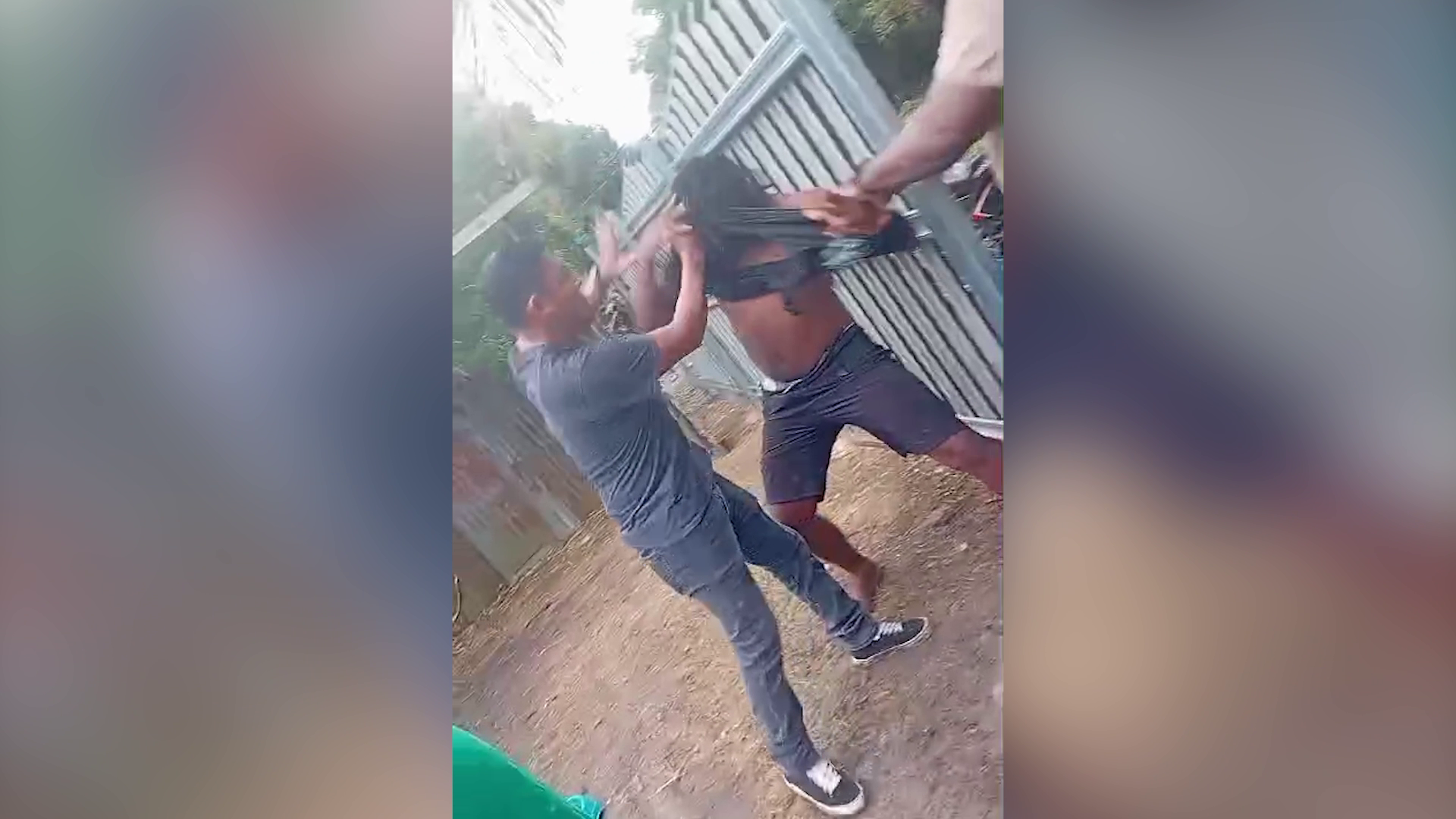
A recent police apprehension in the Belizean community of Unitedville has ignited public scrutiny and family demands for transparency, after a widely circulated video captured an officer using a chokehold during the arrest of local resident Samuel Parham, dated October 19, 2026.
The incident unfolded Friday when law enforcement officers arrived at a residential property in the community to take Parham into custody. Footage shared across social media platforms shows Parham actively resisting the attempted detention, leading to a physical struggle between the man and officers. In the heat of the confrontation, one officer deployed a chokehold to subdue Parham, forcing him to the ground, where the detainee briefly lost consciousness. According to a family relative, it was her intervention that ultimately convinced Parham to end his resistance and comply with the officers’ detention order.
In a phone interview with local news outlets, Nikkita Perez, Parham’s cousin, outlined the family’s longstanding frustrations with police treatment of Parham, as well as their urgent questions about the use of the chokehold. Perez shared that Parham had repeatedly told her he is exhausted by repeated, seemingly unprovoked interactions with law enforcement. “Every time these police see me, they want to attack me and beat me up,” Perez recalled Parham saying. “Anywhere I am at and police see me, police want to beat me up, they want to arrest me and take me for forty-eight hours, and nobody tells me what they are taking me for.” Perez said she had encouraged Parham to cooperate, arguing that consistent compliance would eventually lead officers to stop targeting him.
When asked about the family’s position on the chokehold, Perez made clear the incident has sparked deep concern across the entire family. The core question the group is demanding answers to is whether the use of a chokehold during arrest is actually legal under Belizean law. Beyond legality, the family is also pushing for clarification on whether the technique is part of official police training at the national Police Academy, and whether it counts as approved protocol for use during detainee confrontations.
Perez also highlighted the broader, long-term harm of such incidents for local communities, particularly children who witness excessive use of force by police. “These small children, when they see these police vehicles and these things happening, it puts a fright in them. They are afraid,” Perez explained. “So what will happen when these children grow up and see a police? They will want to run, because they will say, ‘I don’t want anybody to beat me up like how they beat up that one.’”
This report is a transcript of an evening television newscast from the local outlet, with Kriol-language quotes transcribed using a standard spelling system for accessibility.