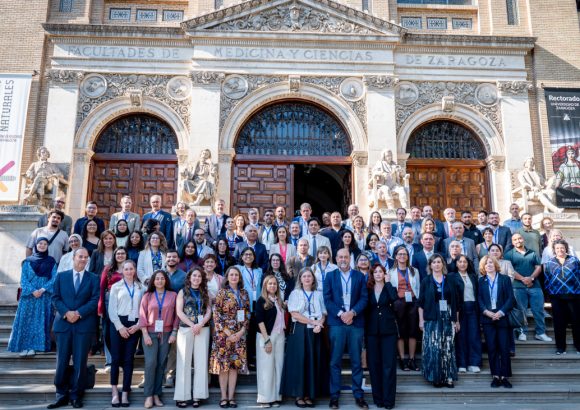
At the 27th Conference of Ibero-American Water Directorates and Authorities (CODIA) held in Zaragoza, Spain, a senior Dominican water management official has laid out the Caribbean nation’s comprehensive strategy to strengthen national water security and upgrade cross-sector water distribution. Olmedo Caba Romano, executive director of the Dominican National Institute of Hydraulic Resources (Indrhi), used the platform to highlight the Dominican Water Pact 2021–2036, a landmark 15-year framework designed to drive systemic improvements in every dimension of water policy, from governance and sustainable management to conservation and resource protection.
Caba explained that the Dominican government has leveraged inter-agency coordination through its newly established Water Cabinet to align efforts across public entities and guarantee stable water access for residential, agricultural, industrial and commercial sectors. Two additional oversight bodies — the Water Observatory and the Indrhi-led Committee for the Operation of Dams and Reservoirs (Copre) — work in tandem to coordinate evidence-based operational decisions, optimize water allocation, and shore up the country’s overall water resilience against growing supply pressures.
Despite these institutional advances, Caba acknowledged that the Dominican Republic still faces a set of persistent challenges on its path to robust water management. Key priorities for action include expanding national forest cover to protect watershed health, upgrading management practices for upper and middle river basins, modernizing water-intensive agricultural production systems, advancing the approval of a long-overdue national water law, and adjusting existing water governance frameworks to account for the accelerating impacts of climate change.
To strengthen collective progress across the Ibero-American region, Caba called for expanded participation of local water users in national decision-making processes, and proposed that CODIA launch a coordinated regional initiative to support widespread adoption of systematic hydrological planning as a core tool for effective water management and governance.
Beyond the conference proceedings, Caba’s working visit to Spain included targeted knowledge-sharing and collaborative development activities. In Madrid, he held a strategic working meeting with officials from the Center for Studies and Experimentation of Public Works (Cedex) to advance plans for a new national hydraulics laboratory in the Dominican Republic. The facility, which will be developed in partnership with Dominican universities, will enable cutting-edge research, physical modeling, and performance testing for new and existing hydraulic infrastructure across the country. The Dominican delegation also conducted a study visit to Madrid’s Canal Isabel II, where experts walked the team through Spain’s proven approaches to urban flood control, stormwater storage, and integrated urban water resource administration.