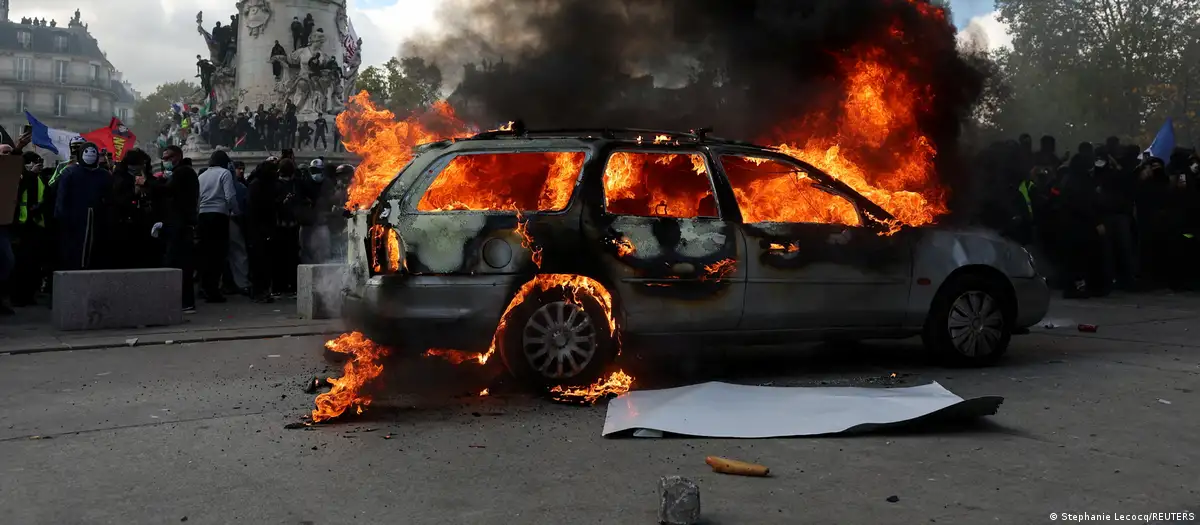
France was plunged into a wave of civil unrest on Saturday, when mass demonstrations over soaring living costs devolved into widespread clashes, widespread looting, and deliberate arson that left thousands detained, hundreds of police injured, and critical public infrastructure damaged. French Interior Ministry officials confirmed on Sunday that approximately 2,400 people were taken into custody across the country amid the chaos that spilled into dozens of major and mid-sized cities. In the capital alone, Parisian police made 855 arrests, a total that law enforcement officials described as an unprecedented single-day record for protest-related detentions. As of early Sunday, 517 arrested individuals remained in official custody, with provisional data showing 171 of those being minors, according to national prosecutors. The violence left no part of the country untouched. In the central city of Limoges, rioters set the historic town hall ablaze, gutting large portions of the centuries-old civic building and destroying irreplaceable local records. Unrest also erupted in other major urban centers including Marseille, Lyon, Avignon, and Grenoble, where law enforcement was forced to deploy crowd control measures including tear gas, baton charges, and water cannon to disperse violent groups. Along with more than 1,000 injured police officers, multiple demonstrators also suffered serious harm during the clashes. Leading French newspaper Le Figaro reported that a 17-year-old demonstrator lost a hand after a police crowd-control grenade detonated at close range in the city of Saint-Etienne. The protests drew a broad coalition of groups united by growing frustration over stagnant wages, skyrocketing fuel and energy prices, and worsening economic hardship across multiple sectors. Farmers struggling with rising input costs, firefighters facing unfavorable working conditions, and students demanding improved learning infrastructure and conditions all joined the marches, creating one of the largest showings of popular discontent in recent French history. Official and union estimates of turnout varied widely: the Interior Ministry put the nationwide total of peaceful demonstrators at 550,000, including 110,000 in Paris, while the influential CGT trade union counted total attendance closer to 800,000. In a televised national address following the unrest, President Emmanuel Macron issued a sharp condemnation of the violence that unfolded over the weekend. However, he explicitly acknowledged that the demonstrators who gathered peacefully had legitimate economic and social grievances that could not be ignored. Macron also pledged full transparency into law enforcement’s response to the unrest, an effort to address growing concerns about excessive use of force by police during mass protests. The weekend’s unrest comes at a moment of rising political polarization across France, just three years ahead of the 2027 presidential election. Macrons administration faces structural economic constraints that limit its ability to respond to protester demands through new public spending: the country’s high national debt and persistent budget deficit have left little fiscal room for large-scale wage increases or broad energy subsidies that would address the core cost-of-living concerns driving the public anger.