Across Barbados, a growing movement of self-sufficiency is emerging as more residents turn to home-grown food production, with space-efficient cultivation methods like hydroponics and greenhouse farming capturing widespread attention. This shifting trend has led to a steady stream of queries to the Barbados Agricultural Development and Marketing Corporation (BADMC), from beginner householders looking to grow kitchen vegetables to aspiring commercial producers seeking guidance on farm establishment and government rebates.
The growing enthusiasm for local agriculture was highlighted by BADMC agronomist Rontia Crichlow during a World Food Day agri-clinic held Thursday in Six Roads, St Philip. The event brought together agricultural experts and community members to provide free technical support for plant health management and crop production challenges. Speaking to reporters on site, Crichlow confirmed that interest in small-scale and commercial farming has climbed steadily in recent months. “Every day we get questions about different crop varieties or how to troubleshoot specific growing challenges, so the public response has been overwhelmingly positive,” she said.
Enquiries come from aspiring growers across all experience levels, Crichlow explained. Unlike traditional large-scale farming that requires extensive plots of land, most new growers are prioritizing compact, home-adaptable production systems. Both greenhouse cultivation and controlled-environment agriculture have become top topics of interest, as these methods allow residents to grow crops in even small urban or suburban spaces. “Many householders are drawn to these techniques because they have a much smaller land footprint,” Crichlow noted. “You can start with a tiny hydroponic setup right on your balcony to grow fresh leafy greens for your family.”
This rising interest extends beyond backyard hobby gardening. Crichlow reported that many residents exploring full-time commercial agriculture are also reaching out for information on sustainable production methods and government support programs. Questions about agricultural rebates to offset upfront investment costs are among the most common, with additional queries covering general crop management and animal livestock production.
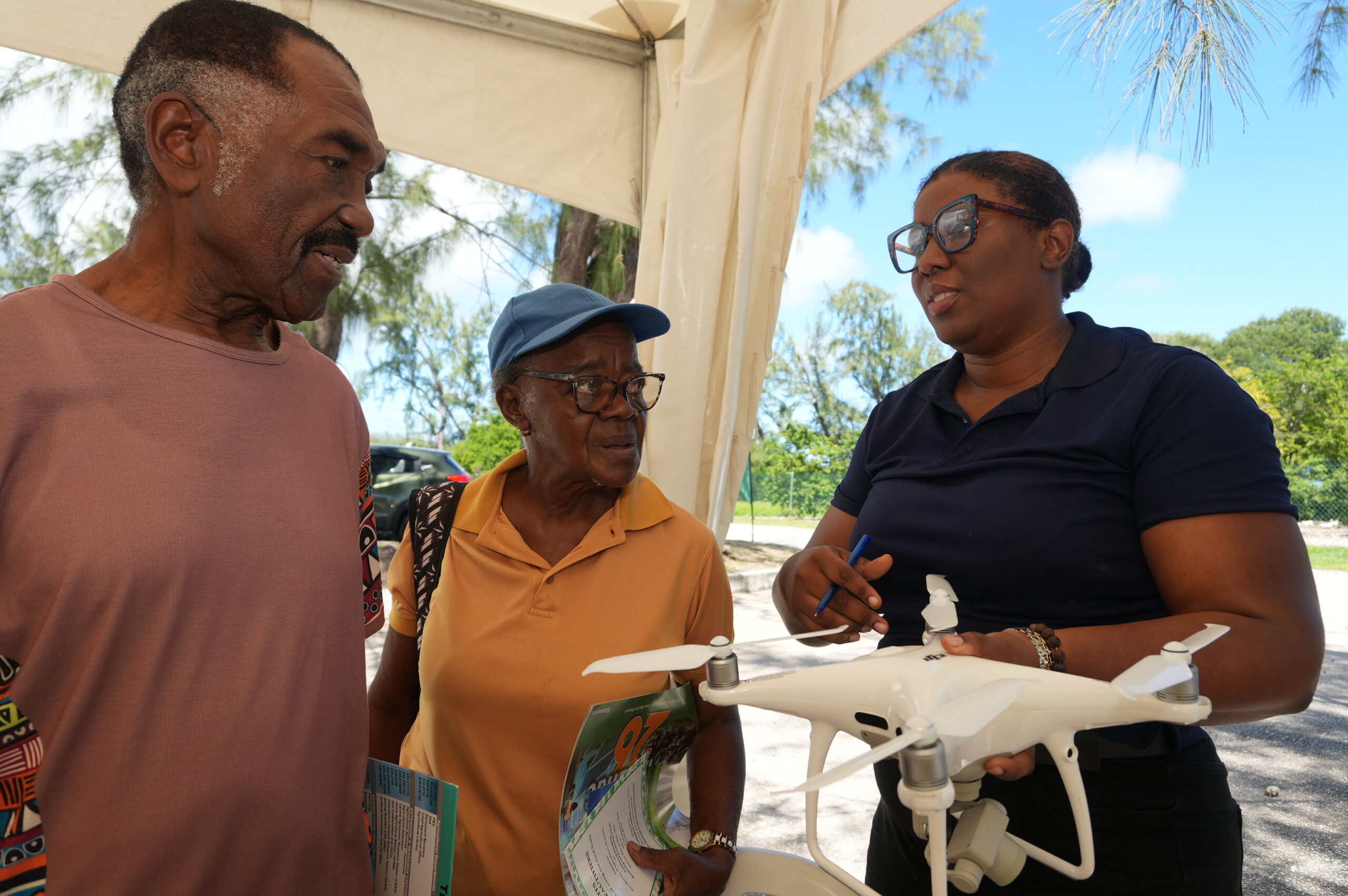
The World Food Day agri-clinic showcased a range of modern technologies designed to boost local food production and support new and existing growers. Attendees got a first-hand look at agricultural drones used to survey large farm parcels, detect early signs of plant disease, and map flood-prone areas that threaten crop health. A portable soil scanner was also demonstrated, which can deliver detailed data on soil nutrient levels, electrical conductivity, and pH balances in under five minutes. The tool allows extension officers to quickly identify soil issues that could hinder crop growth and recommend targeted amendments.
Participants were also introduced to Farmer Dave, a new artificial intelligence-powered agricultural assistance tool currently being rolled out across the island. Accessible via mobile phone, the tool lets growers snap photos of unhealthy plants to get instant problem diagnoses and ask questions about best farming practices at any time of day. BADMC officials emphasize the AI tool is designed to supplement, not replace, the work of in-person extension officers who provide on-site technical support to farmers across Barbados.
Despite the widespread enthusiasm for growing local food, the sector faces a pressing challenge: prolonged inconsistent rainfall and widespread water scarcity. Crichlow explained that farmers had hoped for more steady rainfall during the 2024 wet season, but have instead faced extended dry spells broken up by intense, short periods of heavy rain. “We’re in the official rainy season, and everyone hoped for a more active wet period to replenish water reserves,” she said. “That hasn’t happened, so we’re seeing long drought periods followed by sudden downpours, and that erratic pattern is really hard on plant health.”
To help growers adapt to these changing climate conditions, BADMC has launched several new initiatives. The agency is currently testing new soil amendments designed to improve soil water retention, reducing the amount of irrigation needed to sustain crops. It has also installed irrigation sensors across major farming districts that monitor real-time soil moisture levels, helping farmers make more informed decisions about when to water crops. Crichlow advised growers to move away from fixed irrigation schedules, instead aligning watering with measured soil moisture and the specific growth stage of each crop. “When moisture drops below a pre-set threshold, you irrigate, and that threshold changes depending on how developed the crop is,” she explained.
While water scarcity has created production challenges for many growers, BADMC has not confirmed any widespread shortages of specific vegetables at this time. Crichlow added that current conditions are far from the worst Barbados has seen in recent years, noting that local farmers have become far more proactive in adapting to climate variability and reducing the impact of water shortages on their output.