On Thursday, the United States announced a sweeping new multi-million-dollar aid package for the Caribbean region during a landmark political dialogue with the Caribbean Community (Caricom), where leaders from the 15-nation bloc pushed to turn high-level diplomatic exchanges into tangible, people-focused commitments spanning energy security, infrastructure, and crisis response in Haiti.
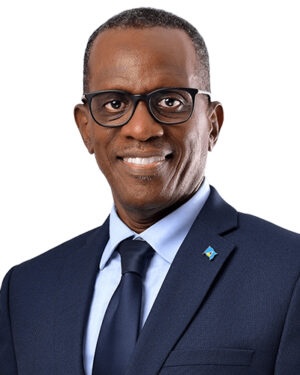
The talks, hosted at the political level in response to a request from Caricom leaders, followed a productive February meeting between bloc leaders and U.S. Secretary of State Marco Rubio at the Caricom summit in St. Kitts and Nevis. St. Lucia Prime Minister Phillip J. Pierre, who currently serves as Caricom’s chairman, opened the discussion by emphasizing the deep, interconnected ties between the regional bloc and the U.S. that extend far beyond formal diplomacy.
“Our countries are connected by geography, commerce, tourism, family and friendship. The Caribbean Community is a close neighbour, a stable democratic partner and a region open to investment,” Pierre said, addressing U.S. Deputy Secretary of State Christopher Landau, who led the American delegation. “We seek a more strategic partnership, sustained by regular dialogue and measured by improvements in our people’s lives.”
In response to Caricom’s priorities, Landau laid out a broad package of new U.S. commitments totaling hundreds of millions of dollars, tailored to address security, connectivity and development needs across the region. The package includes an additional $55.5 million to strengthen Caribbean law enforcement capacities, alongside $11 million in Foreign Military Financing to boost regional security force capabilities. A centerpiece of the investment is $175.8 million allocated for secure digital infrastructure through the Caribbean and Central America Undersea Cables Programme.
“Ultimately, a modern economy cannot exist without a secure network. We all have seen vulnerabilities,” Landau said. “This will provide trusted, high-speed connectivity across the region to build resilient, secure networks that serve your people and not outside interests.” He added that beyond the total dollar figure, the package reflects a long-term U.S. reaffirmation of its commitment to the strategically critical neighboring region.
Pierre framed Caricom’s core priorities for the dialogue in plain, people-centered terms: for Caribbean households, energy security means affordable electricity; economic cooperation means jobs, inward investment and expanded opportunity; security cooperation means safer local communities; and disaster preparedness means guaranteed rapid assistance when hurricanes or other crises strike. He called on delegates to turn the day’s discussions into actionable commitments, including targeted financing for climate-resilient energy systems, more predictable trade frameworks, stronger commercial partnerships, enhanced secure digital infrastructure, improved public health systems and disaster response coordination, and cross-border collaboration to dismantle organized crime and stop the flow of illicit firearms.
Top of the bloc’s urgent agenda is the ongoing political and security collapse in Haiti, where armed criminal gangs have launched a coordinated push to overthrow the country’s elected government. Pierre called the Haiti crisis a non-negotiable priority for the dialogue, and thanked the U.S. for its support of the recent extension of the United Nations mandate for Haiti’s multinational Gang Suppression Force (GSF). The UN Security Council voted 12-0 to extend the GSF mission for an additional six months, keeping the operation active through March 31, 2027.
The mandate renewal comes as Haiti’s security situation deteriorates at an alarming rate: armed gangs now control large swathes of the capital Port-au-Prince and have expanded their control into rural communities, carrying out systematic killings, mass kidnappings, widespread sexual violence and extortion to consolidate power. UN data indicates that roughly 1.5 million Haitians – 12% of the country’s total population – have been displaced by the ongoing violence, with more than 3,000 people killed and over 1,500 injured between October 2025 and April 2026.
The GSF replaced an earlier Kenyan-led security mission, and currently has between 1,500 and 1,600 personnel deployed across Haiti. Its core mandates are to restore public order, secure critical state infrastructure, and enable the Haitian government to resume basic functions. The mission is on track to reach its full deployment quota of 5,500 personnel by October 2026. Pierre noted that Caricom continues to support Haiti’s path to stability through its Eminent Persons Group (EPG), chaired by former St. Lucia Prime Minister Dr. Kenny Anthony. He emphasized that sustained international assistance and inclusive, credible national elections are essential to restoring public confidence and enabling Haiti to return to long-term democratic stability.
The dialogue also addressed migration and immigration, issues Pierre said carry profound implications for Caribbean communities and cross-border people-to-people ties. Pierre stressed that the true impact of the talks would be measured by follow-through, not just dialogue, calling for participants to link high-level political discussion to sustained technical cooperation, clear priority-setting, and formal accountability arrangements for next steps. The Guyana-based Caricom Secretariat will coordinate the bloc’s technical work alongside national authorities and regional institutions to advance the outcomes of the meeting.
“Caricom comes to this table ready to listen, ready to engage and ready to build a partnership that delivers mutual benefit, with respect for our sovereignty and our shared aspirations,” Pierre added.
In his address, Landau echoed the long-standing importance of U.S.-Caribbean ties, noting that the U.S. has benefited enormously from immigration and cultural exchange from the region, from founding father Alexander Hamilton to former Secretary of State Colin Powell, who led the State Department 25 years ago. He openly acknowledged that for years, U.S. foreign policy failed to give the Western Hemisphere – and the Caribbean specifically – the attention it deserves, despite its proximity and strategic importance.
“For far too long, we have been looking at things that are happening halfway across the world, and we have been ignoring things that are happening right in our own neighbourhood,” Landau said. “I think it’s very important that we recognise some of the flaws of recent years in our policies and we talk together to commit to ways that we can build institutional relationships.”
Landau emphasized that the core goal of the renewed dialogue is to build a lasting, institutional foundation for U.S.-Caribbean relations that does not depend on personal relationships alone. While personal ties play an important role in diplomacy, he said, a durable partnership requires structural, long-term institutional cooperation that will survive across changes in leadership.
Noting that the U.S. does not claim to have all the answers, Landau stressed that the dialogue is intended as a two-way exchange, not a series of lectures from Washington. “You all are sovereign countries; you are going to decide your fate,” he said. “I truly believe we wouldn’t be having this meeting if the Secretary and I didn’t believe that what is in your interests is also in our interests; that there are many, many areas where we should be deepening cooperation where there are great solutions.”
Beyond one-off grant funding to address immediate needs, Landau said the U.S. is focused on fostering long-term private sector investment that creates sustainable economic growth and durable ties between the two sides. “Because ultimately, a particular grant can be fine to fill a particular need, but for a long-term growth strategy, a particular grant isn’t going to fix that,” he explained. He noted that U.S. economic strength is driven by the private sector, and the U.S. government’s core role is to act as a convener to connect American businesses with investment opportunities in the Caribbean, while ensuring Caribbean leaders can shape what cooperation looks like to meet their own national priorities.