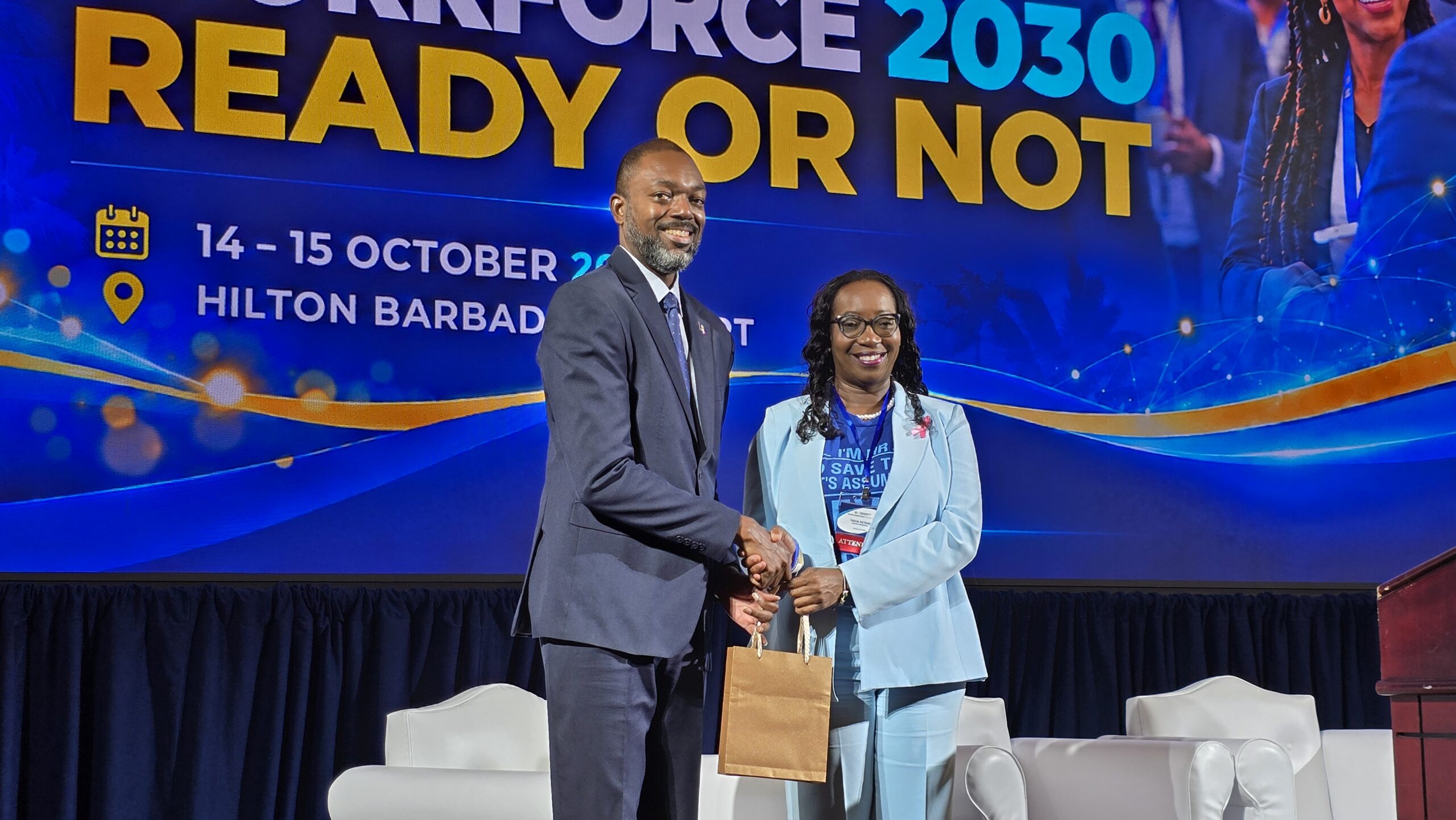
As artificial intelligence continues to reshape routine corporate functions across industries, human resource leaders in Barbados are calling on HR professionals to redefine their core value, shifting away from administrative tasks that can be automated and leaning into uniquely human skills that technology cannot replicate. The call to action came during the 2026 biennial People Development Conference, held Wednesday at the Hilton Barbados Resort under the overarching theme “Workforce 2030: Ready or Not”. The event also marked the 30th anniversary of the Human Resource Management Association of Barbados (HRMAB) Incorporated, a milestone that underscores the organization’s longstanding commitment to advancing people development across the Caribbean nation.
In her keynote address, Tisha Peters, president of HRMAB, used a relatable analogy from the aviation industry to illustrate the evolving role of HR in an AI-driven workplace. Peters, an avid aviation enthusiast, explained that even the most advanced modern commercial aircraft rely heavily on skilled human pilots: while automation handles routine flight operations, pilots must master how these systems work and retain the expertise to take manual control when unexpected challenges arise. The same logic, she argued, applies directly to human resources.
“Technology will not replace people, but people who master technology will replace those who do not, and that includes all of us,” Peters told conference delegates. She emphasized that as AI increasingly absorbs repetitive administrative HR tasks, professionals in the field must move beyond these routine functions to claim a more strategic, value-driven seat at their organizations’ leadership tables.
To back her argument, Peters cited two high-profile case studies of AI adoption gone awry. She pointed to global fintech firm Klarna, which made headlines in 2024 when it announced that an in-house AI assistant had taken over the duties of 700 full-time customer service agents. The move backfired, however, when overall customer service quality declined sharply, forcing the company to reverse course and rehire hundreds of human workers. She also referenced U.S. tech company Bolt, which restructured its entire operations around AI in 2024, cutting its global workforce from 2,500 employees to just 100 and eliminating its entire human resources department entirely. The Bolt example, Peters said, raises critical questions about how many organizations undervalue the unique contributions of the HR profession.
“The answer is very simple. If all our HR departments do is what a chatbot can do for free, we would not be surprised when the company chooses a chatbot,” she said.
Beyond redefining HR’s core role, Peters called on employers across all sectors to overhaul outdated recruitment practices that fail to align with the fast-changing pace of technological innovation. She called out the common problem of job postings that demand 10 years of professional experience in emerging tech fields that have only existed for a fraction of that time. Instead of hiring exclusively based on past experience, she urged employers to prioritize candidates’ learning potential, and to look inward to train existing employees to fill newly created roles that did not exist a decade ago.
“We have to stop hiring exclusively for what people have done and start hiring for what they can learn,” she said.
Peters laid out three core guiding principles for HR professionals navigating the AI transition: keep people at the center of all technology adoption, embed continuous learning into daily workplace culture, and lead organizational digital transformation from the front. She stressed that the ultimate purpose of digital tools in HR is to free professionals from tedious work, allowing them to focus on high-impact human interactions: difficult performance conversations, one-on-one employee coaching, and intentional, empathetic care for team members.
“Every digital tool we adopt should exist to free up our time for human work, for the hard conversations, the coaching, and the intentional care. If a tool makes your HR department less human, you are using the wrong tool,” Peters said. She closed her address by challenging every attending delegate to learn at least one new AI tool, use it to streamline or automate a tedious repetitive task, and then pass that knowledge on to a colleague to build collective capability across the industry.
Barbados Minister of Labour, Social Security and the Third Sector Colin Jordan also addressed the conference, echoing many of Peters’ concerns and expanding on the broader societal implications of AI-driven workplace change. Jordan emphasized that HR professionals hold a critical responsibility to ensure that technological progress does not come at the cost of workers’ wellbeing and dignity. He also warned against a common pitfall for HR teams: becoming so focused on aligning with senior management that they lose the trust of frontline employees, who no longer feel comfortable bringing workplace concerns to the HR department.
“I’m not saying to you that you abandon discipline. I’m saying to you that you apply discipline in a human way,” Jordan told delegates.
The minister also outlined key emerging workplace challenges that HR leaders must prepare for, including the growing prevalence of hybrid work models, which have brought new issues such as elevated workplace stress, employee burnout, social isolation among remote teams, and blurred lines between professional and personal life. He added that the rapid expansion of gig and platform-based work has also upended long-standing norms around employment relationships, worker protection, and collective social dialogue.
Jordan highlighted a major global policy development addressing this shift: in June 2024, the International Labour Organisation adopted a new global convention focused on guaranteeing decent work for platform economy workers, which sets clear standards for working conditions, legal protections, and fundamental labor rights in the sector. Jordan shared that two Barbadian experts contributed to the development of the convention, and he himself chaired the ILO’s standard-setting committee that drafted the framework.
Jordan framed the current moment of workplace transformation not as a question of if technology will change work, but of whether global societies can equip workers and organizations to adapt successfully to that change. He noted that building a fair, functional future of work requires coordinated action across all sectors: governments must develop forward-looking policy frameworks, employers and workers must embrace intentional adaptation, and educational institutions must revise curricula to prepare learners for the emerging job market. People development and HR professionals, he said, must lead workplace transformation, while all stakeholders commit to open, collaborative social dialogue to protect workers’ rights amid change.