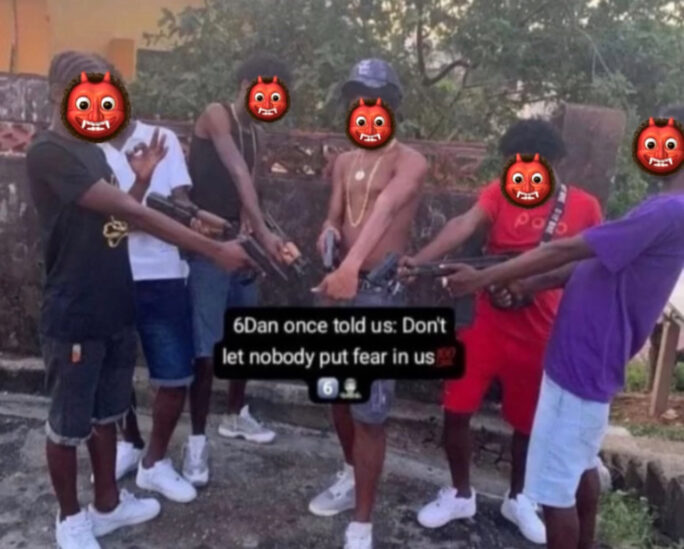
The claim that music breeds criminal behavior has circulated for decades, despite a glaringly simple truth: no microphone has ever fired a bullet. Yet on October 12, 2026, sitting in the Senate of Antigua and Barbuda, commentator Rainer Santos Mercado listened as lawmakers pinned the recent surge in violent crime squarely on local music. This unfair and inaccurate scapegoating compelled Mercado to push back against the narrative, arguing that music is not the cause of rising crime—misdiagnosis of the actual roots of violence is.
Mercado begins with a basic historical reality: both music and crime have existed as long as human civilization, and one never spawned the other. Rather than creating deviant behavior, he explains, music acts as a mirror held up to the world around it. When artists craft raw, unfiltered lyrics about violence, poverty and street life, they are not inventing these experiences—they are describing the realities that shape the communities they come from. These artists are modern poets, channeling lived experience into art. And while music can shift a listener’s mood, it cannot force a person to pull a trigger or commit an act of violence, Mercado argues.
Beyond its role as storytelling, Mercado emphasizes that music is one of the most powerful tools of social mobility for marginalized young people across the Caribbean. Unlike many other paths to success, it demands little upfront investment: a young person with raw talent and a cheap microphone can lift themselves, and often their entire family, out of cycles of poverty. For generations of young people growing up in underresourced ghetto communities, music has offered a legitimate, hopeful path to build a better life, not a roadmap for crime.
Critics of modern dancehall music often fall back on a familiar argument, pointing to the work of “conscious” reggae legends like Bob Marley and Chronixx as the correct model for what music should be. But Mercado dismantles this logic. Marley gave the world his message of global unity with *One Love* back in the 1960s, yet the world remains mired in armed conflict in 2026. If music is truly to blame for the violence that happens in the world, should we blame popular dancehall artists like Vybz Kartel or Masicka for these global wars? The absurdity of the claim makes clear how misplaced the blame is.
Mercado also calls out the inconsistent double standard at the heart of the anti-music argument. He grew up watching iconic Caribbean films like *Shottas*, *Dancehall Queen* and *Bad Boys*—films that depict raw, unflinching depictions of street life that are far more graphic than most dancehall lyrics. Yet policymakers never call for these films to be banned or blamed for crime. Why, he asks, is the blame always directed at working-class young artists with microphones, rather than the mainstream film industry that produces the same content?
For parents who blame music for their children’s bad behavior, Mercado has a blunt message: shifting blame to a three-minute song means you have already abdicated your own role in guiding your child’s development. The idea that a single track can override years of parenting and life experience does not hold up to scrutiny.
This anecdotal argument is backed by peer-reviewed research, Mercado points out. A 2009 study from the University of the West Indies, led by prominent scholar Professor Donna Hope, found no statistically significant causal connection between dancehall music and youth violence. In Professor Hope’s own assessment, the roots of Antigua and Barbuda’s crime crisis extend far beyond the content of local music.
At its core, the push to blame music is a distraction from the actual, measurable drivers of violent crime that policymakers have failed to address. These root causes are well-documented: systemic poverty, widespread youth unemployment, fractured family structures, and a generation of young people growing up without access to opportunity or hope. Addressing these issues is far harder and more resource-intensive than cracking down on a music playlist, Mercado acknowledges—but it is the only place where real solutions to the crime surge can be found. When policymakers look for easy scapegoats instead of tackling these hard problems, they do nothing to make communities safer, and they cheat young talented artists out of the opportunity music provides. To put it plainly: don’t blame the music, mon.