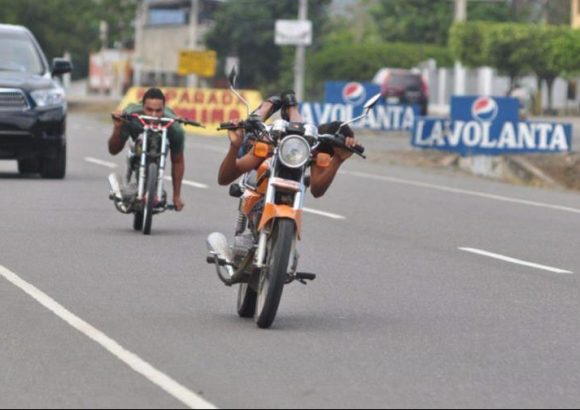
SANTO DOMINGO — A top Dominican traffic safety official has revealed that motorcyclists account for between 70% and 80% of all traffic-related fatalities in the country, issuing a stark warning about the overwhelming role of human error in road accidents. Rafael Tejeda Baldera, communications head and spokesperson for the General Directorate of Traffic Safety and Land Transportation (Digesett), shared these findings during a weekend seminar hosted by the National Central of Unified Transporters (CNTU) titled “Causes and effects of deaths from traffic accidents.”
In his presentation, Baldera broke down the three core contributing factors to traffic collisions: human behavior, vehicle condition, and road infrastructure. He emphasized that the human element is by far the most critical, noting that drivers’ physical and mental states — including fatigue, stress, exhaustion, and drowsiness — directly impair their ability to operate vehicles safely.
Beyond driver condition, Baldera highlighted other dangerous human-caused risks: distracted driving from cell phone use, speeding, reckless operation, and driving under the influence of alcohol, prescription medications, or illicit drugs. All of these choices, he stressed, drastically increase the likelihood of a crash.
The second key factor is vehicle maintenance. Baldera, a colonel, pointed out that widespread lack of regular inspection and upkeep is a persistent threat to road safety. He pushed back against the common expectation that government bodies must take the lead on vehicle safety checks, arguing that individual drivers bear primary responsibility for monitoring their vehicles’ roadworthiness before they ever hit the pavement. “Let’s not wait for official institutions to determine the starting point for a vehicle inspection. That starts with you,” he told attendees.
Specifically, he urged drivers to proactively check core components including tires, headlights and taillights, windshields, and engine fluids to prevent mechanical failures that could trigger accidents. The third factor he outlined is inadequate road infrastructure and poor environmental conditions. Issues including unlit roadways, deteriorated asphalt, and inclement weather such as heavy rain and fog all create hazardous driving conditions that can contribute to collisions.
When it comes to assigning proportional responsibility, Baldera shared a striking statistic: 96% of accident responsibility falls to human factors. He explained that even when vehicle defects or poor road conditions are present, it is ultimately the driver’s responsibility to adapt to those adverse circumstances and take corrective action. “Look how I put it: 96% of the responsibility for accidents lies with the human factor,” he reiterated.
Beyond the human cost of lives lost and people injured, Baldera noted that traffic accidents impose a heavy economic burden on the Dominican state, stretching public health and road safety resources thin. He argued that for too long, road safety and traffic management have been treated as an external issue separate from public accountability, a mindset that prevents meaningful progress in reducing accident rates. Unless individuals step up and take ownership of their role in keeping roads safe, he warned, meaningful change will remain out of reach.