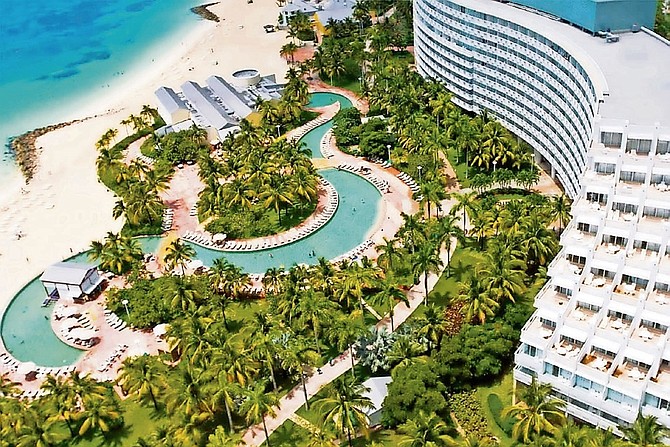
As Bahamas Prime Minister Philip Davis prepares for a major public address focused on Grand Bahama, local residents and community leaders are growing increasingly frustrated with broken promises and delayed action, calling for concrete, time-bound plans for two transformational projects at the heart of the island’s economic recovery: the redevelopment of Grand Bahama International Airport and the Grand Lucayan resort. For years, the Davis administration has repeatedly assured the public that work on these high-stakes initiatives is moving forward, but little visible progress has materialized, eroding public trust and leaving residents uncertain about the island’s economic future. Back in January 2025, Davis announced that the first phase of the airport redevelopment — a $100 million investment critical to boosting tourism and visitor access — had entered the ground preparation stage. Just months later, in May 2025, the government signed a heads of agreement with developer Concord Wilshire for an $800 million overhaul of the long-stagnant Grand Lucayan resort. Yet despite these high-profile announcements, questions around actual construction timelines and completion dates have lingered, fueling widespread discontent. Former Cabinet minister Peter Turnquest, one of the most vocal critics of the government’s approach, emphasized that Grand Bahama needs far more than vague updates on isolated projects. He argued the island is still waiting for a cohesive, overarching strategy to reverse economic decline, revitalize its struggling tourism sector and diversify into new industries as traditional industrial activity continues to contract. “What we really do not need to hear is more of the same,” Turnquest said. “What we need to hear is solid plans, solid developments that are in train with timelines that we can all understand and plan around.” Turnquest pointed to the island’s collapsed golf sector as a stark example of unaddressed decline, noting that what was once a six-course industry has been completely wiped out. He also questioned the broader economic benefits of ongoing cruise port developments, arguing that self-contained on-board facilities often keep tourist spending confined to cruise lines rather than flowing to local small businesses and operators. Beyond tourism and infrastructure, Turnquest highlighted a years-long delay in the construction of a new local clinic, which has remained unfinished for six to seven years. Residents still have no clarity on what services the facility will offer once complete, including whether it will provide inpatient care, and the lack of accessible specialized care — such as chemotherapy and cataract surgery — is not only harming residents’ health but also driving away potential investors and second-home buyers, he added. Local residents echoed Turnquest’s frustration, with many singling out the airport redevelopment as their top priority. Sarah Kirkby, a Grand Bahama resident, said the current temporary terminal and substandard passenger facilities remain a major turnoff for visitors, and called on Davis to deliver a clear completion date rather than another empty announcement. “I sincerely hope he is not coming simply to make another announcement about an announcement — like the hotel project that was announced, knocked down, and then patched up a few days later,” Kirkby said. She stressed that Grand Bahama’s consistent contributions to the national treasury deserve greater urgency from the central government, arguing that a fully functional upgraded airport and sufficient hotel inventory are non-negotiable foundations for supporting local small businesses. “A meaningful announcement for Grand Bahama would be a firm commitment, with a firm timeline, to finally get our airport completed,” she said. For resident Don Martin, the airport delays and the ongoing cost of living crisis — particularly sky-high fuel prices and persistent inflation — are the most pressing issues facing everyday residents. He said repeated government assurances have failed to deliver even basic clarity on when major projects will be finished, leaving residents feeling disillusioned. “If you ain’t doing something with gasoline and you ain’t showing me the blueprints for the airport and some other things, I really don’t care,” Martin said. Shavonne Munnings, a Grand Bahama taxi driver who relies on cruise ship passengers for most of her income, shared that poor air access has been compounded by unfair port transportation policies that favor large tour buses over local taxi operators. Munnings explained that many drivers go multiple cruise ship calls without picking up a single fare, sometimes waiting two to four days between jobs. “You wait almost two up to four boat days to get a job,” Munnings said, calling on the government to revise cruise port transportation rules to give local drivers a fair shot at earning a living. Not all local leaders expressed frustration, however. Veteran unionist Michelle Dorsett struck a more optimistic tone, noting that the government’s ongoing outreach to the Grand Bahama Port Authority and efforts to attract new investment represent positive steps forward. She acknowledged that large-scale development projects inherently take time, but stressed that residents need to see tangible, visible progress at both Grand Lucayan and Port Lucaya in the near term. Dorsett also emphasized that any new economic investment must benefit the entire community, not just a small group of large corporate investors. Benefits need to extend to straw vendors, frontline hospitality workers, sanitation staff and local small business owners, she said, adding that her hope is that new investment will lift living standards across the island rather than concentrating gains among a small elite.