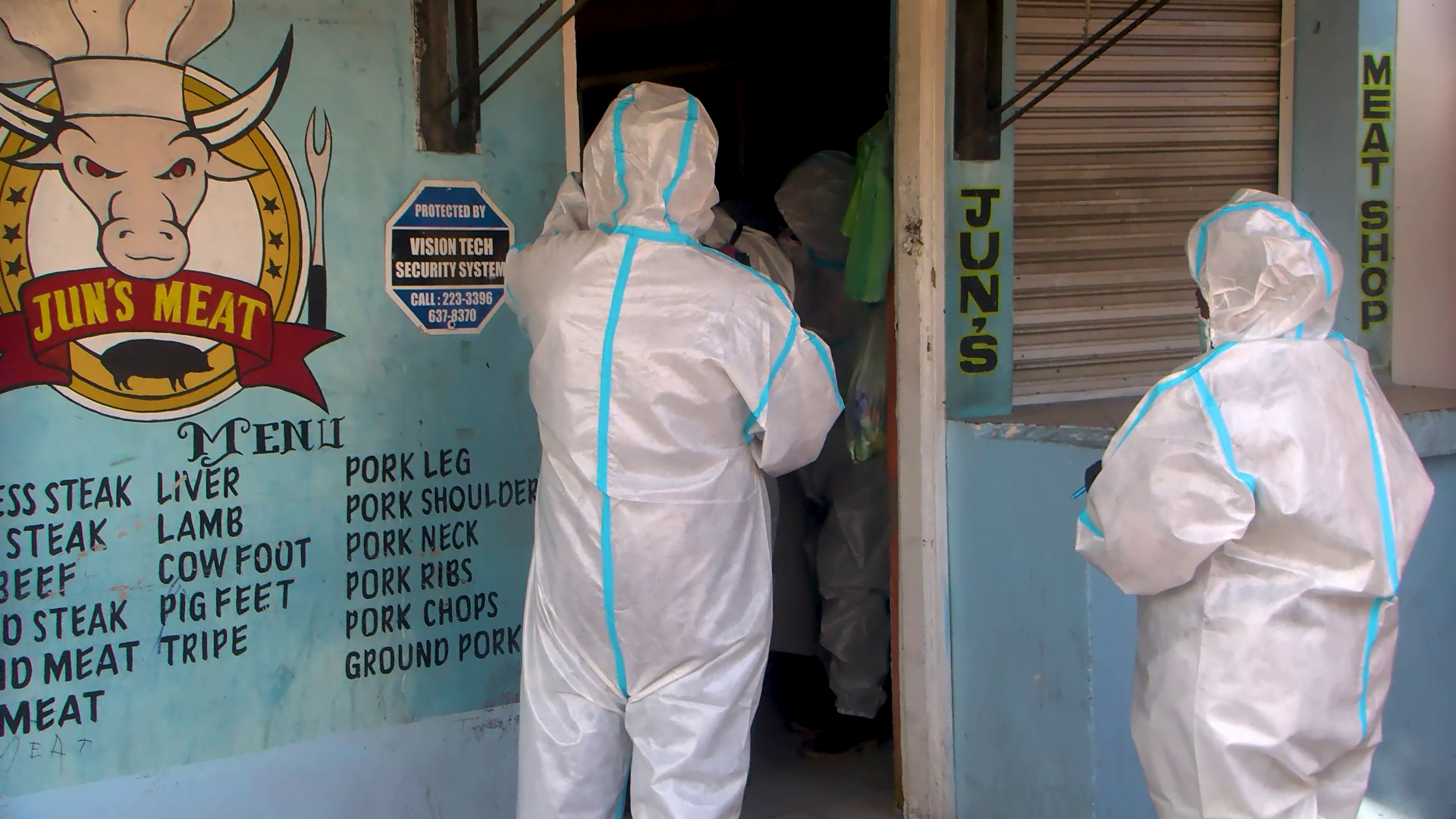
In a high-stakes public dispute unfolding at Belize’s iconic Michael Finnegan Market, a 20-plus-year veteran vendor and the Belize City Council are trading sharp accusations over who is responsible for thousands of dollars worth of rotting meat that has been declared a pressing public health hazard. The conflict, which dates back more than a month, has now escalated into formal legal action, putting a spotlight on the treatment of small business owners at the hands of local municipal authorities.
Aaron Castillo, the vendor at the center of the dispute, tells a damning story of overreach by city officials. According to Castillo and his attorney Orson “OJ” Elrington, the Belize City Council illegally locked Castillo out of his market booth more than 30 days ago, cutting off all access to his inventory and leaving thousands of dollars worth of frozen meat to spoil. Elrington lambasted the council’s actions as an egregious, unlawful violation of a small business owner’s civil rights, dismissing the council’s official narrative as nonsensical arrogance.
In a scathing rebuke of the municipal government, Elrington argued that the council created this crisis entirely through its own unauthorized actions. Even after the legal team formally demanded that the city restore access to Castillo’s booth, Elrington said officials ignored repeated requests, only issuing a vague promise to respond at an unspecified later date. “This is the city council trampling on the small man,” Elrington stated. He added that the total losses from the spoiled inventory top at least $75,000, a devastating hit for a small independent vendor. “We wish we had smell-o-vision so that leaders could understand the stench and the gravity of the losses my client has suffered,” Elrington said, characterizing the council as acting as if it is above the law, unaccountable to courts and due process.
The Belize City Council has pushed back hard against these claims, shifting all blame to Castillo for his repeated failure to meet financial obligations. Jermaine Hyde, the council’s Courts Manager, defended the municipality’s actions, arguing that officials repeatedly extended flexibility to Castillo to resolve outstanding payments, even reaching a formal consent agreement that allowed him to make installment payments on overdue fees. According to Hyde, Castillo repeatedly defaulted on those commitments, creating the chain of events that led to the spoiled meat.
Hyde countered the claim that Castillo was wrongfully evicted, explaining that the council only issued a stop order barring him from operating after he failed to pay for his required trade license. He clarified that it was ultimately Belize Electricity Limited (BEL) that disconnected power to the booth after Castillo failed to pay his long-overdue utility bill, not the council. With no power to run commercial freezers, the perishable meat left on site began to rot, creating a dangerous public health nuisance. Hyde added that the council properly notified Castillo of the hazard, placing full responsibility for the outcome on the vendor.
When pressed on whether the dispute would damage the council’s reputation as a supporter of the small-scale entrepreneurship that Michael Finnegan Market represents, Hyde rejected the criticism outright. He argued that the council went above and beyond to accommodate Castillo by agreeing to a payment plan, and the vendor’s own choice to default on his obligations led to the current crisis.
Now, after months of back-and-forth, Castillo and his legal team have initiated formal legal proceedings against the Belize City Council, seeking financial compensation for the six-figure losses he sustained from the spoiled inventory. The case is set to test whether the court will side with the small business owner’s claims of unlawful overreach, or uphold the council’s position that the crisis stemmed from the vendor’s own unmet financial commitments.