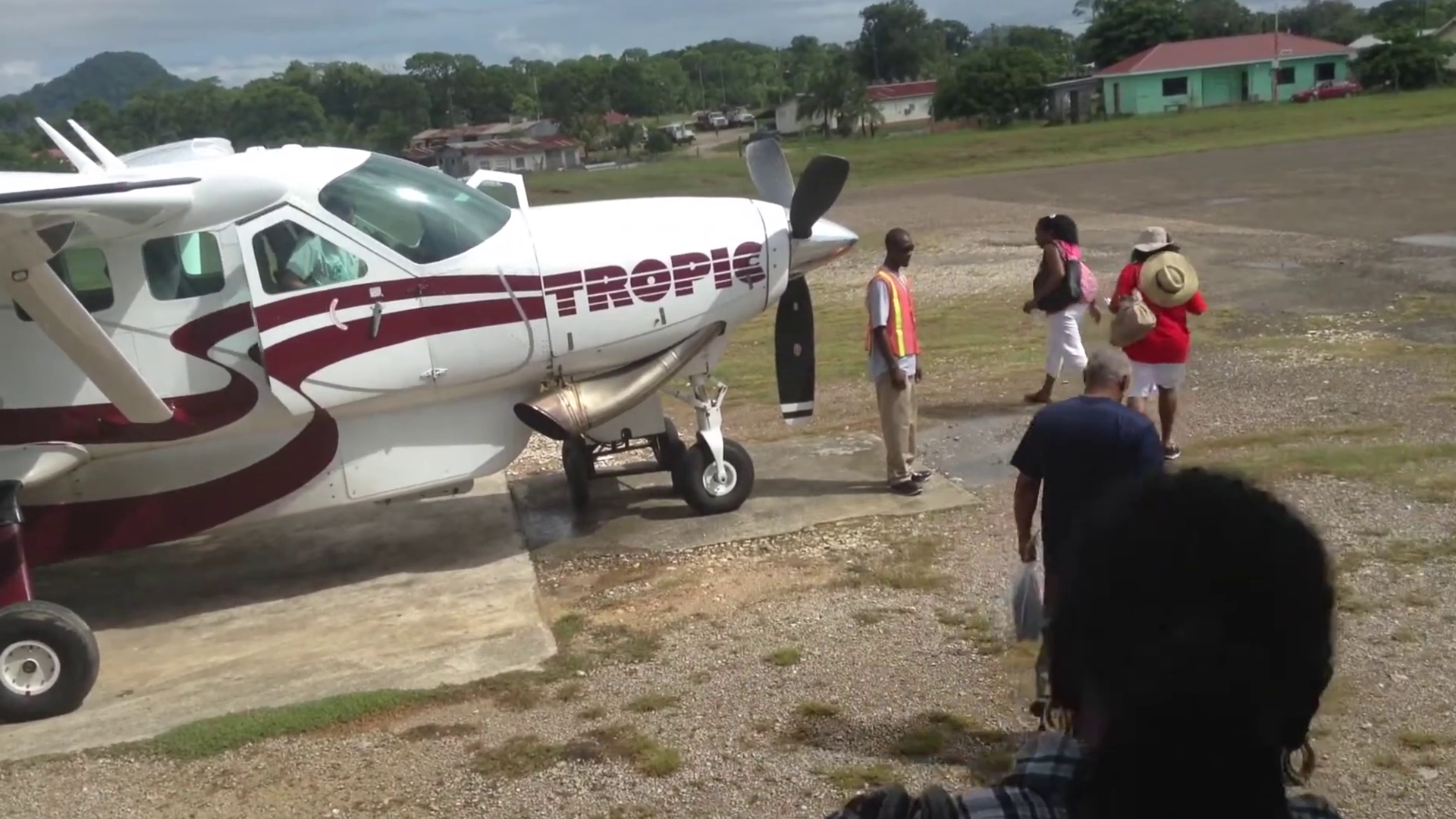
Scheduled commercial air connectivity to southern Belize’s Toledo District is at risk of disappearing entirely, after regional carrier Tropic Air announced it will end all flights to the district’s main hub of Punta Gorda starting November 1, 2026, citing long-term unsustainable financial losses. The impending cut has thrown the district’s economy, healthcare system, tourism sector and community well-being into uncertainty, prompting hundreds of stakeholders—including business owners, tourism operators, healthcare leaders, community representatives and local residents—to gather for an emergency summit in Punta Gorda to coordinate a response.
Tropic Air’s station manager Robert Pennell outlined the multiple financial and operational pressures that have pushed the carrier to exit the route, explaining that each of the company’s aircraft costs $6 million to operate and maintain. He noted that Punta Gorda’s substandard runway places excess mechanical stress on aircraft, accelerating wear and increasing maintenance costs. While local officials have long promised runway upgrades, Pennell confirmed the airline has not received any formal, binding confirmation that the work will move forward, creating unresolvable operational uncertainty. He added that current round-trip fares on the route already sit at nearly $400—close to the cost of a round-trip ticket from Belize to Miami—even as the route continues to post consistent losses amid rising global aviation operating costs.
But local stakeholders argue that cutting the route will cause cascading harm across the entire district, and are pushing for coordinated intervention from the national government, Belize Tourism Board (BTB) and other national bodies to reverse the decision or find a replacement service. Efren Perez, president of the Belize Tourism Industry Association (BTIA), acknowledged the airline’s legitimate financial challenges but stressed that air connectivity is the backbone of Toledo’s economic viability. “When a district loses an air service, the impact extends beyond visitor arrivals to the businesses, families and services that depend on reliable transport,” Perez said, calling for immediate collective action to boost destination marketing for Toledo, grow flight demand and secure the long-term connectivity needed for sustained economic development.
Local tourism business owners warned the route cut could put their companies out of business entirely. Dennis Garbutt, owner of the popular Garbutt’s Fishing Lodge in Punta Gorda, noted that most of his clients come from outside Belize City and would refuse to endure a multi-hour overland trip from the capital to the southern district. “Without it, our business will completely die,” Garbutt said, adding that other major local tourism operators like Copal are facing the same existential threat.
Healthcare leaders added that the loss of air service would directly disrupt critical medical services across southern Belize. Dr. Jorge Sajia, deputy regional health manager for Belize’s Southern Region, explained that medical samples such as laboratory testing for infectious disease outbreaks require urgent transport to national facilities in Belize City. “Recently, we had measles cases. Those samples need to be shipped before a certain time. They cannot last more than 24 hours,” Dr. Sajia said, noting that overland transport would add extra costs and create dangerous delays that put public health at risk.
Environmental representatives also raised alarms over secondary ecological harm: if tourism businesses collapse, many operators may turn to unregulated artisanal fishing to make ends meet, putting additional pressure on already strained coastal ecosystems in the Toledo District. Caroline Oliver, a representative of the Toledo Institute for Development and Environment (TIDE), argued that this shift would undermine the region’s goal of building a sustainable blue economy. “If doing that is going to be causing that, we’re not going to support this in any way,” Oliver said.
National authorities have acknowledged the crisis but have not yet finalized a solution. The Belize Airport Authority confirmed it has received Tropic Air’s notice of suspension, noting that plans for both a long-overdue upgrade to the Punta Gorda airstrip and a new passenger security fee (starting at $4 in June 2027 and rising gradually to $10) remain under active discussion. Local representative Dr. Osmond Martinez for Toledo East has pledged to advocate on behalf of the community, saying he will keep BTIA updated on every step of negotiations with national government and the airline.
Pennell, who also serves as chair of BTIA’s Toledo Chapter, argued that the region has been overlooked for decades in national tourism marketing. He called on the BTB to allocate promotional resources to emerging destinations like Toledo, rather than concentrating all investment in the country’s already popular tourist hubs. Discussions between the Belize Airport Authority and Tropic Air remain ongoing, and the authority says it remains committed to finding a workable solution for all parties. But with less than a month left before the scheduled service end, community leaders warn time is running out to save the route that Toledo says it needs for economic survival.