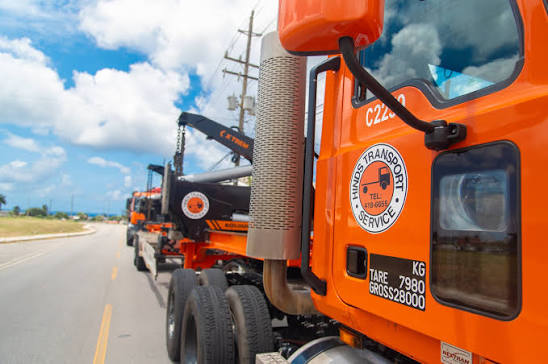
Two recent heavy goods vehicle rollovers on roads across Barbados have amplified long-simmering public anxiety about gaps in pre-departure cargo inspection, load balancing, weight declaration and securing protocols. The separate crashes – one involving a truck hauling mixed waste and another carrying industrial liquid containers – have reignited widespread discussion about what responsibilities road transport operators bear to ensure all cargo moving across public infrastructure meets legal and safety standards. In an exclusive interview with local outlet Barbados TODAY, a senior leader from one of the island’s leading transport firms laid bare the complex, experience-dependent challenges of maintaining cargo compliance, highlighting gaps in official regulation and formal training that force operators to rely on constant internal vigilance. Dave Hinds, managing director of Hinds Transport Services Ltd, explained that safety protocols vary dramatically depending on whether a truck is hauling standard intermodal shipping containers or specialized out-of-gauge freight that exceeds standard container dimensions. “Our core business is container transport, which means loading and offloading is handled by third-party shippers rather than our team,” Hinds explained. “That means our primary safety responsibility focuses on ensuring our equipment is fully roadworthy: all four twist locks that secure containers to trailers are fully functional, suspension systems are in good working order, tyres meet safety standards, and the trailer’s structural frame is not compromised in any way.” For out-of-gauge cargo that extends beyond standard trailer dimensions, Hinds noted that the Barbados Ministry of Transport and Works (MTW) enforces strict requirements that operators must follow before departing. “The rule is clear: any cargo that overhangs the trailer by more than six inches on the left, right, or rear requires official written approval from MTW, a dedicated outrider vehicle to alert other motorists, and high-visibility flagged marking to make the overhang clear to surrounding road users,” he said. Securing irregular non-container loads also requires specialized equipment matched to the cargo’s weight and material composition. Heavy solid loads are secured with industrial-grade heavy-duty chains and ratcheting locking come-alongs, rather than weaker fabric straps that can fray or snap during transit. For haulers moving metal cargo on metal trailer beds, extra steps are taken to eliminate the high risk of slippage caused by friction between two smooth metal surfaces. “When we haul metal on a metal platform trailer, we always place rubber sheeting or wooden planks between the two surfaces,” Hinds explained. “Metal sliding against metal has almost no friction, so these layers act as a buffer to lock the cargo in place and prevent dangerous movement mid-journey.” Correct centre of gravity positioning is another non-negotiable factor in preventing vehicle rollovers, but it brings unique challenges for transport operators. Heavy loads that naturally have a high centre of gravity are moved on specialized low-boy trailers that lower the overall load height and drastically reduce rollover risk. However, for sealed shipping containers, it is often impossible to assess how the cargo inside is balanced until the truck is already moving on public roads. “We have encountered multiple sealed containers that were loaded top-heavy, which pushes the centre of gravity dangerously high and makes the truck unstable,” Hinds said. “We would never know this until we start driving and notice abnormal handling. In dozens of these cases, we have aborted trips before any crash can occur, keeping both our drivers and other road users out of danger.” Breaking down the two recent rollover incidents, Hinds noted that the specific cargo types involved – mixed waste and liquid in intermediate bulk containers, or totes – carry inherent stability risks that stem from shifting weight distribution during transit. “Both capsized trucks were dealing with uniquely unstable cargo, from what we understand,” he said. “One was hauling municipal garbage, where you have no way to verify how it was loaded. It could easily be light material like grass and plant cuttings at the bottom, with heavier waste stacked on top, creating a top-heavy, high-centre-of-gravity load. The other was carrying liquid-filled totes. Liquid is one of the hardest cargoes to transport safely, because when the truck turns or corners, the fluid shifts, pulling the centre of gravity with it and destabilizing the vehicle – the level of instability changes depending on how full the containers are.” Hinds also emphasized that matching total cargo weight to the truck’s maximum rated capacity is critical, but haulers across the island regularly encounter misdeclared weights from shippers that put drivers and the public at risk. “Over the decades we’ve been in business, we have found that container shipments often exceed the weight that is listed on the container documentation,” he said. “The bill of lading will state one weight, but when we start driving, we can immediately feel that the actual weight is wrong. When we have to lift containers off with cranes, we size the crane for the declared weight, and we often find the actual weight is underestimated by 20 to 25 percent in some cases.” When asked about formal government-accredited training for drivers on load balancing, weight assessment and cargo securing, Hinds explained that there is a critical lack of formal local training programmes for the industry, meaning on-the-ground experience remains the primary safeguard against accidents. “Our drivers handle these loads every single day, so they have the hands-on experience to pick up on abnormal handling that signals an improperly secured or unbalanced load,” he said. “It is very difficult to access formal, standardized training for this type of work in Barbados. The best qualification is QBE – qualified by experience. No classroom training can match the knowledge that comes from transporting different types of cargo on our roads every single day.”