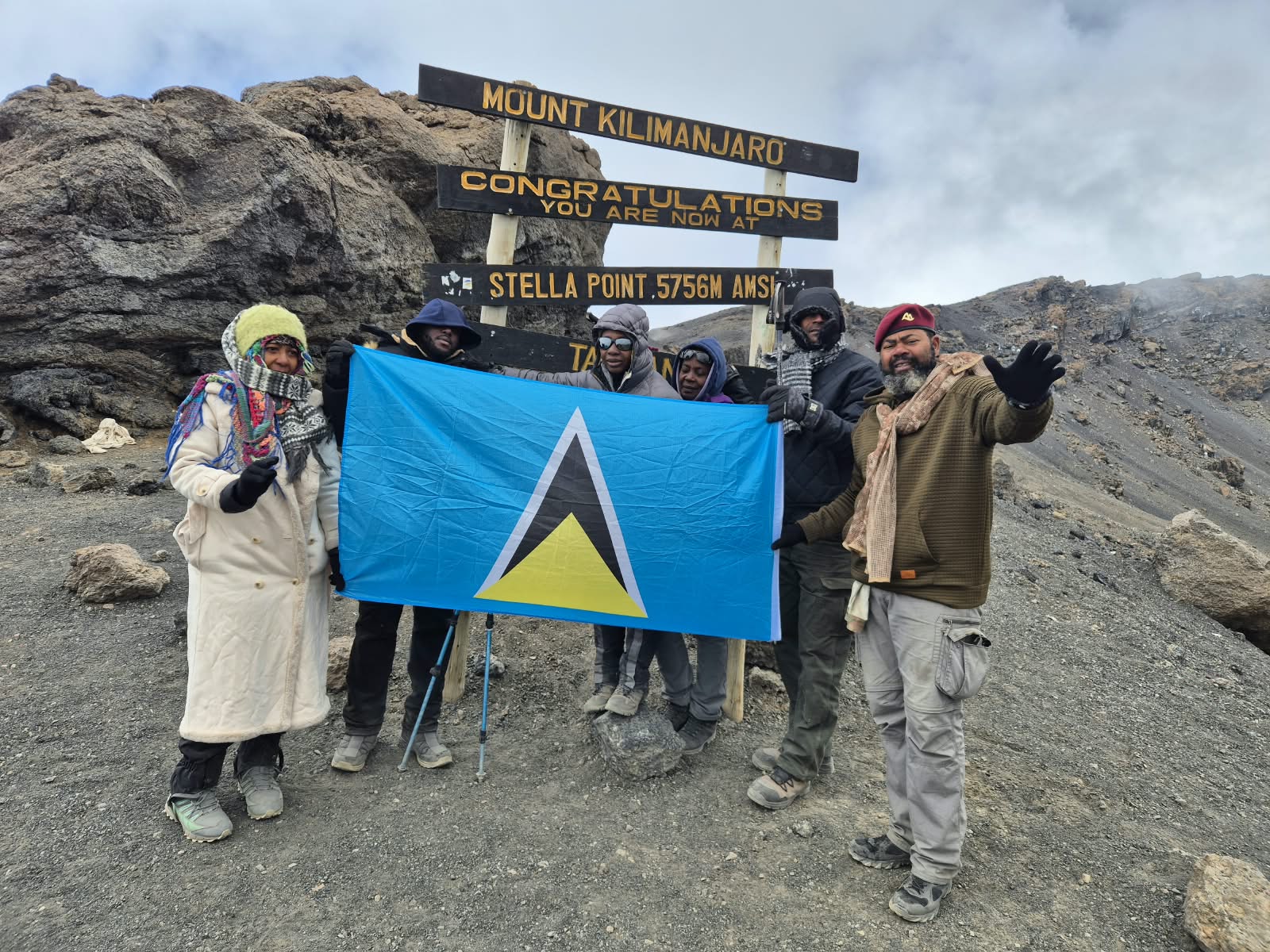
Last month, a team of seven hikers from the Caribbean island nation of Saint Lucia successfully summited Mount Kilimanjaro, Tanzania’s iconic dormant stratovolcano, capping off an eight-day grueling journey that blended physical endurance with deep humanitarian purpose. Standing 5,895 meters (19,341 feet) above sea level, Kilimanjaro holds the title of Africa’s highest peak, and the trek tested every member of the group, according to expedition leader Marcus Mufasa Joseph.
The expedition grew from a seed planted during a 2023 humanitarian water well project in Zambia, when Joseph learned a fellow Caribbean native had founded a new school in rural Tanzania. Rather than simply providing a one-time donation, the team structured a dual mission: raise funds to expand the school, while climbing Kilimanjaro to draw attention to a range of pressing issues affecting Saint Lucia – including cancer awareness, efforts to curb community violence, and support for local orphans and widows. The trek also marked a milestone: 30 years of service by Joseph’s non-profit, Kairos Konnection, a non-denominational Christian humanitarian organization that operates aid projects across the globe, from drilling clean water wells to constructing educational facilities.
For Joseph, this marked his fifth humanitarian expedition to Africa, but his first visit to Tanzania, requiring extensive pre-trip preparation to respect local cultural norms. “I held monthly meetings to walk the team through local customs: everything from appropriate dress codes and dining etiquette to expectations for gender interactions and how to respect community boundaries,” he explained to local outlet St Lucia Times in a post-climb interview.
Physical preparation was equally rigorous, with months of training completed back in Saint Lucia to build endurance and acclimatize the team to high-altitude conditions. The group completed monthly long-distance hikes to the island’s iconic waterfalls and climbed Gros Piton, Saint Lucia’s famous volcanic peak, logged hours of strength training at local gyms, and Joseph even completed an overnight solo stay on Mount Gimmie to practice mental conditioning for the challenge ahead.
Even with all that preparation, the climb pushed the team to their absolute limits. “It was eight straight days of intense pain,” Joseph recalled. “Hours of non-stop walking, freezing temperatures at high elevation, and severe breathing difficulties – there were two moments I truly thought I would not make it off the mountain alive.” High altitude sickness is one of the biggest hazards on Kilimanjaro, and several team members required emergency rescue by local guides, who quickly escorted them to lower elevations to stabilize their conditions. Through every moment of struggle, the group’s shared mission kept them moving forward. “Every single one of us climbed for a specific reason,” Joseph said. “You just fix your focus on that purpose, and thank God for every step you get to take. When teammates hit their breaking points, we pulled each other along, reminding everyone not to quit.”
The team summited and completed the trek on September 18, wrapping up the first phase of their broader African humanitarian campaign. The group has already donated $4,050 USD to the Tanzanian school expansion project. Due to a tight travel schedule, they were not able to stay to see construction begin, but they have arranged to receive regular updates on how the funds are allocated and the progress of the build moving forward.
Reflecting on the experience, Joseph shared that the journey left him with a lifelong lesson beyond the humanitarian impact. “Kilimanjaro taught me that life is meant to be taken one step at a time,” he explained. “Our guides used the Swahili phrase ‘pole pole’ every single day on the trail – it means ‘slowly slowly’. We all have our own internal mountains to conquer, don’t we? The biggest lesson I’m bringing home to Saint Lucia is that when you face life’s hardest challenges, you walk through them one step at a time, leaning on your faith.”