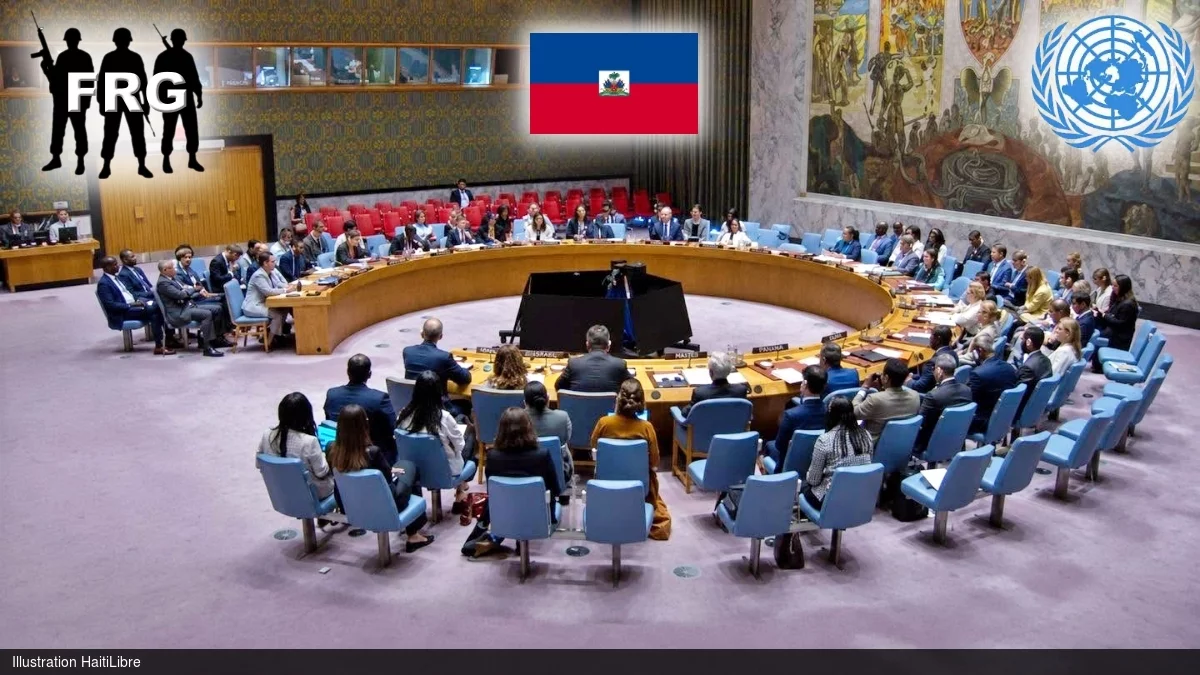
On September 29, 2026, the United Nations Security Council passed Resolution 2829 (2026) in a 12-0 vote with three abstentions from China, Pakistan, and the Russian Federation, extending the mandate of the Gang Suppression Force (GSF) operating in Haiti for an additional six months, pushing its expiration to March 31, 2027. The resolution-backed text calls for the rapid full deployment of the Multinational Security Support Mission (referred to as FRG in the original text) to retake territorial control from heavily armed gangs that have paralyzed much of the country, reestablish the Haitian government’s sovereign authority across the nation, and lay the foundational conditions for long-delayed general elections.
Under the terms of the new resolution, the UN Secretary-General is required to submit progress reports to the Council every six months aligned with the objectives laid out in the 2025 Resolution 2793 that first authorized the mission. The Security Council also formally acknowledged the July 27 agreement between the Haitian government and the FRG that codifies the mission’s legal standing, urging all UN member states to recognize this status and extend required privileges and immunities to the force and its deployed personnel.
Following the vote, council members and regional representatives delivered divergent reactions to the mandate extension, reflecting differing perspectives on how to address Haiti’s years-long spiral into crisis. Haiti’s Permanent Representative to the UN, Ambassador Pierre Ericq Pierre, welcomed the vote as a critical step forward, but stressed that the mission can only deliver results if it receives the full complement of personnel, military equipment, and operational resources needed to function at full capacity. He outlined the incremental goals of the mission: supporting Haitian security forces to retake gang-held territory, secure critical civilian infrastructure, and create space for elections, adding that securing territory is only the first step. “It is not enough to take territory from the gangs,” Pierre noted. Recaptured areas must be stabilized, core public services restored, and sustained security measures put in place to prevent gangs from reestablishing control, he said, adding that the FRG must coordinate closely with the Haitian National Police and national armed forces while prioritizing long-term capacity building for Haiti’s domestic security institutions and upholding the country’s sovereign authority.
The U.S. representative to the council reflected on decades of inconsistent international engagement in Haiti, noting that the country has “limped from crisis to crisis,” with short-term missions that came and went, and hundreds of millions in international spending that failed to deliver lasting stability. “We must ask ourselves: for what?” he asked, acknowledging that gangs have grown increasingly powerful while Haitian state institutions have eroded over time. He argued that the current FRG mission is different, noting that it “exists and, better yet, it is beginning to work,” and paid tribute to early deploying countries including Chad, El Salvador, Guatemala, Jamaica, Mongolia, and Sri Lanka whose personnel are already on the ground. Their work, he said, will lay the groundwork for Haitians to “win back their streets, their lives and their futures for their families.”
China, one of the three abstaining countries, justified its vote by arguing that the Haitian crisis cannot be reduced to a simple security challenge. “The Security Council should never have asked itself whether to support Haiti, but how to support it,” the Chinese delegate explained, expressing skepticism that an external military force alone can resolve the crisis, which he described as a deeply rooted problem of governance. He pointed to systemic issues including documented collusion between elements of the Haitian police and criminal gangs, and the widespread economic desperation that pushes thousands of Haitians, including children, to join armed groups as the only means of survival.
The Russian Federation, which also abstained, recalled that Moscow did not block the creation of the mission a year prior, despite raising persistent questions about the mission’s operating model and long-term financing structure. Russian representative noted that the initiative has faced significant setbacks to date, with delays in deployment already pushing back preparations for Haiti’s planned general elections. “It is in the hands of the international community to stop the external supplies of Haitian criminals with weapons and money,” he insisted, highlighting that transnational arms and funding flows are core drivers of gang power that have not been sufficiently addressed.
Pakistan, the third abstaining country, echoed the argument that Haiti’s deep-seated challenges require a comprehensive, nationally led solution rather than a purely security-focused response. While abstaining on the vote, the Pakistani representative expressed hope that the FRG would achieve full deployment in the coming months and secure sustainable long-term funding to sustain its operations.
Other council members voiced broad support for the extension, while adding nuanced warnings and calls for accountability. Colombia’s delegate warned that gangs are increasingly accessing new transnational funding streams, most notably linked to regional drug trafficking networks, that sustain their operations. He noted that the mandate extension ensures continuity of progress toward full deployment, and will give the council time to gather full data on the mission’s deployment progress and operational effectiveness to make any necessary adjustments when the mandate comes up for review again in March.
Greece’s representative stressed that the international community must provide the mission with sufficient time, political backing, and material resources to complete deployment and reach full operational capacity. The United Kingdom’s representative emphasized that a successful FRG deployment is non-negotiable to reversing Haiti’s instability and “turning the tide against the gangs.” London condemned widespread human rights abuses carried out by gangs, including the use of civilian human shields and systemic sexual violence, and expressed hope that an effective security force will deliver the “stability that the Haitian people deserve and pave the way to credible elections allowing Haitians to choose their next leaders.”
Panama’s representative highlighted that the vote reflects broad international solidarity with the Haitian people, noting that “behind each decision adopted in this Council are the lives of millions of people.” He added that lasting peace and stability in Haiti will require complementary action that addresses every dimension of the crisis, not just security.
Regional bodies also weighed in on the decision. Speaking on behalf of the Caribbean Community (CARICOM), Jamaica’s representative welcomed the mandate extension, noting that while there has been discernible progress on the ground since the FRG’s initial deployment, rollout has been slower than initially projected. He urged the mission to reach full operational capacity as quickly as possible, and called for sustained international support to the FRG, the Haitian National Police, and the Haitian Armed Forces, particularly in the form of sustained financial, logistical, and operational resources. He specifically called on countries with capacity to provide critical enabling support including troop airlift, air and maritime surveillance equipment, and technical assistance. Security, he stressed, must be the foundation for credible elections and the “full restoration of democratic governance in Haiti, led and owned by the Haitian people,” declaring: “Armed gangs will not be allowed to determine Haiti’s future nor, indeed, that of the Caribbean region.”
The Dominican Republic, Haiti’s neighboring country, emphasized that the six-month extension is not an end goal in itself, but a window of opportunity for the mission to complete its deployment. A fully operational force, he said, will create the conditions for elections and allow the Haitian people to “control their destiny,” noting that the success of the council’s decision hinges on sufficient resourcing. “Security opens the way, but security alone is not enough to keep that path open,” he added.