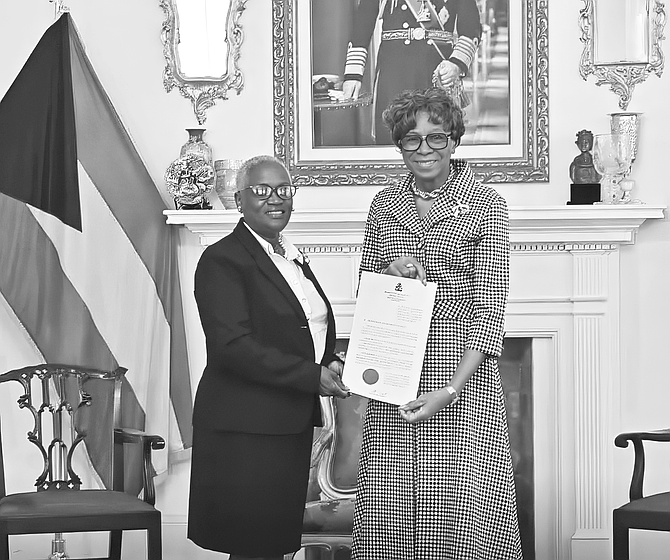
Fourteen years after Bahamas’ parliament passed landmark Freedom of Information legislation, the transparency framework remains blocked from full operation, the newly sworn-in Information Commissioner Donna Newton confirmed in an address this week. The core roadblock, Newton emphasized, is the absence of finalized supporting regulations that are required for the system to launch — leaving a cohort of pre-trained information managers unable to step into their long-prepared roles, with no clear timeline for implementation.
Newton, who took the oath of office yesterday, outlined that securing the finalized regulations will be her immediate top priority, as she could not offer a definitive timeline for when the public will gain access to the full rights enshrined in the 14-year-old law. Years ago, former Information Commissioner Keith Thompson oversaw the training of dozens of information managers assigned to government agencies, but the group has yet to begin their official duties processing public information requests. Earlier this month, the government finally posted draft regulations to its official website, opening a window for public feedback — a major procedural step after more than a decade of delays.
Attorney General Wayne Munroe has previously outlined the next steps: once the public consultation period concludes, the draft will undergo review, and legislative drafters will incorporate any approved adjustments before finalization. Newton acknowledged that she cannot predict how long this final stage of the regulatory process will take, noting she has only just assumed the role and is still evaluating the full resource needs of her office.
Longstanding underfunding has emerged as a persistent structural barrier to launching the system. The Freedom of Information Office currently receives an annual budget allocation of just $140,000, a figure far lower than the $1 million annual operating estimate cited by previous leadership. In 2024, Thompson, whose tenure ended following years of incremental progress, stated that the current funding level would allow the office to accomplish “absolutely nothing.” At the time, critical digital infrastructure to support information request processing and public access had still not been secured, and independent governance advocacy group the Organisation for Responsible Governance warned the budget was too small to cover required technology, agency staff training, and public outreach campaigns.
Finance Minister Michael Halkitis defended the $140,000 allocation during parliamentary remarks in June, arguing the sum covers all core operational expenses for the office and does not include separate salary allocations for staff.
The slow, phased rollout plan developed during Thompson’s tenure targeted a limited launch with 10 selected government agencies, and training for assigned information managers from across ministries and agencies got underway in 2023. Officials initially projected that initial rollout and testing would launch by November 2023, but the timeline collapsed after the office failed to secure funding for required technology from the Attorney General’s office, Thompson confirmed earlier this year.
Alongside finalizing regulations, Newton named public education as a second core priority for her tenure. She emphasized the critical need for the Information Commissioner’s Office to maintain full independence from the government, a requirement she said is foundational to building public trust in the transparency system. The office will not only oversee the processing of information requests but also hear appeals from residents when public authorities deny access to requested records.
“It’s very important that the information commissioner acts independently of the government,” Newton said. “That would be the only way that the information is trusted. The public trusts, puts its confidence in the commissioner and the unit if it is seen to be independent of the government.”
The Freedom of Information Act grants Bahamian residents the legal right to access records held by all public authorities, with narrow exemptions for sensitive information including national security data and protected personal information. As she settles into the new role, Newton confirmed her focus will remain on clearing the remaining regulatory hurdles and preparing the public for the system’s eventual launch.