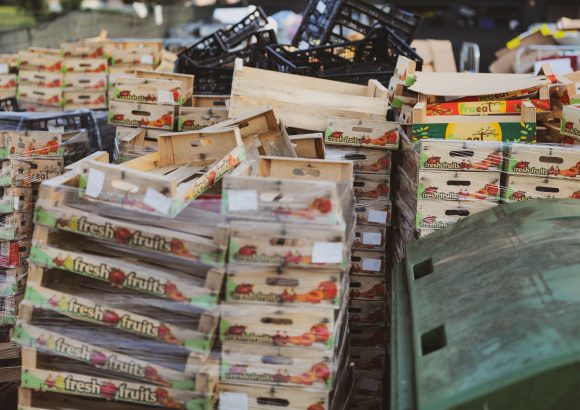
SANTO DOMINGO – As thousands of Dominican citizens struggle to secure consistent access to nutritious, adequate food, a staggering 1.1 million kilograms of edible food is wasted or lost across the country every single week, new data from the Dominican Republic Food Bank reveals.
The food bank made the figure public on September 29, marking the UN-designated International Day of Awareness of Food Loss and Waste, and used the occasion to urge accelerated food rescue initiatives and deeper cross-sector collaboration between private businesses, civil society organizations, and national government bodies.
This international observance was established by the United Nations to shine a light on a pervasive issue that undermines global food security, strains environmental ecosystems, and hinders inclusive economic development. Food loss and waste do not occur at just one point in the food system – they permeate every step of the supply chain, starting from on-farm production and long-distance transportation, through storage and distribution, all the way to retail operations, food service establishments like restaurants, and end-consumer households. Common root causes include inadequate production planning, agricultural overproduction, inefficient logistical infrastructure, and outdated commercial practices that all lead to perfectly safe, consumable food being discarded unnecessarily.
Against this backdrop, the Dominican Republic Food Bank carries out critical work to recover surplus food that would otherwise be bound for landfills, and redistribute it through a network of local institutions that support low-income and vulnerable communities across the country.
Julina Staffeld, Executive Director of the organization, explained that cutting down on systemic food waste is not merely a matter of social responsibility – it is also a key pathway to building a far more efficient, sustainable national food system. She emphasized that recovering surplus food delivers multiple overlapping benefits: it cuts down on unnecessary waste and the associated environmental harm, it helps private sector companies meet their own public sustainability commitments, and most importantly, it gets much-needed food to community members who are currently food insecure.
To support expanded food rescue efforts, the Dominican Republic Food Bank partnered with the Global FoodBanking Network and Harvard Law School to develop national food donation policy recommendations, which found that the country has substantial room for improvement in its regulatory and operational frameworks that facilitate food recovery and donation.
The organization is calling for stronger public policy frameworks, updated regulatory standards, and targeted financial incentives that will remove barriers to food donation and grow the total volume of surplus food recovered each year. It also is pushing for greater participation in food rescue efforts from all stakeholders, including agricultural producers, supermarket chains, hotels, restaurants, small and large businesses, individual consumers, and government agencies at all levels.
The Food Bank underscored that every kilogram of surplus food recovered means less waste sent to overflowing landfills, a reduced carbon footprint and environmental strain, and more life-changing opportunities to put food on the tables of thousands of food-insecure Dominicans. At its core, the fight against food waste is about ensuring edible surplus reaches people who need it most, rather than being buried under mountains of garbage.