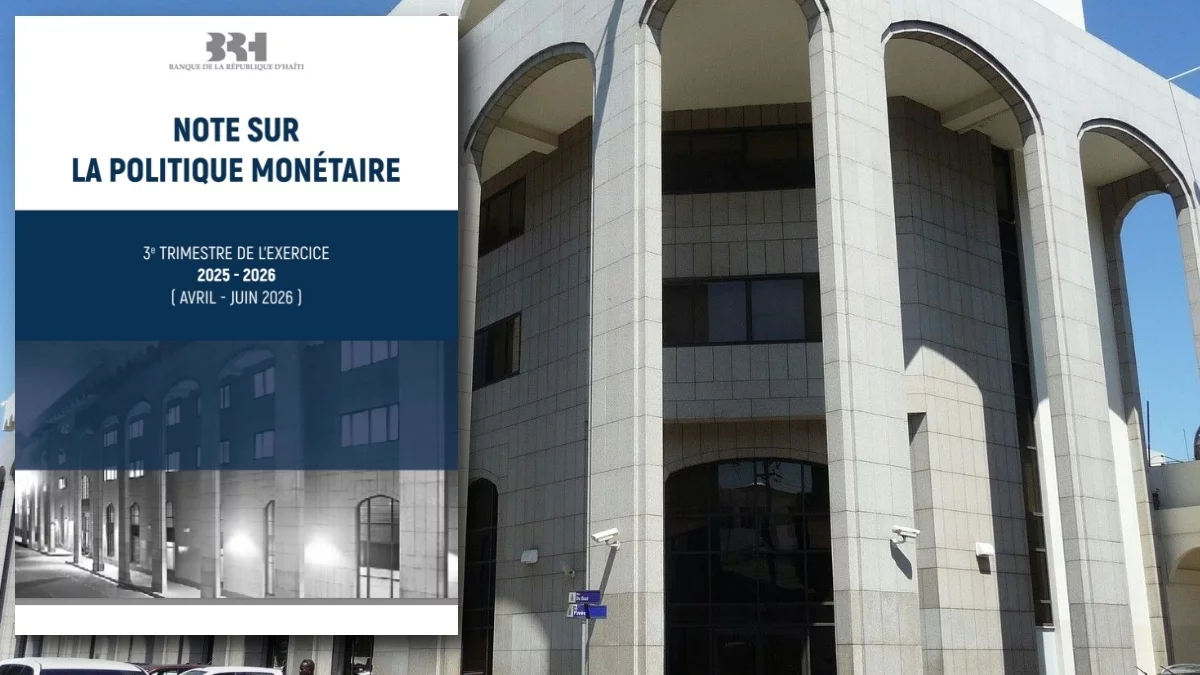
Nearly a decade of unbroken economic decline is set to continue in Haiti, with new projections from the country’s central bank, the Bank of the Republic of Haiti (BRH), confirming the Caribbean nation is on track to record its eighth straight year of gross domestic product contraction for 2026.
The BRH’s latest quarterly monetary policy assessment, covering the third quarter of the 2025-2026 fiscal year (April through June 2026), details that while the pace of economic contraction has slowed compared to previous periods, the overall trajectory remains deeply negative. During the reporting quarter, economic activity shrank by just 0.6% year-on-year, a marked improvement from the 2.7% contraction recorded in the same quarter the prior fiscal year.
Domestic and global headwinds have shaped Haiti’s recent economic performance. Globally, ongoing geopolitical frictions, widespread trade tensions, and erratic fluctuations in global energy prices have created a challenging operating environment for import-dependent economies like Haiti. Domestically, the BRH reports that inflation pulled back from a temporary peak of 21% in April 2026 to 18.9% by June, with the domestic foreign exchange market holding relatively steady through the quarter.
In response to lingering inflationary pressure and ongoing economic instability, the BRH has maintained a cautious, prudent monetary policy framework focused on three core goals: tamping down persistent inflation, preserving stability in the foreign exchange market, and bolstering the resilience of Haiti’s domestic financial system. As of the third quarter, the central bank’s policy actions have helped grow gross international reserves to a level that covers more than seven months of national imports, a key buffer against external shocks.
Despite these modest policy wins, the macroeconomic outlook for the remainder of the 2025-2026 fiscal year and the start of the next fiscal cycle remains extremely uncertain. Multiple interconnected risks threaten to further derail any potential recovery, with chronic widespread insecurity ranking as the most damaging barrier to sustained growth. Persistent violence and instability have crippled domestic supply chains, restricted the movement of people and goods across the country, and created a deeply uninviting climate for domestic and foreign investment. The BRH notes that meaningful, sustained expansion of Haiti’s security apparatus is a non-negotiable prerequisite to improving the business climate and restoring confidence among workers, business owners, and investors. Without significant, tangible progress on security, any positive shift in growth outcomes remains out of reach.
Current growth projections for the 2026 calendar year reflect this pessimism, with forecasts putting annual GDP contraction between 1.5% and 1.9% — extending Haiti’s losing streak to eight full years of economic shrinkage.
External risks add further pressure to Haiti’s fragile economy. Continued geopolitical instability in the Middle East threatens to disrupt global supply chains for critical energy and production inputs. A further escalation of regional conflicts could trigger a new wave of rising global commodity prices, which would pass directly through to higher domestic prices in Haiti, worsening existing inflationary pressure. Additionally, tighter migration policies in major destination countries for Haitian migrants threaten to cut into inflows of private remittances, which serve as the single largest source of foreign exchange for the Haitian economy. A sustained drop in remittance flows would put new, intense pressure on the foreign exchange market and erode the central bank’s hard-won reserve buffer, according to the BRH’s analysis.
Other risks to near-term stability include unfavorable weather patterns that can devastate Haiti’s agricultural sector and persistent pressure on already strained public finances, both of which could further disrupt economic activity, commodity supply, exchange rate stability, and price levels in the coming months.