Against a backdrop of growing urgency around global climate action, St. Vincent and the Grenadines (SVG) has formally joined the Climate Vulnerable Forum (CVF), bringing a sharpened call for systemic reform to international climate finance and greater recognition of the existential threats facing small island developing states.
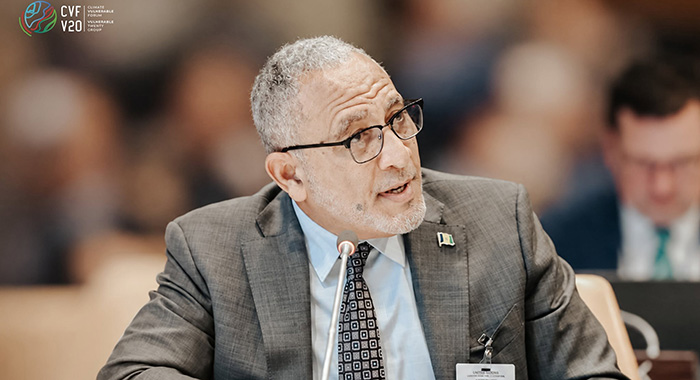
Speaking at the CVF’s high-level meeting in New York, SVG Prime Minister Godwin Friday framed the nation’s accession to the coalition not as an appeal for handouts, but as a demand for climate justice from a country on the front lines of accelerating climate impacts. His remarks followed addresses by leaders from Sierra Leone and Rwanda, who both emphasized that climate change is undoing decades of development progress and forcing vulnerable nations to take on crippling borrowing costs to recover from disasters.
Friday opened his address by thanking CVF Chair Prime Minister Mia Amor Mottley of Barbados and Abdulhamid Alkhalifa for their steady leadership in advancing the forum’s mission. He clarified that SVG is not just seeking to leverage the CVF’s platform for its own benefit, but aims to contribute firsthand, on-the-ground experience to the global collective struggle for human survival and economic equity in the face of climate change.
That experience, Friday reminded the assembled leaders, is marked by repeated climate-driven disasters that have strained the small island nation’s finances and recovery capacity. As of September 2024, SVG is still recovering from the devastation of Hurricane Beryl, which made landfall on July 1 and left a full section of the country with total destruction. That disaster comes on top of ongoing recovery from the April 2021 explosive eruption of the La Soufriere volcano, which hit at a time when SVG was already facing significant debt distress.
Friday argued that these overlapping, back-to-back disasters perfectly illustrate the core dilemma facing all climate-vulnerable nations: when disasters strike that they did almost nothing to cause, they are forced to take on expensive commercial loans to rebuild their economies and infrastructure. Using his country’s accession to the CVF as a platform, he amplified the forum’s central criticism: the existing global financial framework is structurally rigged against economies most exposed to climate harm.
In particular, he called out outdated middle-income country classification metrics that block small island states from accessing low-interest concessional financing, even when they face catastrophic climate disaster risk. Left without access to affordable funding, vulnerable governments are forced to borrow at exorbitant, often punitive interest rates just to repair damage caused by the carbon emissions of wealthy major economies.
SVG fully aligns with the CVF’s call for fundamental reform of how climate-vulnerable states access funding, Friday said. He argued that critical long-term investments in water security, education infrastructure, climate-resilient healthcare systems and other foundational sustainable development priorities cannot be funded through short-term, high-cost debt that traps nations in repayment cycles. Instead, he backed a shift to 40-year long-term financing instruments with interest rates set below a country’s economic growth rate, allowing nations to build climate resilience without falling into unsustainable debt.
SVG’s decision to join the CVF comes as the coalition advances a package of concrete policy initiatives to turn its critique of the existing system into actionable reform. At the New York meeting, leaders worked to finalize agreement on the CVF Leaders’ Declaration and push for United Nations observer status, a move that would give the coalition greater influence in multilateral climate and finance negotiations.
Within this framework, Friday announced that SVG fully endorses two of the CVF’s flagship initiatives: the Vulnerability to Viability (V2V) Compact and the Lifeline Fund. The V2V Compact, already backed by Sierra Leone President Julius Maada Bio, prioritizes national ownership of climate investment plans by putting vulnerable countries in the lead, and calls on international financial institutions to align their support with nationally defined investment platforms. The Lifeline Fund, which SVG has fully endorsed, is designed to deliver fast, predictable climate finance without the onerous bureaucratic conditions that often delay or block access to critical climate resources.
For Friday, these policy tools are not abstract proposals — they are lifelines for countries like SVG that are repeatedly forced to rebuild after climate disasters. He described the CVF-led push for reform as a “development reset” that replaces the current cycle of fiscal depletion with durable, long-term prosperity. SVG’s membership in the forum, he added, is part of a broader movement to ensure that climate-vulnerable nations are not trapped in an endless cycle of reconstruction and debt repayment, but instead can build the resilience they need for long-term economic and social stability.
Throughout his address, Friday reinforced the CVF’s core message that the 1.5°C global warming threshold is an absolute red line for small island developing states. “We must reject complacency about temperature overshoots,” he warned, emphasizing that 1.5°C is a non-negotiable boundary for island nations whose very existence and habitability depend on keeping warming below this limit. By joining the CVF, SVG has aligned itself with a bloc that is holding major emitters and global financial institutions accountable for closing the gap between climate ambition and actual delivery.
Friday also highlighted a regional dimension to SVG’s membership, pledging to take up Mottley’s challenge to encourage fellow CARICOM member states to join the CVF. This signals that SVG intends not just to participate in the forum’s work, but to help expand its influence across the Caribbean. In total, SVG’s accession to the CVF aligns the small island nation with a growing global coalition working to rewrite the rules of global climate finance — moving away from short-term, high-cost borrowing and toward long-term, equitable financing terms that match the scale of the climate crisis facing vulnerable nations.