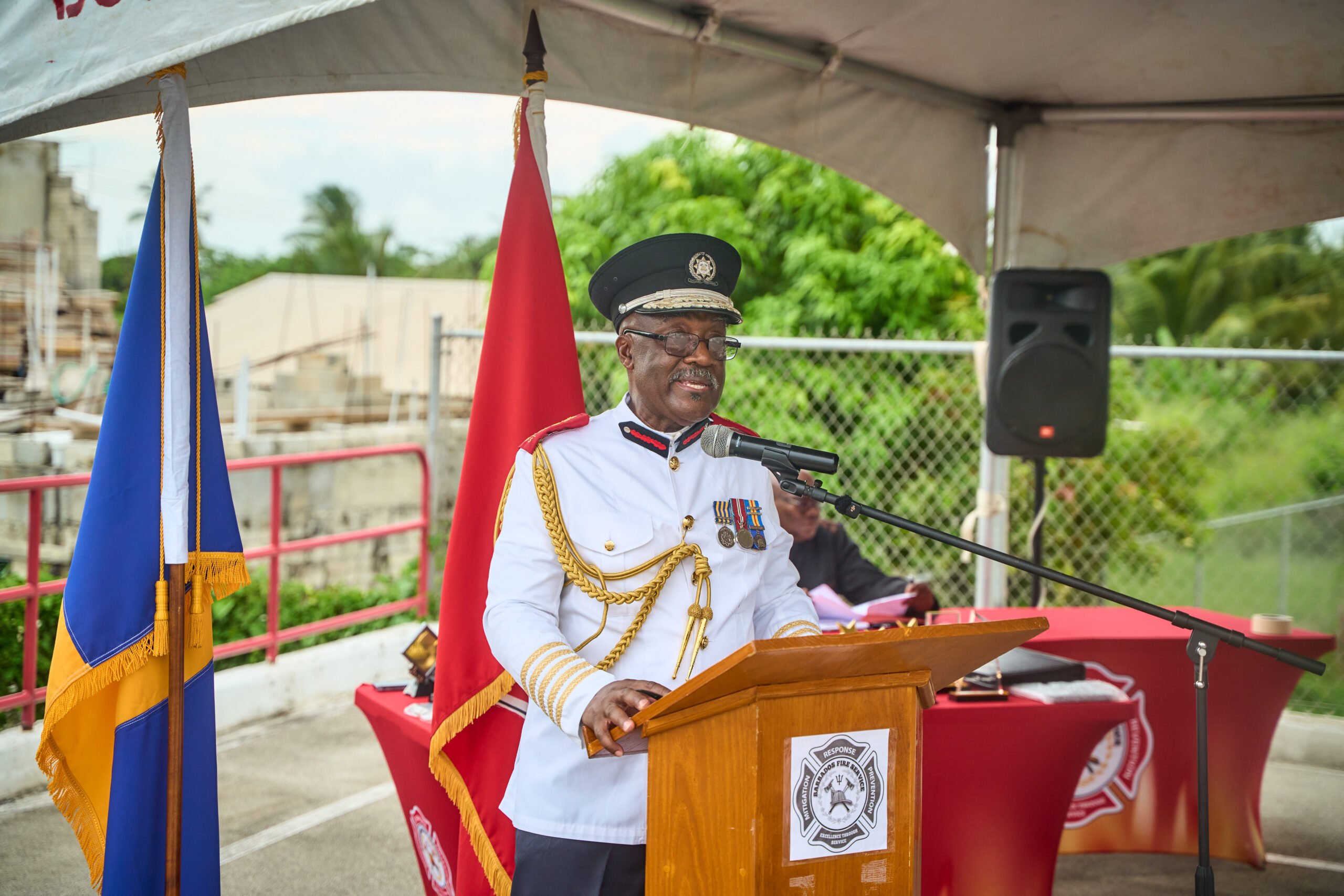
Less than three weeks from now, the Barbados Fire Academy — the dedicated training division of the Barbados Fire Service — will open its doors to assessors for a long-awaited international accreditation review, a step that top fire officials say could unlock global recognition for the qualifications earned by the nation’s firefighters. The announcement of the upcoming evaluation came during the fire service’s 42nd passing out parade, held at the academy’s Arch Hall campus in St. Thomas, where officials also celebrated the graduation of 20 new recruits. In remarks to the gathered graduating class, dignitaries, and academy staff, Chief Fire Officer Errol Maynard framed the impending accreditation as a transformative milestone not just for Barbados’ fire service, but for professional firefighting training across the entire Caribbean region.
International accreditation will deliver independent, third-party confirmation that all training programmes run by the Barbados Fire Academy align with the rigorous standards and evidence-based best practices accepted by firefighting bodies worldwide. Maynard emphasized that the most meaningful outcome of this process will extend far beyond institutional validation. “More importantly, it will ensure that the qualifications earned by all firefighters are recognised beyond our borders, enhancing professional mobility, strengthening regional cooperation, and reaffirming our commitment to developing firefighters who can operate confidently and competently alongside counterparts from anywhere in the world,” he said.
The fire chief noted that the demand for highly skilled, adaptable emergency responders has grown steadily in recent years, as the threats facing local and regional communities continue to shift and expand. “Population growth, technological advances, climate-related events, modern transportation systems, and emerging hazards all create new challenges for emergency responders,” Maynard explained. “To meet these challenges, we must continually invest in our most valuable asset — our people.” He reaffirmed the Barbados government and fire service’s long-term commitment to upholding the highest professional training standards across all academy programmes, with the pursuit of international accreditation serving as a core component of that pledge.
Despite the progress being made, Maynard did not shy away from acknowledging the ongoing hurdles the service faces as it works to upgrade its training infrastructure. Key challenges include a shortage of purpose-built training props, limited access to consistent advanced training opportunities, and insufficient space to conduct full-scale live-fire drills. The service is currently developing specialized training props for aircraft firefighting response, and has launched an effort to secure a standalone, dedicated training facility in the northern district of Barbados. Once completed, the new facility will expand the academy’s overall training capacity, enable recruits to take part in more realistic, complex emergency response drills, and better prepare firefighters for the wide range of evolving hazards they will encounter over their careers, Maynard added.
The passing out parade that served as the setting for the announcement honored the 42nd graduating batch, Course 1 of the 2026 training cycle. All 20 recruits completed the required Firefighter Level 1 and Firefighter Level 2 training programmes, in addition to a certified Emergency Medical Technician (EMT) course administered in partnership with the Barbados Community College. Over the course of their training, the recruits built core competencies across a full spectrum of emergency response skills, including structural fire suppression, urban and wilderness rescue operations, fire behaviour analysis, incident site safety management, advanced firefighting tactics, heavy equipment operation, and standardized emergency response protocols.
Maynard pointed out that the role of modern firefighters has expanded far beyond the traditional task of extinguishing fires. Today, medical emergencies account for a large share of all calls received by fire and emergency services across the island, making integrated EMT training a non-negotiable requirement for new recruits. “I am pleased to report to you that all 20 graduates successfully met the minimum requirement for both the Firefighter 1, the Firefighter 2, and the EMT course,” he said.
Addressing the new graduates directly, Maynard urged them to carry the discipline, resilience, and technical skills they developed during training into every operational assignment they take on throughout their careers. “Be proud of your achievement. You have earned your place on this parade square today. You have met demanding standards, overcome challenges, demonstrated resilience, and proven your commitment to the value of this service. As you move forward into your operational career, let discipline guide you,” he told the cohort.