BASSETERRE, Saint Kitts – On September 22, 2026, the Government of Saint Kitts and Nevis took a landmark step to democratize access to formal investment markets with the official launch of its first-ever Retail Bond tailored exclusively for households and non-governmental organizations (NGOs). The new initiative creates a low-barrier opportunity for citizens, local residents, and eligible groups to contribute directly to the nation’s economic growth while generating steady, guaranteed returns on their savings.
Issued through the Regional Government Securities Market (RGSM), the two-year fixed-income instrument carries an annual interest rate of 4.5 percent, with interest disbursements scheduled every six months. The full principal investment will be returned to bondholders when the instrument matures on October 26, 2028.
To break down traditional barriers to market entry, policymakers designed the bond with an intentionally low minimum investment threshold of just 500 Eastern Caribbean dollars (EC$). Following the initial investment, participants can add additional funds in increments of EC$100, with a cap of EC$125,000 per individual or organizational investor. This flexible structure was crafted to accommodate a wide range of financial capacities, from ordinary working families to small community groups.
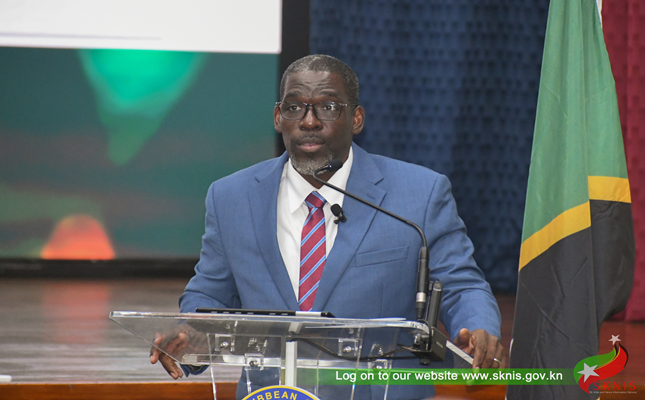
The launch event was hosted at the Eastern Caribbean Central Bank (ECCB) headquarters, where Financial Secretary for the Ministry of Finance Carlton Pogson framed the initiative as far more than the introduction of a new financial product. In his remarks, he emphasized that the bond’s core mission is to build a broader culture of long-term saving, strategic investing, and proactive financial planning across all segments of Saint Kitts and Nevis society.
Pogson noted that the low minimum investment was specifically chosen to open participation to groups that have historically been locked out of formal investment markets: individual households, faith institutions, community associations, local cooperatives, and charitable organizations that aim to grow their reserves to support their community work. “This bond was designed with you in mind,” Pogson told the intended audience. “It is an invitation to participate in the financial future of our nation and our region in a way that is secure, structured and accessible.”
For individual investors, the bond offers predictable, low-risk terms that align with medium-term financial planning goals: a defined two-year holding period, a guaranteed fixed return, and regular interest payments, with full principal repayment at maturity. Beyond individual financial benefits, the government also aims to shift widespread misconceptions about investing, Pogson explained. For too long, many people have viewed participation in securities markets as a privilege reserved only for wealthy individuals or large institutional investors. The new bond is intended to challenge that narrative, framing investing as a routine, responsible component of everyday household financial management.
For local NGOs and community groups, the bond offers a secure avenue to grow their financial reserves, allowing organizations to strengthen their capacity to advance their public service and community missions. For households, it adds a low-risk, diversified option to their savings management strategies, expanding the range of tools available to build long-term financial stability.