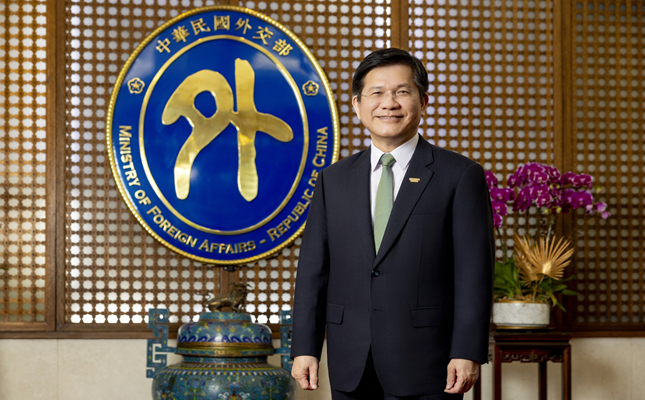
In an opinion piece published September 22, 2026, Dr. Lin Chia-lung, Minister of Foreign Affairs for the Republic of China (Taiwan), makes the case for Taiwan’s rightful place in international institutions, framing the island’s inclusion as a critical pillar for defending the freedom-centered global order against rising authoritarian pressure.
Lin argues that the post-World War II rules-based international system is facing unprecedented stress, as authoritarian powers actively work to weaken long-standing safeguards and rewrite global norms to advance their own geopolitical goals. Even the core principles of the United Nations Charter — the peaceful resolution of disputes and the ban on the threat or use of force against sovereign states — are now being openly challenged and deliberately ignored. The global community stands at a defining crossroads, Lin notes: nations must either unite to uphold justice, defend international law, and preserve collective peace and security, or watch the existing order collapse, taking with it the global commitment to freedom, self-determination, and democratic governance.
This stark choice is most visible in the Indo-Pacific’s first island chain, where Lin says China has ratcheted up regional security pressure through persistent gray-zone aggression. These tactics, which include routine military intimidation, cross-border cyber intrusions, and economic coercion, are designed to unilaterally redraw existing regional rules and power dynamics at the expense of neighbors. Positioned as a frontline defender of freedom and democracy in the region, Taiwan remains committed to upholding the cross-strait status quo, Lin emphasizes. But preserving regional peace and stability is not solely a Taiwanese priority — it is a shared responsibility of the entire international community.
The Taiwan Strait stands as one of the world’s busiest commercial shipping corridors and a critical artery for global supply chains. Its outsized importance to global security and economic prosperity has been repeatedly highlighted in joint statements from the G7, as well as bilateral and multilateral meetings between the United States, Japan, the United Kingdom, Australia, New Zealand, and other like-minded nations. A growing international consensus now recognizes that cross-strait peace and stability is a global public good.
A key point of distortion undermining the integrity of the international rules-based order, Lin argues, is China’s deliberate misinterpretation of United Nations General Assembly Resolution 2758. Adopted in 1971 to resolve the question of China’s representation at the UN, the original resolution text never mentions Taiwan, does not rule on the island’s political status, and does not bar Taiwan from participating in the UN system. Despite this, China has systematically conflated the resolution with its own so-called “one China principle” to block Taiwan’s participation in the UN and dozens of other international intergovernmental bodies. If this misrepresentation goes unchallenged, Lin warns, it will set a dangerous legal precedent that could be used as a pretext for future military aggression against Taiwan.
Even despite its ongoing exclusion from formal UN participation, Lin stresses that Taiwan remains committed to contributing meaningfully to global collective action. The island boasts world-leading strengths in advanced manufacturing, disaster risk reduction, and public health — all areas where its expertise can deliver tangible benefits to the international community.
Taiwan’s foreign policy is built around advancing democratic partnerships, collective security, and global economic resilience, Lin explains. By collaborating with like-minded partners around the world, Taiwan works to expand democratic governance, protect human rights, and advance freedom globally. As a global leader in semiconductor manufacturing, artificial intelligence, and cutting-edge technology, Taiwan is also committed to building secure, resilient supply chains that do not rely on authoritarian regimes for critical inputs.
Through its Diplomatic Allies Prosperity Project, Taiwan works to advance mutual shared development with its diplomatic partners, sharing technical expertise and resources to address local development gaps and build local institutional capacity. Concrete examples of these efforts include the development of an integrated national digital healthcare information system for Paraguay, construction of a strategic petroleum reserve facility in Eswatini, and a partnership to implement smart healthcare infrastructure at Palau National Hospital. These initiatives have improved local data management efficiency, strengthened national energy security, supported sustainable industrial growth, and advanced the United Nations Sustainable Development Goals in partner nations.
As the 81st UN General Assembly gets underway, incoming General Assembly President Khalilur Rahman has named restoring international trust and reforming global institutions as the central themes of his presidency. Lin notes that Taiwan fully shares these goals and stands ready to contribute to achieving them.
Restoring public trust in the United Nations, Lin argues, must start with upholding fair and equal treatment for all members of the international community. Institutional reform cannot be considered complete while a constructive, reliable contributor like Taiwan remains unjustly locked out of the UN system.
Lin called on the global community to uphold core UN principles: inclusivity, leaving no community behind, peaceful dispute resolution, and rejection of the threat or use of force. These foundational principles underpin the entire rules-based international order, Lin says, and must be applied consistently to all nations, without exception.
“The free world needs Taiwan — and a stronger, more credible United Nations needs Taiwan’s meaningful participation,” Lin concludes. Working in partnership with Taiwan will strengthen global collective security, boost economic and technological resilience, and build the collective capacity of free nations to push back against authoritarian pressure. Ensuring Taiwan’s meaningful participation in the United Nations and broader international system is therefore an essential step toward building a more inclusive, secure, resilient, and rules-based global order.
This article was distributed as an opinion submission by SKNVibes.com, which notes that it has been published as received, without edits to spelling or grammar, and that the views expressed do not necessarily reflect those of SKNVibes.com, its sponsors, or advertisers.