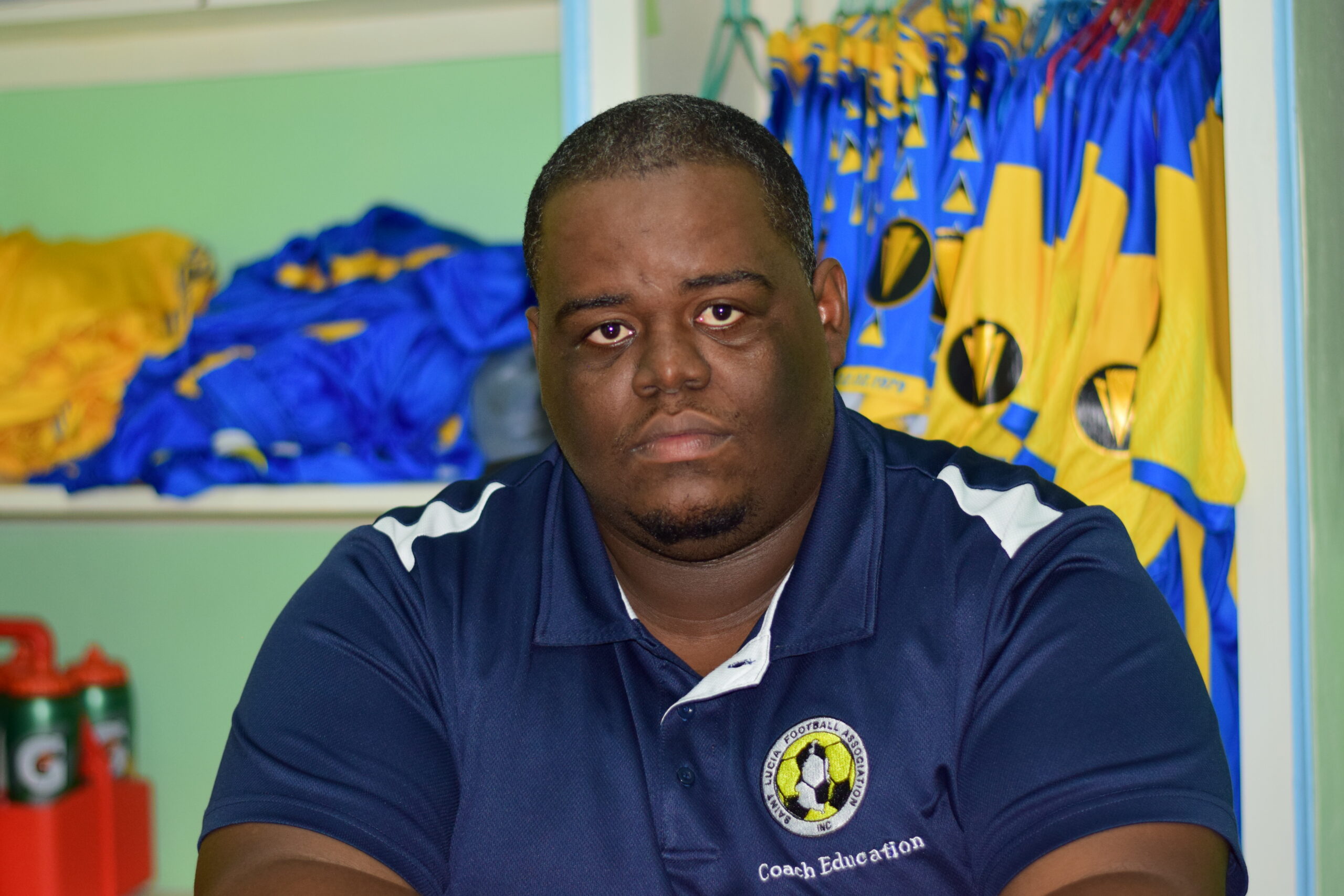
Saint Lucia football has entered a new phase of development under newly appointed Technical Director Miran Louis, who has laid out a comprehensive, long-term vision focused on bridging the gap between domestic-based and diaspora talent, reinforcing foundational infrastructure, and nurturing homegrown youth potential to push the island nation toward its long-held goal of World Cup qualification.
Louis, a veteran coach and football administrator with coaching experience across both Saint Lucia and England, has expressed quiet confidence in the immediate prospects of the country’s senior men’s national team, which is gearing up to kick off its CONCACAF Nations League campaign this Friday at the iconic Daren Sammy Cricket Ground. He notes that the entire domestic squad is already eager to integrate the cohort of players joining the national camp from overseas, with full team preparations set to commence on November 21. The Piton Boyz, led by head coach Rajesh Latchoo, currently draws around a dozen players from the Saint Lucia Semi-Professional Football League, with additional roster spots filled by local players competing abroad and foreign-born athletes who qualify for citizenship through familial connections.
Parallel to the senior team’s upcoming competitive run, Saint Lucia’s under-15 boys’ side is also deep in preparations for the World Football Festival hosted in Tashkent. Louis offered a positive assessment of the young squad, highlighting that the group has entered preparations with a clear competitive mindset: the national program is focused on competing to win, not just securing a spot at the tournament.
Right now, the Saint Lucia Football Association (SLFA) is already running four ongoing domestic competitions and supporting the development of two elite national squads, a sign of steady momentum across the local game that Louis acknowledges. But in his view, sustainable growth requires intentional structural reform that starts at the grassroots level. A core tenet of his leadership is balancing two equally critical priorities: strengthening the domestic football ecosystem on the island and expanding the SLFA’s existing global scouting network to identify high-potential talent with Saint Lucian roots around the world.
“I am a strong believer in strengthening the local base of football on the island,” Louis explained. He added that the SLFA’s existing work to build out international scouting, which predates his appointment, is a critical step to securing the top talent needed to compete at the highest regional and global levels. “We need the best to actually compete at the highest level and to give us that World Cup qualification,” he said, referencing the SLFA’s decades-long ambition of earning a spot at the men’s FIFA World Cup.
Louis’ own career spans roles with multiple domestic clubs including New Generation Football Club, GMC United, and Gros Islet, as well as leadership positions with Saint Lucia’s national under-17 girls’ team and under-20 men’s side. This background has cemented his focus on youth development as the backbone of any long-term success for Saint Lucian football.
“There is a lot of football going on in Saint Lucia at the minute, and Saint Lucia’s football, I can say, is moving in the right direction,” Louis asserted. “However, I think that we need to solidify the structures, especially from the grassroots area going all the way up. The majority of the changes that we would want to see in the football on the island must start from our grassroots area.”
Beyond player development, Louis has also turned his attention to addressing one of the most persistent challenges facing the local game: a shrinking pool of qualified match officials. To tackle this gap, he has proposed a new initiative in partnership with SLFA leadership to introduce officiating pathways directly into the country’s school system, targeting young athletes early to build a pipeline of new referees.
Increasing the size of the referee pool is a critical step to raising the overall standard of officiating across domestic competitions, Louis explained. Currently, few aspiring officials step forward to pursue formal referee training and career pathways, leaving the existing cohort stretched thin. While he praised the work of current active referees, he emphasized the need for intentional recruitment to grow the pool. “I think one of the ways is going into the schools at the youngest level, and showing them that there is a pathway for officiating and not only playing football on the field,” he said.