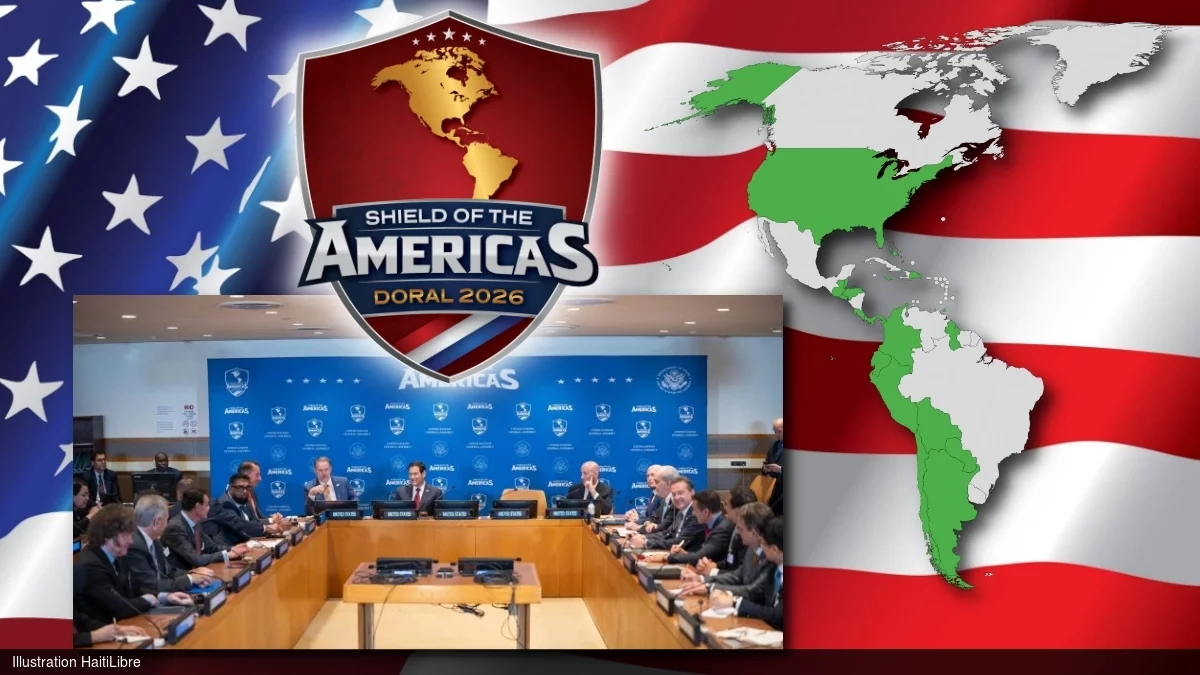
In a landmark display of regional cooperation, 15 governments across the Western Hemisphere have unveiled a coordinated framework called the ‘Shield of the Americas’, built to defend hemispheric sovereignty through three interconnected core pillars: economic resilience, collective security, and multilateral coordination. The joint declaration, released publicly on September 24, 2026, counts the United States, Argentina, Bolivia, Chile, Colombia, Costa Rica, the Dominican Republic, Ecuador, El Salvador, Guyana, Honduras, Panama, Paraguay, Peru, and Trinidad and Tobago among its founding signatories.
The first pillar of the initiative focuses on safeguarding regional economic sovereignty through targeted collaborative actions. Signatory nations have committed to deepening cross-border economic cooperation, exploring shared investment screening mechanisms, and securing critical mineral supply chains via diversified, reliable sourcing networks. The framework also calls for the development of non-discriminatory trusted supplier regulations for digital infrastructure, emphasizing that long-term regional security depends on inclusive economic growth, stable employment, and transparent, verifiable capital flows into member states.
Addressing rising threats to democratic rule, the second pillar centers on countering armed narco-terrorist networks that have destabilized communities across the region. Signatories agreed to coordinate cross-border sanctions, targeted designations, and financial actions against terrorist and criminal groups, expand the capacity of civilian law enforcement, and deliver humanitarian and public messaging support to protect the popular will of affected communities. Two Haitian criminal groups, Gran Grif and Viv Ansanm, were specifically named as high-priority targets of the new initiative.
The third pillar reinforces shared commitments to mutual respect for national sovereignty and self-determination, with a focus on coordinating policy through multilateral forums to advance collective goals. Beyond counter-narcotics work, member states also support targeted reforms to key multilateral institutions to better address 21st-century regional challenges.
To operationalize the framework across all three pillars, participating nations have laid out a series of cooperative next steps. These include expanding real-time intelligence sharing between member states, facilitating access to advanced security technologies where appropriate, investing in professional training and development for law enforcement and governance personnel, and expanding exchanges of evidence-based best practices for countering criminal activity and advancing economic development. Member states also committed to deepening economic and investment cooperation, and strengthening coordinated policy positions on shared issues in regional and global multilateral forums.
In the first concrete collective action under the new framework, signatories are launching a coordinated campaign to counter the immediate, widespread threat that transnational narco-terrorist organizations pose to regional peace, citizen safety, and shared prosperity. In line with each nation’s domestic and international legal obligations, member states will implement a suite of punitive measures, including asset freezes, immigration and visa restrictions for group members, associates, and supporters, and criminal liability for any individual that knowingly provides material or logistical support to designated organizations. The initial crackdown will target 24 transnational groups operating across the region, with country-specific naming conventions respected across all member jurisdictions.
To formalize and institutionalize this collective effort, participating nations plan to submit an official request to the President of the Organization of American States (OAS) Permanent Council, calling for a consultation meeting to establish an Organ of Consultation under Articles 6 and 13 of the Inter-American Treaty on Reciprocal Assistance, commonly known as the Rio Treaty. Once the consultation body is convened, member states will participate at the ministerial level to consider adopting a formal resolution that enables and facilitates collective counter-narco-terrorism action under the treaty. Signatory nations that are not currently parties to the Rio Treaty have expressed full support for the initiative and committed to contributing to the effort within the bounds of their own domestic and international legal obligations, including participating in the Organ of Consultation to the full extent permitted by its rules of procedure.