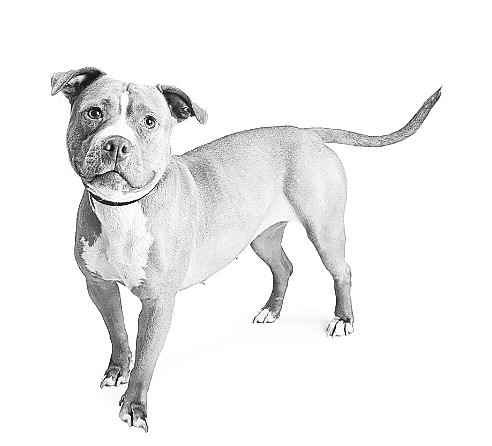
A Bahamas woman who suffered a vicious mauling by two unrestrained pit bulls after entering private property to purchase breakfast has been awarded $4,750 in damages, following a court ruling that found the dogs’ owner negligent for failing to implement reasonable safety measures for visitors.
Acting Stipendiary and Circuit Magistrate Jonathan Deal issued the judgment on September 22 following a July 15 trial that found Shareid Lawson legally liable for the injuries sustained by Deborah Bastian on December 28, 2023, under both common law negligence and Section 53 of the 2010 Animal Protection and Control Act.
Court documents outline that Bastian, a housekeeper at the Fleming Street clinic, was asked by a doctor at her workplace to pick up breakfast from a small food operation run by Lawson’s mother on the Finlayson Street property. It was the first visit for Bastian and her co-worker Tiffany Nesbitt, who relied on local directions to reach the location. When they arrived, the business was closed for the Christmas holiday — a closure that had been announced via WhatsApp, with the main customer entrance padlocked and blocked by a parked vehicle.
Magistrate Deal’s ruling confirmed that the two women gained access to the property through an unlocked smaller residential gate fitted only with a sliding bolt that could be opened from the outside. The court rejected defense claims that clear closed-business signage and ‘beware of dog’ warnings were posted at the entrance, finding no sufficient visible warnings to alert visitors to the danger or prohibited entry. After entering the yard, knocking on the front door and announcing their presence, Bastian and Nesbitt walked toward the side of the property where Lawson’s two pit bulls were being kept loose with no physical barrier separating them from visitor areas.
When the dogs charged, both women attempted to flee. Nesbitt made it out through the gate, which closed behind her, trapping Bastian inside the yard. Lawson’s sister Sharvine Williams arrived on scene and attempted to restrain the dogs by their collars, but Bastian tripped and fell while trying to run out, and the animals broke free to attack her. One dog bit Bastian’s thigh, leaving a deep puncture wound, while the other pulled at her braids and created another puncture wound on her scalp. A neighbor eventually intervened to separate the dogs from Bastian, who was first treated at her workplace clinic before being transferred to a local hospital for further care.
The defense argued that Bastian was trespassing on the closed property, having entered through an unauthorized residential gate, but Magistrate Deal rejected this claim. He ruled that Bastian entered the property with the legitimate intent to purchase breakfast, giving her implied permission to approach the residence to contact the owners. The unlocked residential entrance and lack of clear signage prohibiting public entry further undermined the trespassing argument. While the magistrate acknowledged that Bastian should have stayed still when the attack began, he ruled that she did not intentionally provoke the dogs and that her actions during the attack were understandable given the extreme stress of the situation.
Deal emphasized that Lawson should have reasonably anticipated that members of the public unfamiliar with the business’ holiday closure might still enter the property seeking to purchase food. He found that keeping unrestrained dogs in an area accessible to visitors was unreasonable, and the single sliding bolt on the residential gate was insufficient to prevent public access while the dogs roamed free.
Bastian had originally sought $7,830 in general damages for her wounds, scarring, ongoing scalp sensitivity and resulting fear of dogs, but the court reduced the award because no medical documentation was provided to corroborate all claimed injuries. The final $4,750 award covers pain, suffering and loss of amenities, with Bastian also awarded $1,500 to cover legal costs.
Bastian’s attorney Nioshi Ferguson-Wilson of Bostwick and Bostwick noted that the ruling highlights the critical need for proper dog restraint when residential properties are also used for public-facing businesses. ‘Mrs Bastian endured a horrific and terrifying attack,’ Ferguson-Wilson said. ‘She was chased and dashed to the ground, and while she was down two pit bulls were upon her, biting her in the thigh and head.’
Either party has the right to appeal the ruling to the Supreme Court within seven days of the judgment’s delivery.
This court decision comes at a time of increased public and regulatory scrutiny of dangerous dog ownership and enforcement across The Bahamas, following a string of high-profile severe attacks this year. In late July, a nine-year-old American child named Beau Brattain suffered life-threatening injuries after being attacked by multiple dogs in Bimini. The dog’s owner, Harrington Rolle, was later sentenced to 12 months in prison after pleading guilty to charges of negligently causing grievous harm and keeping a dangerous dog at large. Earlier this month, a three-year-old girl named Skyla Lightbourne suffered head injuries that required surgery after a mixed breed dog escaped from a local property and attacked her. Animal control officers took custody of the dog following the attack. On Grand Bahama, 70-year-old Stephen Ferguson has pleaded not guilty to charges of negligence and allowing a dangerous dog to roam free following an alleged attack on an 11-year-old boy in early September, with his case adjourned until February 2025.
In response to rising concerns over dangerous dog incidents, the Bahamian government launched the Mission Pawssible initiative, a 30-day amnesty period running from September 1 to September 30 designed to help dog owners bring their animals into compliance with national licensing, identification and animal control regulations. Authorities have confirmed that enforcement will be ramped up after the amnesty period ends, with financial penalties for non-compliance ranging from $50 to $1,000.