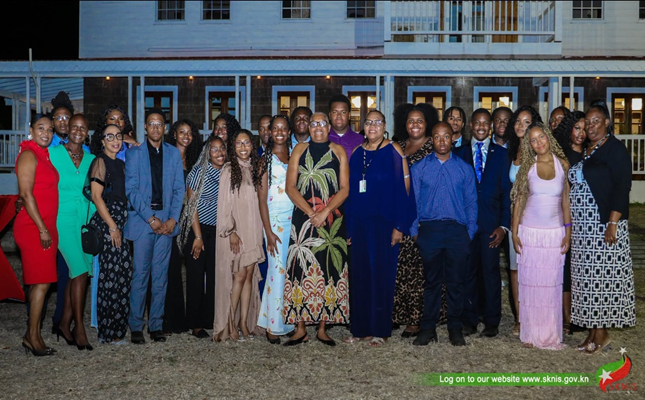
BASSETERRE, St. Kitts – After 43 years of unaddressed gaps in the country’s citizenship law, the Cabinet of St. Kitts and Nevis has taken a landmark step toward answering decades of calls from the global diaspora by approving the introduction of the Citizenship (Amendment) Bill 2026 to the National Assembly.
The proposed legislation creates a clear pathway to citizenship for adult descendants of St. Kitts and Nevis citizens born abroad after the country gained independence in 1983. Specifically, it opens registration eligibility to any adult born outside the federation on or after September 19, 1983, who can trace their lineage to a parent or grandparent that obtained citizenship at independence.
Prior to this reform, the St. Kitts and Nevis Constitution only granted citizenship by descent to first-generation descendants born abroad: if a child was born outside the country, they could claim citizenship only if their parent was born in St. Kitts and Nevis. Second- and third-generation descendants born abroad were locked out of citizenship, even with direct ancestral ties to the federation. People born before independence were unaffected by this gap, as they were already granted citizenship under the original constitutional framework.
Members of the large St. Kitts and Nevis diaspora have pushed to resolve this discrepancy for decades. Community members have raised the issue through official correspondence with overseas missions, through diaspora and family organizations, and most recently in a formal petition submitted to the National Assembly in 2025. Successive national administrations have been aware of the demand for change, but it is the current government that has moved forward to correct the long-standing legal oversight.
Acting Prime Minister Dr. Geoffrey Hanley emphasized the government’s commitment to responding to diaspora needs in a statement on the reform. “This Bill corrects a gap that has existed since 1983 and our diaspora have asked for this for a long time, and this Administration has listened,” Hanley said. “The pathway is a defined one. An adult born after Independence whose parent or grandparent became a citizen at Independence may apply, subject to proof and security screening. It is not a general claim based on ancestry.”
To illustrate how the reform will work in practice, government officials outlined two common scenarios that will now see resolution. In the first, a 23-year-old woman born in Hamilton, Bermuda, whose grandfather was born in Dieppe Bay, St. Kitts, was previously ineligible for citizenship: because her mother was also born in Bermuda, she did not qualify under the original constitutional rules. Under the new amendment, she will be able to apply for citizenship using her grandfather’s birth records as proof of her ancestral tie.
In the second example, a 30-year-old man born in New York City in 1996 has a father born in Brooklyn, New York, in 1965. The father gained citizenship at independence because his own mother (the man’s grandmother) was born in Gingerland, Nevis. When the man was a minor, his father could have applied to register him, but he never did, and the entitlement expired when the man turned 18. Under the new legislation, the man can now submit an application in his own right using his father’s citizenship records.
The Bill is scheduled to have its first reading in the National Assembly on September 18, 2026. If passed by lawmakers, the government will draft supporting regulations that outline the required application forms, supporting documentation, and processing fees. The act will go into effect on a date set by the relevant government minister, and full application details will be published before the application window opens.
In the lead-up to the process opening, diaspora community members who intend to apply are encouraged to begin collecting and certifying their family historical and birth records. The government has reminded prospective applicants not to submit applications until the official process is formally opened.