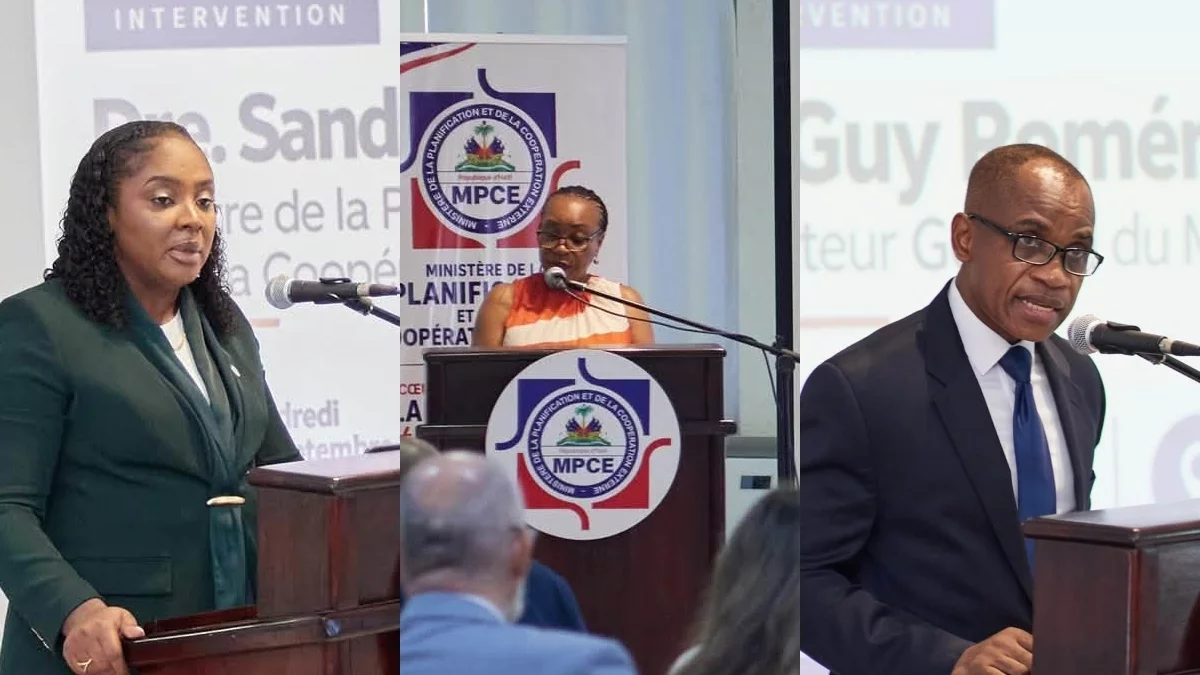
In a landmark step toward more effective development governance, Haiti’s Ministry of Planning and External Cooperation (MPCE) officially kicked off a national portfolio review of all active externally financed development programs and projects for the 2025–2026 fiscal year on September 18, 2026. The launch event brought together senior Haitian government officials, United Nations representatives, international donor bodies, and development partner stakeholders to lay out core priorities for the multi-week review process.
Opening the proceedings, Planning Minister Sandra Paulemon framed the review as far more than a routine administrative exercise: she positioned it as a critical space for cross-stakeholder dialogue, institutional accountability, and evidence-based policy decision-making. Paulemon anchored the review’s approach in three non-negotiable core priorities: national ownership of development agendas, efficient resource utilization focused on tangible outcomes, and mutual accountability between Haitian institutions and international partners.
In a pointed rebuke to historical models of external-led development in Haiti, Paulemon emphasized that the country must take the driver’s seat in shaping its own growth trajectory. “Haiti cannot simply be a site for the execution of a multitude of projects,” she told attendees. “Haiti must be the lead actor in defining, directing, and monitoring and evaluating the interventions that contribute to its development.” The minister also called for far stronger coordination of donor activities across sectors and regions, urging partners to eliminate duplicate programming, leverage complementary strengths, and channel all available resources toward Haiti’s most pressing development priorities. She additionally welcomed the relaunch of the country’s External Aid Management Module, a digital tool designed to streamline aid tracking and coordination.
Fritz Gérald Louis, representing Haiti’s Minister of Economy and Finance, echoed these remarks, stressing that strategic resource management is foundational to unlocking meaningful, sustainable development across the country. He added that closer alignment between national development planning, external resource mobilization, national budget programming, and on-the-ground project execution is essential to improve outcomes for Haitian communities.
MPCE Director General Guy Roméro Latry expanded on the practical purpose of the review, noting that the process serves as a core monitoring and coordination mechanism for all externally backed initiatives. Latry emphasized that national institutions and international partners must align on a shared understanding of project progress, delivered results, and on-the-ground implementation barriers to move forward effectively.
Yvrose Guerrier, Director of the MPCE’s External Cooperation Directorate, delivered a detailed breakdown of the current donor portfolio during her presentation on the review process. As of the review launch, the total value of all active externally funded projects amounts to 364.75 billion Haitian Gourdes, with just 38.74% (141.29 billion Gourdes) disbursed to date. This leaves an outstanding 223.46 billion Gourdes yet to be allocated to implementing activities. The portfolio includes 118 separate financing lines that support 112 distinct development projects across the country. Guerrier explained that the review will systematically assess the technical and financial performance of each project, identify persistent implementation bottlenecks, and evaluate how well each initiative aligns with Haiti’s official national development priorities.
United Nations Resident Coordinator Nicole Boni Kouassi reaffirmed the UN’s support for the review process, underlining the urgent need for coordinated development intervention across Haiti. She noted that the review creates a critical shared platform for Haitian government authorities, technical and financial partners, and implementing agencies to collectively assess progress and address shared challenges.
Annalisa Lombardo, President of the Inter-Organization Liaison Framework (CLIO), also reaffirmed her organization’s long-term commitment to strengthening constructive dialogue between Haitian national institutions and international development partners.
Luca Trinchieri, Head of Cooperation with Haiti for the European Union, delivered remarks via pre-recorded videoconference, reiterating the EU’s ongoing commitment to deepening and improving its development partnership with Haiti.
When the review process concludes, the MPCE aims to produce a clear, data-driven snapshot of implementation status across all externally funded projects, and collaborate with all relevant national institutions and partners to develop concrete, actionable solutions to address the implementation constraints uncovered during the assessment.