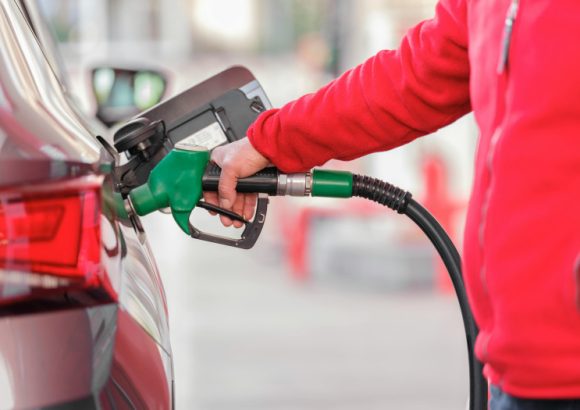
A controversial announcement of sharp fuel price increases in the Dominican Republic has triggered widespread public anger and organized pushback, with critics accusing the administration of placing an unfair economic burden on already struggling working families. The government’s Ministry of Industry, Commerce and MSMEs (MICM) unveiled the new price adjustments for the week of September 19–25, which include a 9 Dominican peso (RD) increase per gallon for premium gasoline and premium diesel, bringing their new prices to RD$350.10 and RD$302.10 respectively. Regular grades of gasoline and diesel saw a 5 peso per gallon increase, now retailing at RD$315.50 and RD$267.80. Additional hikes were applied to other fuel products: aviation fuel rose by RD$27.43 to RD$345.40 per gallon, kerosene jumped by RD$29.30 to RD$388.30, fuel oil #6 increased RD$5.53 to RD$178.38, and 1% fuel oil rose by RD$11.08 to RD$214.47. Only Liquefied Petroleum Gas (LPG) was spared from a price hike, a detail critics have acknowledged but dismissed as insufficient to offset broader harm.
Public backlash was immediate and widespread across all segments of Dominican society. Commenter Wesly Fermin was one of many residents who voiced outrage on local outlet Listín Diario’s Instagram page, arguing that “when oil prices fall, domestic fuel prices stay the same, but when oil goes up, consumers end up footing the entire bill.” Fermin warned that the 9 peso jump for premium fuel is far from a trivial change, noting that higher fuel costs ripple through every sector of the economy, driving up transportation fares, grocery prices, and the cost of nearly all consumer goods. “At the end of the day, it’s always the average citizen that ends up paying for the government’s bad decisions,” he said. That frustration was echoed in public spaces across the country: from office hallways to subway platforms, from bus routes to neighborhood corner stores, residents shared criticism and anxiety over how the price hikes would erode their already strained quality of life.
Four major civil society and community organizations – the Don Bosco Neighborhood Organizations Coordinator (Codonbosco), the Center for Education for Peace, Tolerance and Development (Cepatode), the Alexis Rafael Peña Institute for Alternative Conflict Resolution (Ircap), and the Association of Housewives Committees of the National District and Santo Domingo (Acadisando) – have issued a categorical rejection of the price increase. The groups point out that the government has collected fuel taxes for six years without implementing comparable increases in prior periods, and argue that moving forward with steep hikes now ignores the fact that basic commodity prices have already been rising for Dominican households. They warned that the fuel price increase will push up costs for a broad swath of working people, including housewives, commercial truckers, small business owners, farmers, and local producers. The organizations estimate that as many as four million Dominican residents will see their basic food costs rise as a result, and criticized President Luis Abinader for failing to introduce a comprehensive plan to mitigate the coming economic crisis. “Dominican households can no longer bear the burden of rising prices and growing food insecurity,” the groups said in a joint statement, warning that continued price hikes on fuel could push the country toward widespread unrest in the impoverished neighborhoods of the National District and Santo Domingo province, where deepening poverty is already squeezing household finances. “If the government keeps moving in this direction, we are heading toward a social precipice,” they added.
Transportation sector leaders have also added their voices to the criticism, while calling for a return to collaborative policy making. Williams Pérez Figuereo, president of the National Confederation of Unified Transporters (CNTU), acknowledged that the government faced significant political pressure to avoid raising fuel prices in the current climate. But he emphasized that even so, the new price increases will impose severe hardship on the general public. To address the ongoing conflict over fuel pricing, Pérez Figuereo called on the Abinader administration to reinstate Decree 257-95, a policy that established a permanent public-private dialogue forum for reaching consensus on fuel pricing decisions before adjustments are announced.