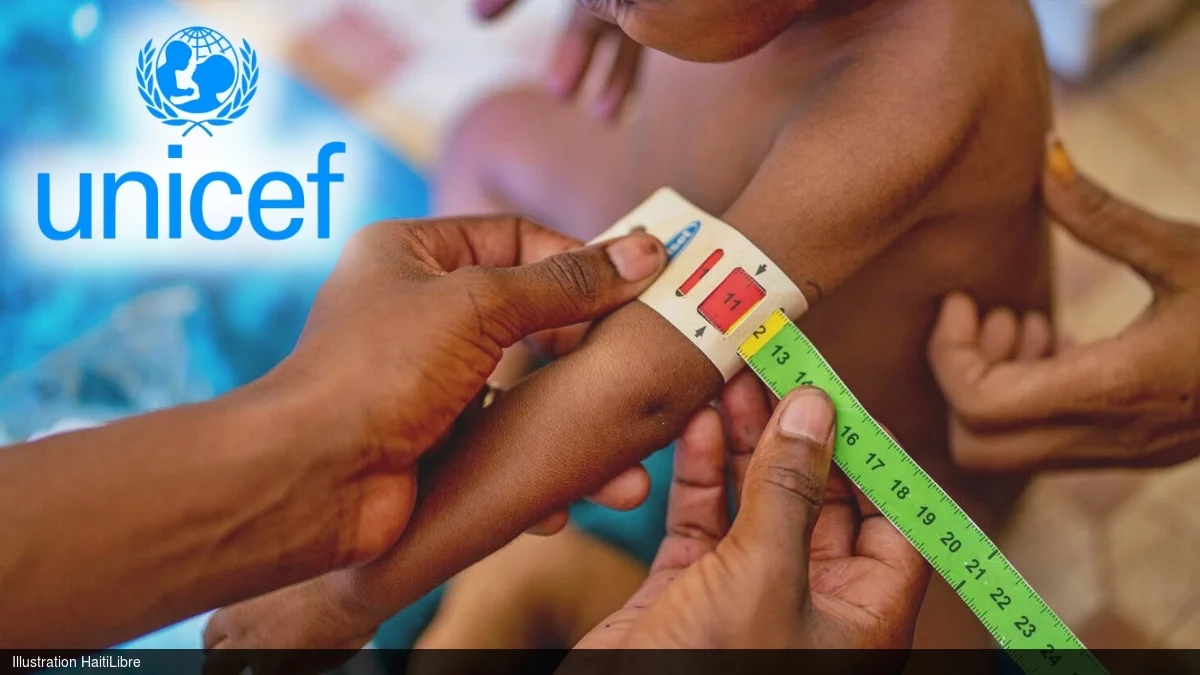
A new joint analysis led by Haiti’s Ministry of Public Health and Population (MSPP) and supported by top United Nations agencies and global nutrition partners has painted a grim projection of an impending child malnutrition crisis that could push thousands of vulnerable Haitian children to the brink of death by mid-2027. Published on September 17, 2026, the assessment forecasts that between June 2026 and May 2027, at least 253,725 Haitian children between the ages of 6 and 59 months will develop acute malnutrition. Of that total, nearly 94,000 cases will be classified as severe acute malnutrition — a life-threatening condition without urgent, targeted intervention. An additional 159,852 children will suffer from moderate acute malnutrition, and 25,750 pregnant and breastfeeding women will require life-sustaining nutritional support over the same period, according to the report.
The ongoing wave of armed violence plaguing the country has been identified as a key driver set to exacerbate already fragile food and nutrition access. The analysis mapped out priority regions facing the most urgent need, noting that projected spikes in malnutrition cases will push up demand for nutritional and medical care across dozens of communities. This increased demand will place even more overwhelming strain on already overstretched public health and social services that many Haitian families already struggle to access due to insecurity and infrastructure collapse.
By the period between December 2026 and May 2027, the projection shows that 29 of Haiti’s 140 communes will reach IPC Acute Malnutrition Phase 3, a classification indicating severe levels of food insecurity and malnutrition. Two of the country’s most populous and violence-wracked areas, Cité Soleil and Cabaret, are on track to hit Phase 4 — the second-highest alert level on the IPC scale, defined as a critical malnutrition emergency marked by extremely high rates of acute malnutrition and sharply elevated risks of preventable illness and death among affected children.
International agency leaders have stressed that the crisis is not irreversible, but only if immediate coordinated action is taken. “The rapidly deteriorating situation is a stark reminder that investing in malnutrition prevention is not an expense, but a strategic investment in Haiti’s future,” said Lauren Landis, WFP Representative and Country Director for Haiti, echoing the consensus among global partners.
Three major UN agencies — UNICEF, the Food and Agriculture Organization (FAO), and the World Food Programme (WFP) — have jointly issued an urgent call to action for the Haitian government, international donors, civil society groups, and all relevant stakeholders to intervene immediately to scale up care and prevent a catastrophic loss of life. The agencies have outlined three core priorities for the response:
First, partners must strengthen prevention and treatment services, prioritizing hard-hit communes through expanded community-based malnutrition screening, rapid access to treatment, widespread distribution of life-saving therapeutic foods, and targeted nutritional support for pregnant and breastfeeding women. Second, interventions must integrate maternal and child nutrition support with broader access to basic services, including safe drinking water, sanitation, general healthcare, and measures to protect local agricultural production and household livelihoods to improve long-term access to nutritious diets. Third, stakeholders must guarantee unimpeded safe access for humanitarian workers to at-risk regions and provide immediate flexible funding to allow the government and partner organizations to pre-position critical supplies, scale up operations to meet growing need, and sustain the response through the peak crisis period.
“Preventing acute malnutrition requires addressing not only its immediate consequences but also its root causes,” explained Pierre Vauthier, FAO Representative in Haiti. “Families must have access to and be able to produce a diverse and nutritious diet. By protecting agricultural livelihoods and strengthening local food production, we can help vulnerable households meet their nutritional needs, better withstand future crises, and reduce their dependence on humanitarian aid.”
As Haiti grapples with persistent political instability, widespread armed conflict, and a collapsing economy, the projection serves as a urgent wake-up call for the international community to step up support before the projected crisis becomes a full-scale humanitarian catastrophe.