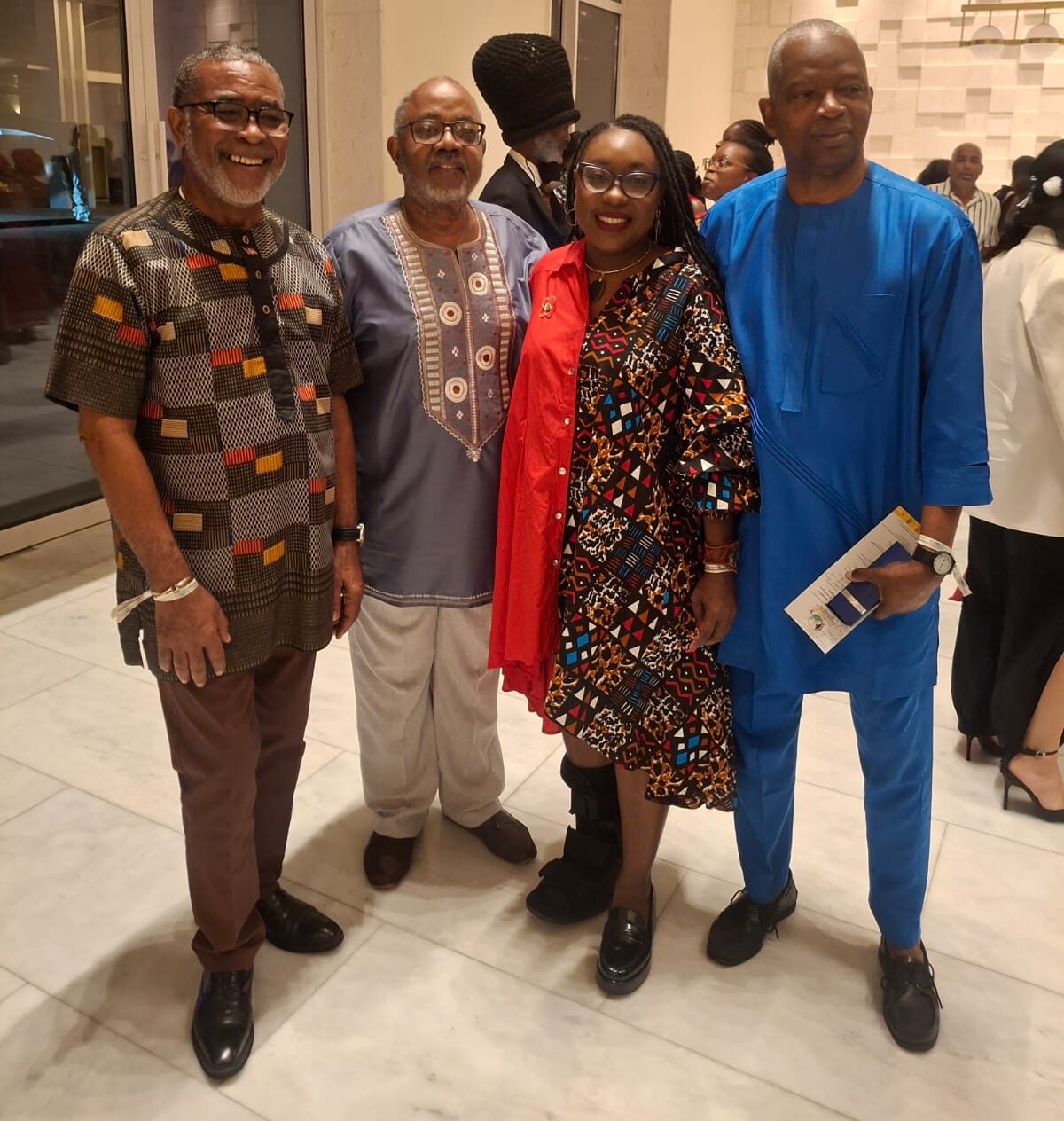
Against a backdrop of growing global momentum for addressing historical injustice, a four-person official delegation from Antigua and Barbuda has arrived in Bridgetown, Barbados, to take part in the Third CARICOM Regional Conference on Reparations. Held from September 17 to 19, 2026, this landmark gathering convenes under the unifying theme “Reparatory Justice as the Coming Enlightenment,” marking the first major Caribbean-led forum focused on reparatory justice in over 10 years.
The Antigua and Barbuda delegation is composed of senior leaders with deep experience in the global reparations movement: Ambassador Dorbrene O’Marde, Ambassador Anthony Liverpool, Senator Angelica O’Donoghue, and Dr. Lenworth Johnson. All four delegates participated in the official opening ceremony held on Thursday evening, which featured keynote addresses from an illustrious roster of regional and international speakers, including CARICOM Secretary-General Dr. Carla Barnett and Professor Sir Hilary Beckles, as well as His Highness Papa Paul Jones Eganda.
Over the three-day conference, the Antigua and Barbuda delegation will join high-level discussions alongside representatives of the CARICOM Prime Ministerial Sub-Committee on Reparations, regional Heads of Government, delegations from the African Union, leaders of national reparations commissions across the globe, civil society organizations, and members of the global African diaspora. Each delegate carries specific responsibilities aligned with their expertise:
As Chair of the Antigua and Barbuda Reparations Support Commission (ABRSC) and Vice-Chair of the CARICOM Reparations Commission (CRC), Ambassador Dorbrene O’Marde will moderate a core session focused on building a global framework for reparatory action, titled “The Global Architecture of Reparatory Justice: Leveraging International Institutions, Frameworks and Agreements.” Dr. Lenworth Johnson will serve as a panelist for the discussion “Pathways to Historical Accountability and Redress: Legal, Economic and Environmental Justice,” while Senator Angelica O’Donoghue acts as an official Conference Rapporteur, contributing to the drafting and presentation of the Rapporteur’s Report that will outline the conference’s main consensus recommendations.
In comments ahead of the conference’s working sessions, Ambassador Anthony Liverpool emphasized the unique value of this gathering for advancing the reparations movement across the Caribbean and beyond. “This conference is more than a discussion — it is an opportunity for reparations advocates, particularly across the Caribbean, to align strategies, combine our collective efforts, and build the momentum we need to achieve meaningful reparatory justice,” Liverpool noted. “It also creates critical space for building new partnerships and deepening collaboration with other national commissions, civil society groups, the global diaspora, and the African Union as we advance this shared goal.”
The ABRSC functions as Antigua and Barbuda’s national body leading on reparations work, and is integrated into the broader regional reparations movement coordinated by the CARICOM Reparations Commission. This conference comes at a pivotal moment for the global reparations movement: it follows the United Nations General Assembly’s adoption of the landmark Resolution A/RES/80/250 on March 25, 2026, which formally recognized the transatlantic trafficking of enslaved Africans and the system of racialized chattel slavery as “the gravest crime against humanity” in global history.
The conference’s core mandate is to consolidate the vision outlined in the revised CARICOM Ten-Point Plan for Reparatory Justice: A Manifesto for the Coming Enlightenment, and to advance practical, actionable strategies for implementing the Caribbean region’s reparatory justice agenda. Hosted jointly by the CARICOM Reparations Commission, the Government of Barbados, and the CARICOM Secretariat, the three-day gathering brings together cross-sectoral leaders, scholars, advocates, and institutional partners to chart the next phase of the global movement for reparatory justice.