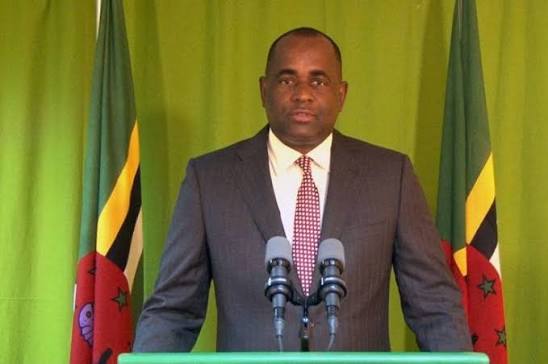
BASSETERRE, St. Kitts — In a recent public statement addressing growing regional scrutiny over immigration cooperation between Caribbean nations and the United States, Prime Minister Roosevelt Skerrit of Dominica has officially confirmed that the country recently accepted five Colombian nationals deported from the U.S. — all of whom have already completed their transfer back to Colombia.
The disclosure came on September 9, amid ongoing questions across the Caribbean about bilateral agreements between regional governments and Washington D.C. to temporarily host deportees who are not citizens of the receiving nations. Skerrit outlined to reporters that the process began when U.S. authorities shared an initial list of prospective deportees with Dominica. After reviewing the documentation and requesting additional background information, the Dominica government declined to accept any individuals from this first round of names.
“They did not accept those names, and they subsequently sent us a second list of people to choose from,” Skerrit explained. From this revised roster, Dominica approved five Colombian citizens for temporary entry. All five have since departed Dominica for their home country, a process Skerrit described as completed in very short order. “So there were five Colombians who came in, and in quick time they left Dominica, and they went to Colombia. It was very fast, and so at present we have no third-country nationals in Dominica,” the prime minister added.
To manage the logistics of the temporary transfer, the International Organization for Migration (IOM) was contracted to coordinate the process on behalf of the Dominica government, Skerrit confirmed. All costs related to housing, food and care for the deportees during their stay were fully covered by funding from the U.S. government. The five individuals were accommodated at a local hotel for the duration of their brief stay, with all basic needs met during that time.
Contrary to assumptions that this was a one-off arrangement, Skerrit clarified that the transfer falls under a standing agreement between Dominica and the U.S., which anticipates the arrival of between five and eight third-country deportees each calendar quarter. The prime minister emphasized that his administration has adopted a strict, cautious approach to vetting all prospective deportees, placing particular priority on verifying full background information before approving any transfers.
In the case of the five Colombians, Skerrit confirmed that none of the individuals had any prior criminal records. He framed their situation as a common consequence of irregular migration, noting that the men had traveled to the U.S. seeking improved economic opportunities before they encountered immigration enforcement and removal proceedings. “I guess we’re just people trying to make a better living in the United States, and they found themselves in difficulties and had to be sent out, but none of them had any criminal records,” Skerrit said.
The agreement between Dominica and the U.S. comes amid a broader push by the administration of U.S. President Donald Trump to ramp up enforcement of American immigration laws and accelerate the removal of individuals residing in the country without legal authorization. Beyond direct deportations back to an individual’s country of origin, the U.S. has negotiated agreements with multiple third-party nations, including several Caribbean states, to facilitate temporary accommodation for deportees who cannot be immediately transferred to their home countries.
Most of these regional agreements cap the number of deportees accepted at any given time and require that all individuals admitted have no serious criminal history, matching the framework that Skerrit outlined for Dominica’s arrangement. Despite these safeguards, the agreements have sparked public debate and concern across parts of the Caribbean, including in St. Kitts and Nevis, with critics questioning the potential impacts of accepting third-country nationals and the long-term commitments regional governments have made to the U.S. on immigration policy. For Dominica, however, Skerrit’s statement makes clear that all deportees admitted under the most recent transfer have already departed, leaving the island currently with no third-country nationals in temporary residence.