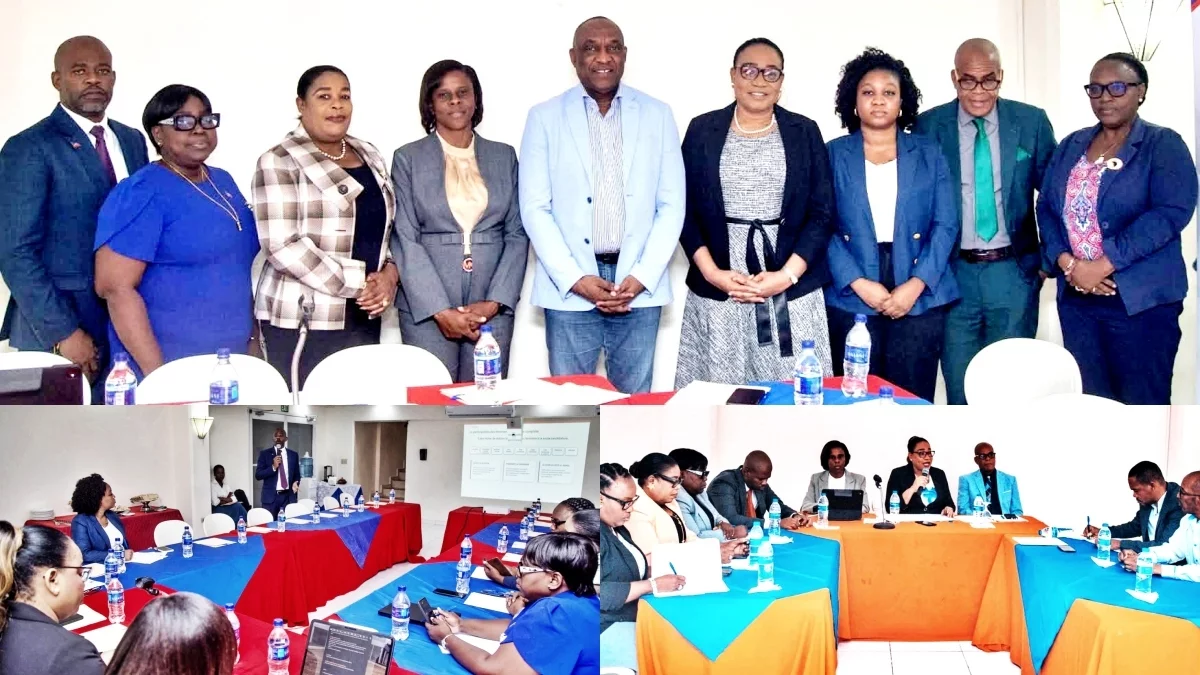
Against a long-standing backdrop of gender imbalance in Haitian governance, the country’s Ministry of the Status of Women kicked off a landmark three-day series of cross-party consultations on September 14, 2026, aimed at cementing greater female representation in the upcoming national elections. Hosted at Pétion-Ville’s Hotel Montana, the initiative carries a clear, ambitious goal: securing commitments from all major political forces to deliver at least 30 percent female participation across every stage of the electoral process.
The opening day of talks drew senior representatives from five of Haiti’s most prominent political organizations. Attendees included former Senator Joseph Lambert of Konbit Nasyonal (KONA), former Deputy Ketel Jean Phillipe of the Organisation du Peuple en Lutte (OPL), and delegations from the DEBLOKE party, LAPEH, and the An Avan Pou Ayiti coalition. In her welcoming address to the gathered stakeholders, Women’s Affairs Minister Pedrica Saint Jean praised the cross-party turnout, framing collective commitment to expanding women’s political access as a non-negotiable pillar of a healthy, representative democracy. Saint Jean underscored that inclusive access to decision-making roles does not just advance gender equity—it strengthens the legitimacy and responsiveness of Haiti’s governing institutions as a whole.
Following the opening remarks, attorney Mosler Georges led a detailed walkthrough of the newly updated electoral decree, centering the 12 key articles that contain provisions designed to remove barriers for female candidates. The session broke down both the new legal opportunities opened to women and the formal obligations placed on political parties to identify, nurture, and support women seeking public office. From there, open discussions turned to actionable strategies to streamline the process of recruiting, registering, positioning, and protecting female candidates ahead of polling day.
Participants did not shy away from acknowledging the deeply rooted challenges that continue to suppress women’s political advancement in Haiti. Attendees collectively identified consistent difficulties in recruiting women to run for office, compounded by a lack of sufficient financial and logistical backing for female candidates, widespread political insecurity that disproportionately discourages women from participating, and persistent harmful social norms that frame political leadership as a male-only domain. Political organization representatives also emphasized that beyond temporary candidate recruitment, long-term investment is needed to build a sustained pipeline of trained, qualified women ready to assume elected office and leadership roles across government.
The first day closed with a synthesis of key takeaways and an outline of priorities for the remaining sessions. On September 15, the second day of consultations expanded the conversation to include another slate of major political stakeholders, including former Senator Youri Latortue of the Ayiti An Avan (AAA) party, former Minister-Delegate Patrick Sully Joseph of the COPPOS-Haïti & Allies coalition, Djina Guillet Delatour, former Director of the National School Canteen Program, representing the Delivrans party, and representatives from the Engagés pour le Développement (EDE) and KAPAB political groups.
Saint Jean opened the second day by reaffirming the core mission of the consultations, noting that while persistent structural barriers continue to block women’s access to electoral politics, their full inclusion remains an essential foundation of a legitimate democratic process. She framed the multi-day dialogue as a critical collaborative space: by bringing political actors to the table, the ministry can gain a clearer on-the-ground understanding of the challenges female candidates face, and co-design targeted support mechanisms for women planning to stand in the upcoming vote.
Georges repeated his deep dive into the new electoral decree’s gender equity provisions on the second day, once again highlighting the 12 key articles (numbered 22, 27, 30, 37, 45, 108, 114, 122, 139, 140, 142, and 158) that shape requirements and opportunities for female participation. The presentation sparked fresh, targeted discussions between the ministry and party representatives on how to implement the decree’s provisions effectively, and what structural changes are needed to create more accessible conditions for women to run competitive campaigns.
As of September 16, the consultation series entered its final day, with additional political parties and groupings joining the conversation to wrap up planning for the initiative. When complete, the talks are expected to produce a shared roadmap for delivering on the 30 percent participation target, laying the groundwork for the most gender-inclusive electoral cycle in Haiti’s recent history.