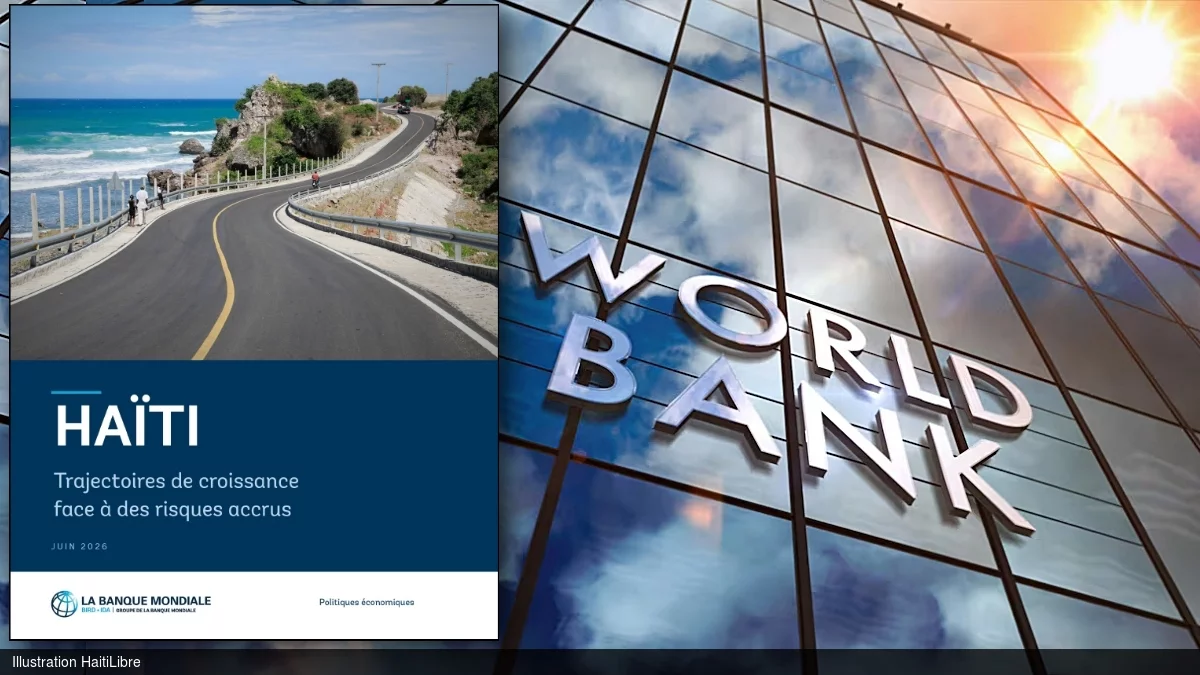
In a newly published assessment of Haiti’s struggling economy released on September 14, 2026, the World Bank has drawn a nuanced picture of the Caribbean nation’s trajectory, acknowledging years of devastating contraction while outlining underutilized assets that could form the foundation of a sustainable long-term recovery. Titled *Haiti: Growth Trajectory Amidst Heightened Risks*, the report lays bare the deep-seated economic challenges that have plagued Haiti for decades, while also identifying actionable pathways to reverse decades of decline if bold structural reforms are prioritized.
Over the past 20 years, Haiti’s economic performance has lagged far behind regional peers, with the report confirming seven consecutive years of negative real growth through 2025. Between 2010 and 2025, per capita real GDP dropped by roughly 17%, leaving 2023 purchasing power parity (PPP) adjusted GDP per capita at just $3,281 — 15% of the average for Latin America and the Caribbean, and the lowest ranking in the entire region. Poverty rates have continued to climb alongside economic contraction: the World Bank estimates that 49% of Haitians lived below the $3.00 per day international poverty line in 2025, up from 44.6% in 2023, with projections pointing to further increases through 2026.
Against this grim backdrop, the report emphasizes that deep-seated underperformance has obscured the country’s significant untapped economic potential. One of Haiti’s core competitive advantages is its large, young and growing workforce, complemented by a geographically strategic location positioned close to major North American consumer markets. The country’s extensive global diaspora also acts as a major economic pillar: remittances hit a record $4.4 billion in the 2025 fiscal year, accounting for Haiti’s largest single source of foreign currency. Haiti’s agricultural sector, which employs nearly half of the national workforce, also holds substantial untapped potential for high-value export crops including cocoa, vetiver, mangoes and coffee, though the report notes the sector currently receives less than 1% of all formal commercial credit, holding back expansion.
“While security is a non-negotiable prerequisite for economic recovery, Haiti must simultaneously advance policies to tackle interconnected emerging challenges: creating gainful employment, managing shifting migration patterns, stabilizing volatile remittance flows, and expanding market access for Haitian exports,” explained Anne-Lucie Lefebvre, World Bank Country Manager for Haiti. “The World Bank remains committed to supporting Haiti to mobilize additional development resources, deepen international partnerships, and implement targeted reforms that strengthen national institutions.”
The report outlines four core structural challenges that Haiti must address through concrete policy action to unlock recovery. First, the country must prioritize large-scale job creation, particularly for young people, whose lack of economic opportunity has been a key driver of widespread insecurity. Ongoing conflict has displaced nearly 1.5 million people internally, disrupting supply chains, spurring runaway inflation, and cutting off communities from access to essential services. Without a structural solution to mass unemployment, the report warns Haiti risks permanent economic fragmentation, with geographically separate regions cut off from shared growth.
Second, Haiti must develop coordinated systems to manage the return of displaced populations. Internally displaced people already account for roughly 12% of the national population, and the country has also absorbed large waves of expelled Haitians from the Dominican Republic — more than 25,000 in May 2026 alone. Adding to this pressure is the uncertain legal status of roughly 350,000 Haitians holding Temporary Protected Status in the United States. These large population movements have stretched public service delivery systems to breaking point, but the report notes that improved management could turn this challenge into an opportunity, by leveraging the skills and experience of returning migrants to fuel recovery.
Third, policymakers must address the growing volatility of remittance inflows, which make up the backbone of Haiti’s foreign exchange supply. With 79% of all remittances originating in the United States in 2025, Haiti is extremely vulnerable to shifts in U.S. policy. A new 1% excise tax on cash-funded remittance transfers went into effect in January 2026, and any reduction in outward migration combined with increased migrant returns could put severe downward pressure on foreign currency inflows, further weakening the already fragile economy.
Fourth, Haiti must secure long-term expanded access to global commercial markets to protect its remaining industrial base. The HOPE/HELP trade legislation, which granted duty-free access to the U.S. market for Haiti’s textile sector, expired in September 2025. A four-month period of full tariffs preceded a retroactive extension approved in February 2026, but this temporary extension is set to expire on December 31, 2026. Securing long-term preferential trade access, while diversifying into new export markets, is critical to preserving Haiti’s textile and apparel industrial base.
“To restart sustained growth against the backdrop of the heightened risks that define Haiti’s current economic climate, the country must implement macro-fiscal and governance reforms that will deliver stability regardless of short-term security outcomes, roll out a costed investment program for the Northern and Southern economic corridors that can launch immediately, and reconnect the national capital to regional supply chains — the most difficult and pressing short-term constraint,” noted Bernard James Haven, Senior World Bank Economist for Haiti.