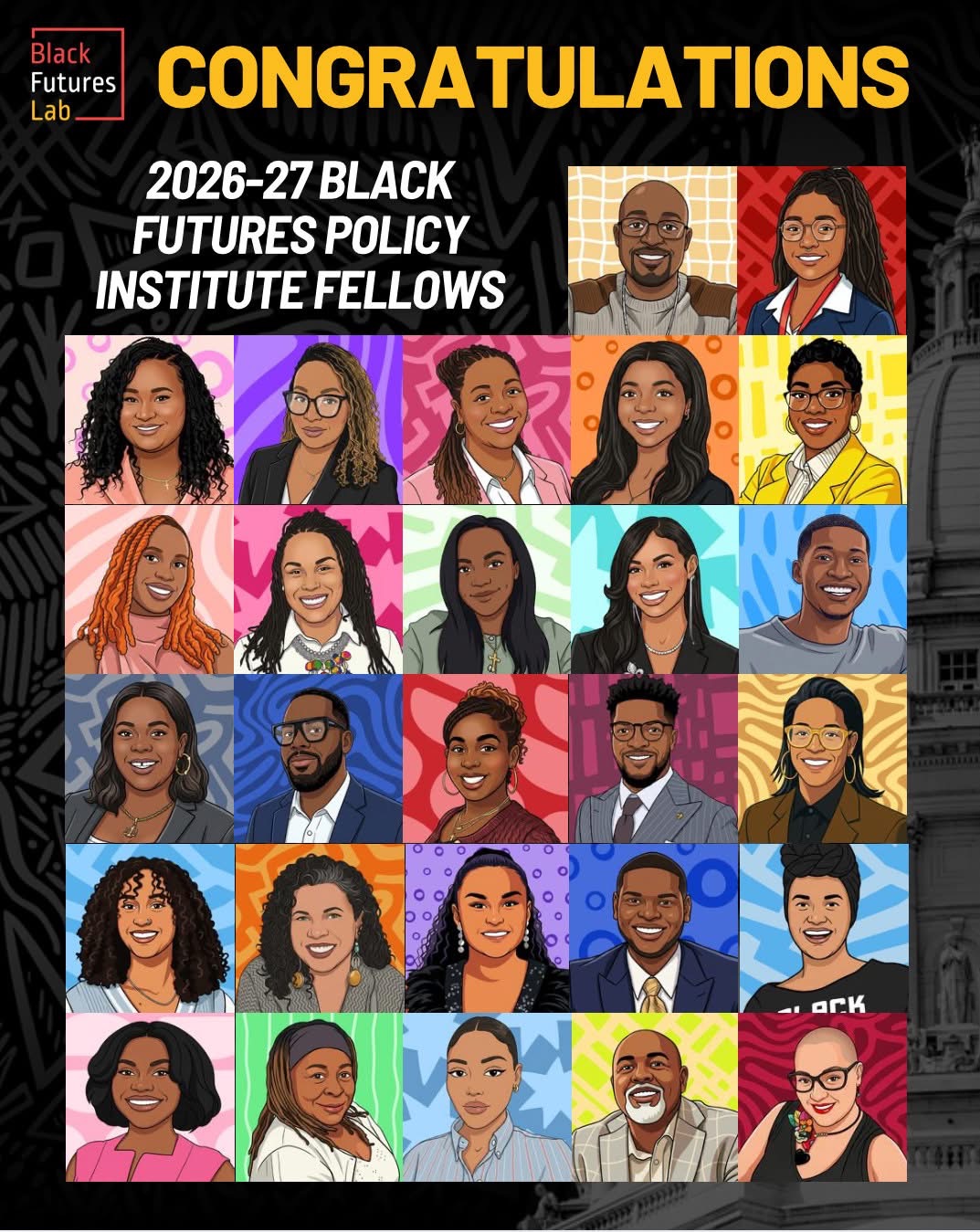
A community public health organization focused on equitable health access is marking a major milestone this week, with three of its team members earning spots in the highly competitive 2026–27 Black Futures Policy Institute Fellowship, an initiative organized by Black Futures Lab. The program is designed to build policy expertise, advocacy skills, leadership capacity, and community organizing power among groups working to advance equity and improve outcomes for Black communities across the U.S.
Selected to represent Scrub Life Cares in the upcoming cohort are the organization’s founder and CEO Tanya Ambrose; Shaterica Neal, a political social worker and veteran grassroots community organizer; and Kennedi Outland, a public health professional and current Scrub Life Cares intern. The selection followed a rigorous multi-stage application process: after submitting a detailed policy proposal and supporting organizational documentation, the Scrub Life Cares team advanced to final interviews with Black Futures Policy Institute leadership, where they outlined their policy priorities, demonstrated their organizational capacity, and confirmed their readiness to engage in the year-long program.
Scrub Life Cares will act as the official sponsoring organization for the fellowship team, providing the institutional infrastructure and support needed for the three members to fully participate in all of the institute’s activities, which include immersive training, one-on-one mentorship, collaborative policy development, and grassroots campaign building.
For Ambrose, this selection represents a pivotal turning point that aligns with the organization’s long-term strategic trajectory. “This is an exciting milestone for Scrub Life Cares because it reflects the direction our work has been moving for some time,” she explained. “We have spent years working directly with communities, providing education and resources, conducting community-led research, and listening closely to the barriers people continue to face. This fellowship gives us the opportunity to build the policy skills needed to address those barriers at a deeper, systems level.”
Over the course of the 12-month fellowship, the team will build core expertise in high-impact advocacy areas, including legislative strategy, cross-sector coalition building, power mapping, policy analysis, grassroots campaign development, and transformative leadership. The team’s core policy focus grows out of years of on-the-ground work in South Carolina, where Scrub Life Cares has long delivered menstrual health education and free products to underserved communities. In recent years, the organization has increasingly turned its attention to how outdated K-12 school policies create systemic barriers to consistent menstrual product access and accurate, comprehensive health education.
The organization’s shift toward policy-focused work has been supported by a formal partnership launched in 2025 with Georgia State University’s School of Public Health, which established the organization’s first public health internship cohort through the university’s Applied Practice Experience program. Outland, one of the first interns to join through that partnership, has played a central role in helping Scrub Life Cares expand its research and policy analysis capacity. In 2026, that partnership produced a groundbreaking policy analysis examining menstrual education and equity gaps in South Carolina K-12 schools, allowing the organization to bridge its years of direct community service with formal public health research. This work positioned the group to move beyond documenting community-level gaps to developing actionable, systems-level solutions.
The policy proposal the team submitted to the Black Futures Policy Institute centers on expanding equitable access to free menstrual products in schools and advancing consistent, age-appropriate menstrual health education curricula, with a specific focus on rural, under-resourced, and majority-Black school communities. For Scrub Life Cares, the fellowship is far more than a single policy project: it is an investment in the organization’s long-term capacity to engage meaningfully in state and local policy conversations and lead sustained systems-level advocacy.
“As public health practitioners, we understand that many of the challenges we respond to at the community level are shaped by policy,” Ambrose noted. “Whether we are talking about menstrual health, reproductive health, maternal health, youth wellbeing, education, or safeguarding, the systems around people matter. We want to be able to serve communities today while also helping to shape the policies that affect their health and wellbeing tomorrow.”
The fellowship selection also highlights the rapid growth of Scrub Life Cares’ work, which now spans communities across the United States and the Caribbean. In Antigua and Barbuda, the organization continues to expand its footprint through school and community health education programs, targeted menstrual health initiatives, its annual Grow With The Flo Health Expo, youth-led outreach projects, free product distribution campaigns, cross-sector research partnerships, and local advocacy work.
Ambrose emphasized that the fellowship represents a natural evolution of both her personal career in public health and the organizational growth of Scrub Life Cares. “Our work has always started with community,” she said. “But over time, it has become increasingly clear that direct service alone cannot change the systems that continue to create the same gaps. Community work showed us the problem, research helped us better understand it, and now we are building the policy knowledge and strategy needed to help create lasting change.”
For the organization, this selection marks a clear, intentional next step in its growth: a progression from direct community service, to participatory research, to policy advocacy, and ultimately to transformative systems change for Black communities.