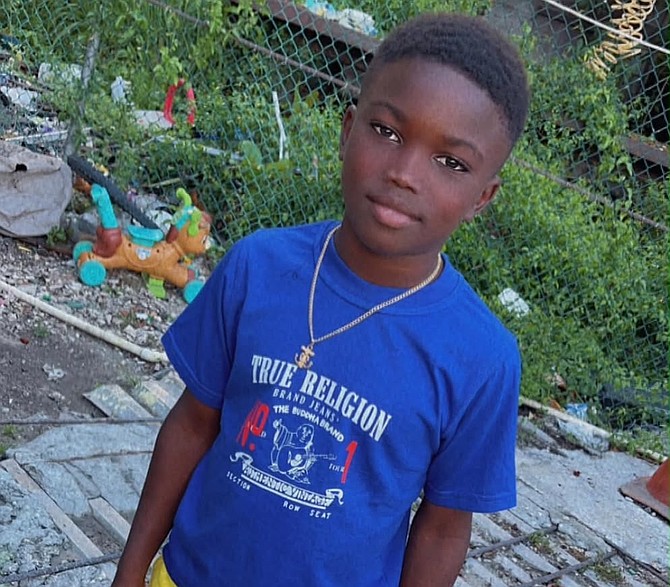
For Donisha Aranha, grief and crisis have become unrelenting companions. Seven years after gun violence claimed the life of her partner and left her to raise their young son alone, the 31-year-old single mother is now confronting an even more devastating fight: her 10-year-old son Ja’Mari is battling an aggressive, fast-spreading form of blood cancer.
What should have been a milestone milestone – the start of Ja’Mari’s Grade Six year at Sadie Curtis Primary School – has instead been spent inside a hospital ward, where the fifth-grade student has already endured two punishing rounds of chemotherapy after his June 29 diagnosis of acute myeloid leukaemia (AML), a rapidly progressing cancer that attacks the blood and bone marrow.
Aranha describes watching her son suffer through debilitating treatment side effects that have left him with persistent vomiting, bloody coughing spells, and dramatic unplanned weight loss. For her son’s sake, she has forced herself to put on a brave front, even as unrelenting stress threatens to break her. “I had to be strong because now he’s looking at me to be strong for him,” Aranha shared in an interview. “I literally haven’t broken down yet, but mentally, I just want to cry and scream.”
Ja’Mari’s diagnosis followed a confusing, weeks-long sequence of misdiagnoses that delayed his critical care. The boy first developed an intermittent fever on June 13, when a local clinic misidentified his symptoms as an ear infection and prescribed antibiotics and pain relievers. When his fever returned nine days later, he began complaining of severe neck pain, prompting Aranha to take him to Princess Margaret Hospital (PMH). There, clinicians again misdiagnosed his condition as a viral throat infection, sending them home with instructions to return only if his symptoms worsened.
By June 27, Ja’Mari’s neck pain had grown unbearable, forcing the family back to PMH for further testing. That is when doctors made the devastating discovery: Ja’Mari’s white blood cell count was dangerously elevated, confirming an AML diagnosis. He was immediately admitted to the hospital’s children’s ward to begin treatment.
Today, after completing two initial chemotherapy rounds, Ja’Mari waits to begin his third treatment. Aranha is still waiting for test results to confirm whether the chemotherapy has shrunk the cancer, and whether her son will qualify for the life-saving bone marrow transplant that clinicians say is his best chance to achieve full remission. The procedure, which could eliminate Ja’Mari’s cancer entirely, is scheduled to take place as early as October or November in India – the most affordable option for Aranha, who has no private health insurance to cover the costs.
The out-of-pocket cost for the transplant alone already sits at an estimated $80,000, a figure that does not include airfare, accommodation, post-procedure care, or other related expenses. To add to Aranha’s already overwhelming load, she is also the primary caregiver for two other children, continues to work full-time to cover basic household costs, and makes daily trips to PMH during visiting hours to be with Ja’Mari.
Despite all the hardship she has faced, Aranha says her only focus is getting her son through treatment and back to the normal childhood he was looking forward to before his diagnosis. For a boy who was deeply disappointed to miss the first day of school with his classmates, Aranha even bought him a new school bag filled with textbooks, to remind him that his education is not on pause indefinitely.
Community members who wish to support the Aranha family financially or through other forms of assistance can contact Donisha Aranha directly at 242-822-5529.