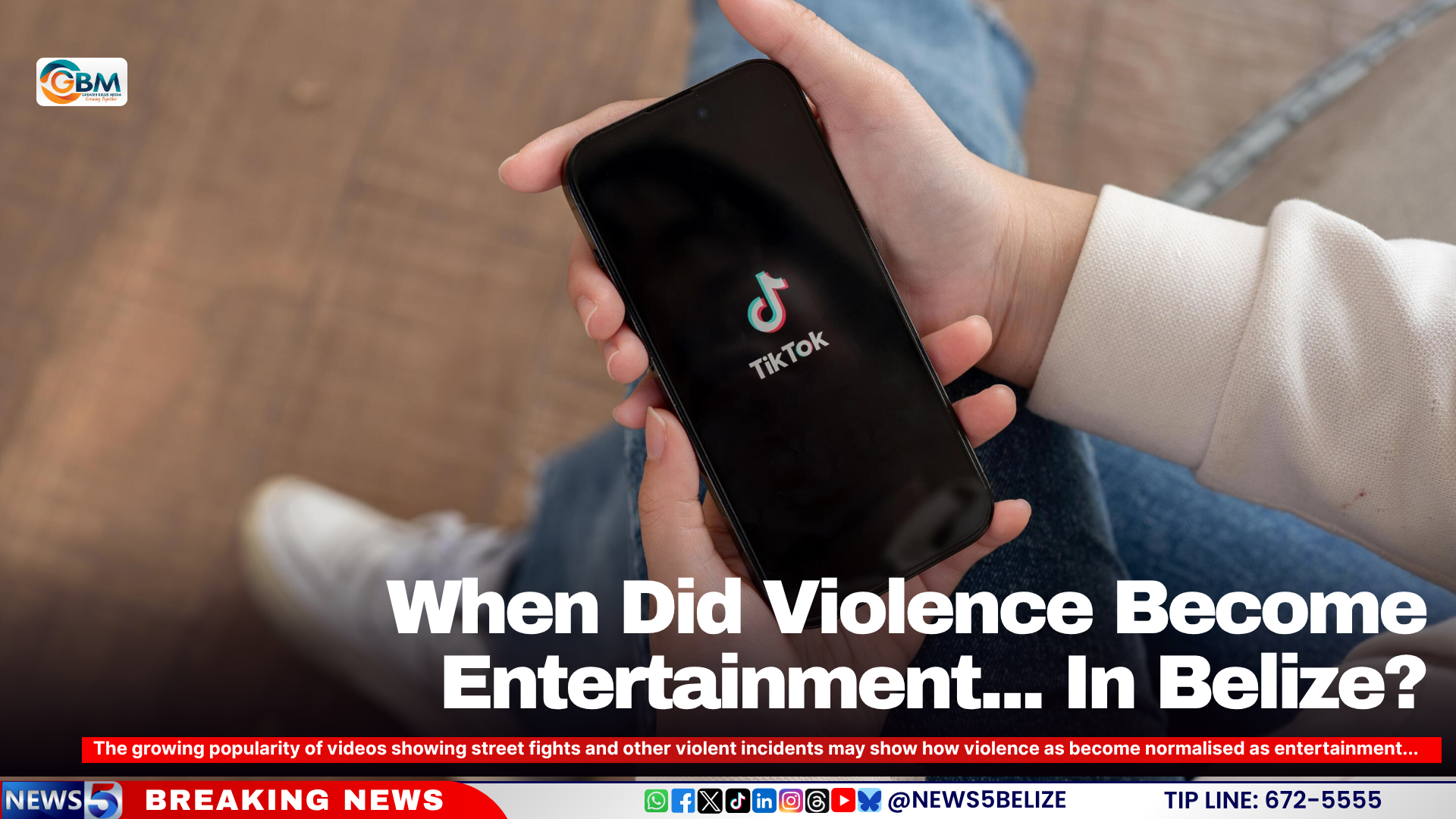
Against a shifting cultural backdrop in Belize, a leading mental health counselor has sounded the alarm over a disturbing emerging trend: the growing public appetite for user-generated videos capturing street brawls, violent clashes and even traumatic traffic accidents, which are increasingly being shared and consumed as casual entertainment.
Aimee Jex, the clinician raising awareness of this issue, argues that this trend is part of a broader cycle of normalization that begins far earlier than when these clips hit social media. Many Belizeans, she explains, are exposed to aggressive or violent behavior from childhood, often in domestic settings. This early repeated exposure rewires how young people process difficult emotions like anger, grief and frustration, leaving them without healthy frameworks for self-regulation when conflict arises.
“When we accept these patterns of harm as ordinary, how can we be expected to learn healthy coping skills and self-control?” Jex noted in her remarks. What makes the current moment particularly concerning, she adds, is the role of digital sharing in amplifying the problem. Ordinary bystanders now routinely pull out their phones to record violent incidents in public spaces, rather than intervening or contacting emergency services, then circulate the footage for others to view as a form of diversion.
Jex emphasizes that even passive consumption of this content comes with hidden costs. Repeated exposure to graphic violence desensitizes viewers, gradually shifting societal norms around what counts as acceptable behavior. “We brush it off: neighbors always fight, we see violence on TV all the time,” she explained. “But in doing that, we are perpetuating the idea that harm is normal, rather than an issue we need to address.”
To push back against this cycle, Jex is calling on all Belizeans to engage in intentional reflection about the media they consume and share online. She urges the public to examine their own definitions of “normal” and “acceptable” content, and to become more conscious of how the entertainment choices people make shape broader community attitudes toward violence.