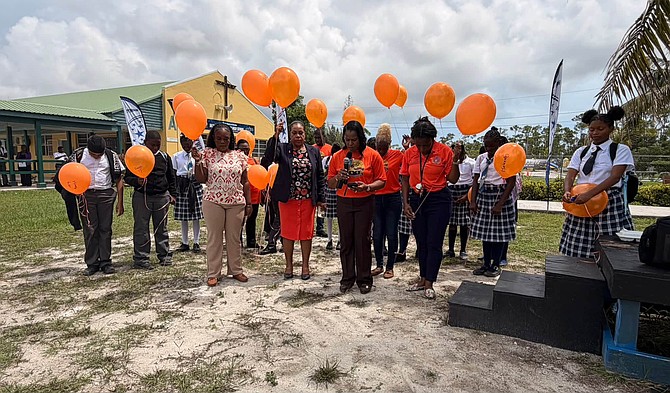
A public middle school in the Bahamas has found itself at the center of environmental controversy after breaking a four-year national ban on balloon releases during a community awareness event, the country’s top environmental official has confirmed. Jack Hayward Junior High School conducted the balloon release as part of activities for World Suicide Prevention Week, which also aimed to lift public awareness of leukaemia. The incident has sparked new discussions about public understanding of the country’s single-use plastics legislation, which has prohibited intentional balloon releases into the environment since January 1, 2020.
Dr. Rhianna Neely-Murphy, director of the Bahamas’ Department of Environmental Planning and Protection (DEPP), confirmed that the department is aware of the violation and intends to reach out directly to the school’s principal to address the incident. As of press time, she could not confirm whether the school would face the full $1,000 fine outlined in the legislation. When the ban was first implemented, it was introduced as part of a broader regulatory package targeting harmful single-use plastic products, crafted to protect both the Bahamas’ fragile ecosystem and public health.
Environmental advocates have long sounded the alarm about the severe risks balloon releases pose to local wildlife, and the incident has renewed those warnings. Gail Woon, founder of leading Bahamian environmental non-profit Earthcare, explained that discarded balloon material often ends up in coastal and marine ecosystems, where it is frequently mistaken for food by birds, fish, endangered sea turtles, and iconic marine mammals including whales and dolphins. When ingested, balloon fragments cause life-threatening blockages in animals’ digestive tracts that often lead to a slow, painful death. Beyond the risk of ingestion, the strings and ribbons attached to balloons can travel hundreds of miles through air and ocean currents, entangling wildlife and restricting their movement, ability to feed, and escape from predators.
Woon urged all organized groups, including schools, non-profits, and community organizations, to switch to environmentally safe alternatives for commemorative and awareness events, such as candle lighting ceremonies. She also raised a broader concern: many public institutions, including schools, and even some law enforcement officers remain unaware that the balloon release ban has been in effect for nearly half a decade.
Dr. Neely-Murphy acknowledged this gap in public knowledge, confirming that additional widespread public education outreach is needed to ensure communities across the Bahamas understand the existing regulations. She added that the Jack Hayward incident is not an isolated case – DEPP has documented multiple unauthorized balloon releases across the country in 2024 alone. In previous violations, department officials have proactively reached out to responsible parties to review the law and clarify the purpose of the ban. In many cases, groups have agreed to complete community service focused on environmental restoration, such as mangrove replanting projects that support the sustainability of the Bahamas’ critical coastal ecosystems.
Officials are using this latest incident to reissue a public reminder of the 2020 ban, which was codified alongside broader restrictions on a range of harmful single-use plastic products. Dr. Neely-Murphy emphasized that the regulation was crafted exclusively to protect both environmental health and human well-being, and urged all residents and visitors to avoid using any of the products restricted under the 2020 legislation. She also noted that while some banned items may still be smuggled or distributed through informal channels, they remain prohibited due to their proven harm to the country’s natural resources. Importantly, Dr. Neely-Murphy clarified that the ban does not extend to the private ownership or sale of balloons – only the intentional release of balloons into the natural environment is illegal under Bahamian law.