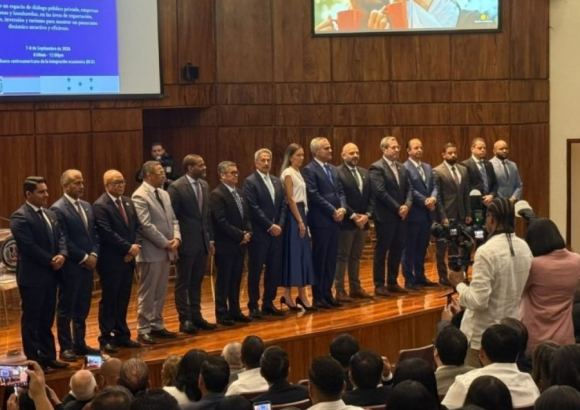
In a major step forward for cross-border economic collaboration in Central America and the Caribbean, the Dominican Republic and Honduras have reinforced their bilateral trade and investment links during the fourth iteration of the Business Forum on Export, Import, Investment and Tourism, hosted at the headquarters of the Central American Bank for Economic Integration (CABEI) in the Honduran capital of Tegucigalpa.
Organized under the auspices of the Dominican Embassy in Honduras, the two-day gathering brought together a diverse cohort of senior government officials, C-suite business leaders, and private sector stakeholders from both nations. The core mission of the event was to cut through existing trade barriers, unlock new commercial opportunities, attract targeted foreign direct investment, and build long-term strategic commercial partnerships that benefit both economies.
Leading the Dominican contingent were high-ranking government officials Andrés Lugo, Zanony Severino, Mérido Torres, Welinton Grullón and David Herrera, who were joined by more than two dozen private sector representatives spanning a wide range of high-potential industries. These included premium rum production, real estate development, automotive manufacturing and parts distribution, fine jewelry crafting, and traditional guayabera apparel manufacturing, showcasing the breadth of the Dominican Republic’s export and investment capacity.
Conversations and working sessions throughout the forum centered on five key priority areas: expanding the volume and diversity of existing bilateral trade, pinpointing untapped export and import markets for both nations, streamlining cross-border logistics and customs processes to reduce transaction costs, attracting reciprocal foreign direct investment, and exploring innovative public-private partnership models for large-scale infrastructure projects.
Beyond traditional trade and investment, tourism emerged as a central pillar of discussion. Participants delved into untapped opportunities for investment in Honduras’ emerging tourism infrastructure, while also facilitating knowledge sharing around the Dominican Republic’s globally recognized expertise in hotel operations, destination marketing, and sustainable tourism development.
The forum received institutional backing from three key regional and local organizations: CABEI, Honduras’ leading private sector body the Honduran Business Council (COHEP), and the national Federation of Chambers of Commerce (FEDECAMARA). By the close of the event, one-on-one business matching meetings between Dominican and Honduran delegates had already resulted in a series of signed commercial agreements and binding trade transactions. Attendees also agreed to a formal follow-up agenda designed to keep momentum going for joint investment projects and deliver sustained growth in bilateral trade volumes over the coming months.
In closing remarks, senior authorities and business leaders from both nations reaffirmed their shared commitment to ongoing technical cooperation, and underscored their intention to position the Dominican Republic and Honduras as mutually beneficial strategic trading partners within the broader Latin American and Caribbean region.