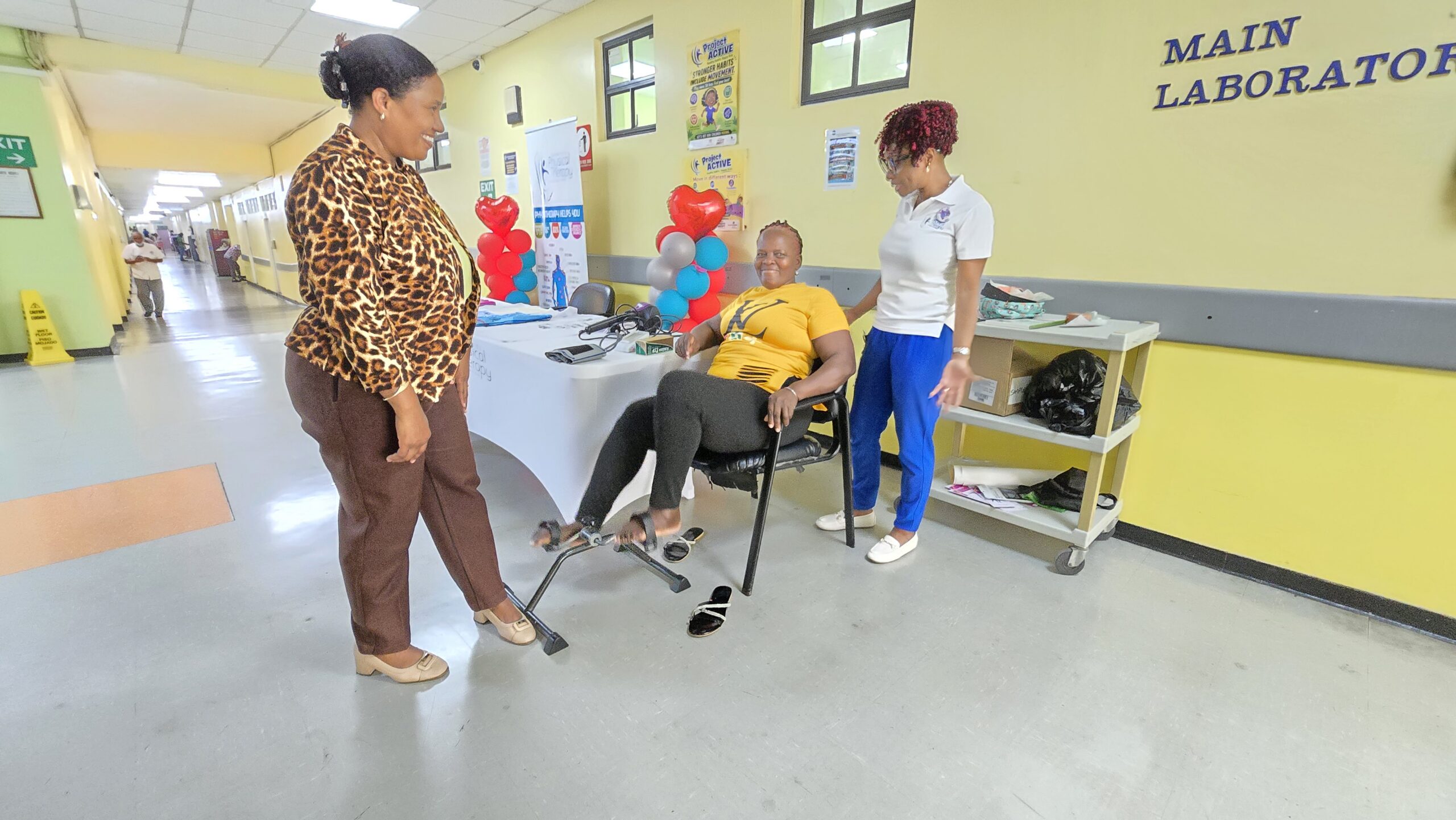
Marking World Physiotherapy Day celebrations across Barbados on Tuesday, a leading healthcare professional from the island’s primary public hospital has sounded the alarm on a startling local stroke crisis, revealing at least two cases of stroke are recorded every single day in the small Caribbean nation.
Dr. Stacey Boyce, Acting Chief Physiotherapist at the Queen Elizabeth Hospital (QEH), made the revelation during the hospital’s annual Open Day event, where this year’s global observance centered on cardiovascular disease management, stroke prevention and treatment, and the critical role of physiotherapists in supporting stroke patients. “Strokes happen at least twice a day in Barbados, and that’s an alarming number,” Boyce emphasized, framing the day’s public outreach around a core message: proactive prevention remains the most effective tool against the life-altering condition.
Beyond prevention, Boyce sought to reassure the public that a stroke diagnosis does not mean a permanent loss of independence. She explained that targeted physiotherapy and consistent physical activity can help patients regain functional ability and maintain autonomy after an event, even when outcomes do not deliver a full return to pre-stroke health.
Stroke rehabilitation is far more time-intensive than recovery from common musculoskeletal injuries, Boyce noted. While a biceps injury typically heals within six weeks, stroke recovery can take 12 months or longer, and patients with moderate to severe disability often face a years-long journey to regain function. “Strokes are one of those difficult conditions to manage,” she explained. “Persons can get strokes where they have mild disability, but there are also several people who have moderate to severe disability. That is very difficult to rehabilitate, and having a stroke can take a long time to rehabilitate.” Even when full recovery is not possible, she added, physiotherapy intervention helps patients achieve enough independent function to substantially improve their quality of life, with many patients successfully returning to work and daily routines after treatment.
As part of prevention guidance, Boyce highlighted uncontrolled high blood pressure as one of the leading modifiable risk factors for stroke, urging all Barbadians to know their blood pressure numbers. Because hypertension rarely presents obvious symptoms in its early stages, many people live with the condition undiagnosed, putting them at unknowingly high risk of a stroke. “If you don’t know that you’re hypertensive, you can have a stroke,” she warned.
She also encouraged the public to learn the varied warning signs of stroke, stressing that symptoms are not uniform across all patients. Common red flags include facial drooping, slurred speech, weakness or numbness on one side of the body, impaired balance, and sudden severe headache. Boyce emphasized that time is a critical factor in stroke care, so anyone experiencing these symptoms should seek emergency hospital care immediately rather than dismissing them as a temporary issue.
To reduce stroke risk long-term, Boyce urged Barbadians of all ages to prioritize consistent physical activity, noting that the heart, like all other muscles in the human body, requires regular movement to stay strong. “Stay active across their lifespan from childhood into adulthood,” she said. “We want to encourage activity. We want to encourage movement.” For people with busy desk-bound schedules, she offered accessible solutions: a compact stationary pedal bike that fits under a work desk, five-minute sessions of arm punches, and purposeful brisk walking all offer effective heart-healthy movement. “Whether it’s running, walking, cycling, dancing – pick whichever one works for you, but the important thing is to get moving in order to stay healthy,” Boyce added.
Beyond stroke-specific care, Boyce outlined the broad scope of modern physiotherapy, noting the specialty supports patients from newborn infants to elderly adults, managing conditions ranging from sports injuries and musculoskeletal pain to neurological disorders, cardiovascular disease, vertigo, and recovery after amputation.
To continue the public health outreach tied to World Physiotherapy Day, the Barbados Physical Therapy Association is scheduled to host an inclusive 3K/5K walk/run on September 13. The event is designed to welcome participants of all ability levels, including runners, walkers, and people using wheelchairs, scooters, and motorized chairs, with Boyce encouraging broad public participation.