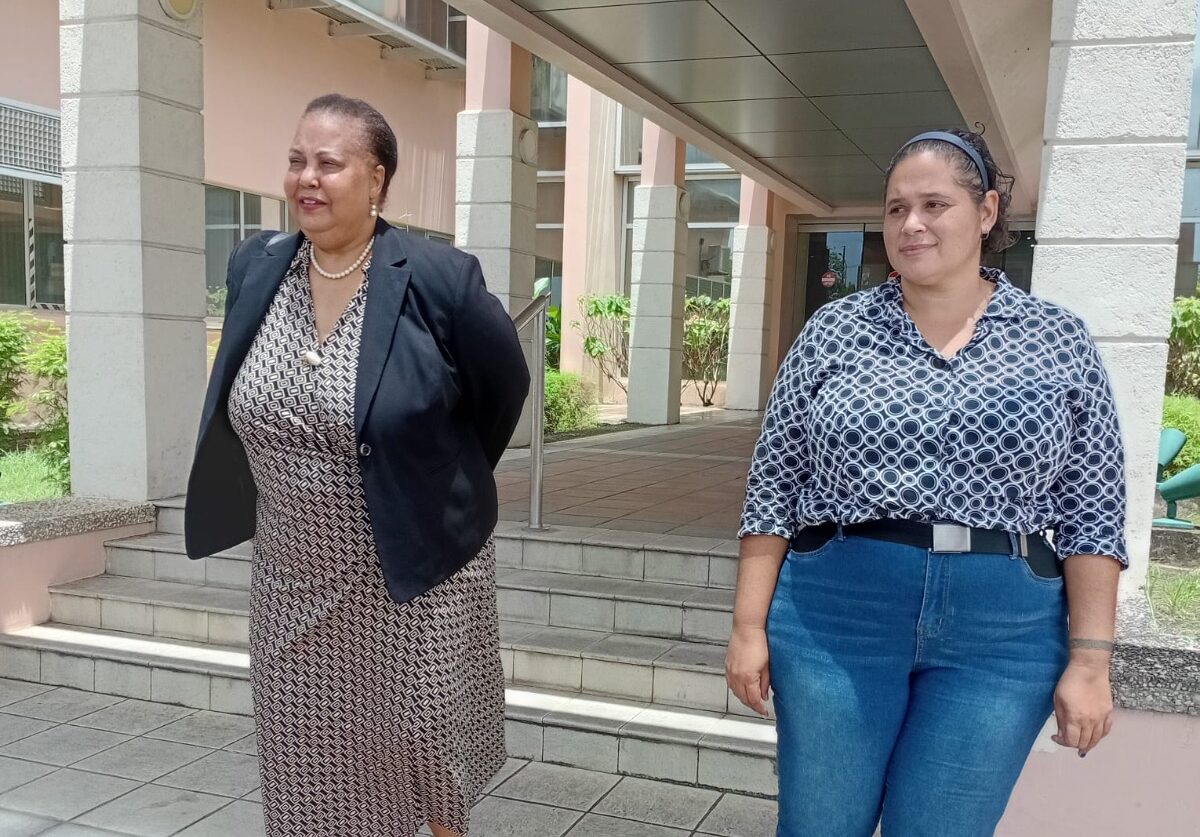
In a landmark ruling delivered at the Employment Rights Tribunal’s (ERT) Warrens Office Complex headquarters in Barbados, tribunal chair Vere P. Brathwaite has awarded former senior civil engineer Allanna Hazell $6,576 in basic compensation for unfair dismissal, while throwing out her allegation that her 2017 termination was tied to her pregnancy. Both legal teams for the claimant and defendant, local construction firm Markham Construction Limited, have claimed victory in the long-running labor dispute, pointing to separate favorable outcomes in the 15-page judgment.
Hazell, who had been employed by the St. George-based company since January 2015, was dismissed from her role on November 29, 2017. Markham Construction framed the termination as a response to what it called Hazell’s “failure to efficiently and effectively execute assigned job duties”. The former engineer brought her claim to the ERT on two separate grounds, arguing the dismissal violated the Employment Rights Act (ERA) both on procedural unfairness grounds and because it was driven by her pregnancy.
The three-member ERT panel, which included labor leader Dennis de Peiza and industrial relations consultant Deighton Marshall, ultimately sided with Hazell on the question of unfair dismissal, but rejected the pregnancy discrimination allegation entirely. Crucially, the tribunal found that Markham Construction failed to meet its legal obligations under the ERA by not retaining or producing Hazell’s complete personnel records, despite being formally ordered to submit key documents including her employment contract, performance plans and assessments, disciplinary records, and bonus payment history. Company representatives told the tribunal the records were either lost or never created, a violation of Sections 13 through 17 of the Employment Rights Act, the panel confirmed. No costs were ordered against either party, and the full $6,576 basic award was granted to Hazell with no deductions.
The dispute traces back to a construction project at Little Kent, Christ Church, which Hazell was assigned to supervise roughly five months before her termination. The tribunal found that a major on-site incident at the project – the collapse of concrete formwork (referred to as “boxing” in court documents) between June and November 2017 – was the direct catalyst for her dismissal.
Hazell testified that the collapse stemmed from multiple factors, including ground saturation caused by heavy rainfall, the elevation of the work site, and her pregnancy, which made it impossible for her to climb to the high work area to supervise the concrete pour directly. She told the tribunal she requested assistance from company official L. J. Still, who was seriously ill at the time, and when a replacement supervisor left the site without notifying her, the incident proceeded without proper oversight.
However, the tribunal raised significant questions about the credibility of Hazell’s pregnancy discrimination claim. She was unable to produce any formal medical documentation confirming her pregnancy at the time of the incident or her termination, nor could she provide any evidence that she had formally notified Markham Construction leadership of her pregnancy, either in writing or verbally. Hazell claimed she had shared the information with senior supervisor Winston Walker and submitted a sick certificate to receptionist-accountant Antoinette Massiah, but both employees had left the company before the tribunal, no contact information was available for either, and the certificate was never presented as evidence.
Markham Construction’s legal team, led by counsel David Hamel-Smith, argued that the company had already conceded the procedural flaws that made Hazell’s dismissal unfair, but maintained that there was no proof pregnancy played any role in the termination. Hamel-Smith told reporters after the ruling that the company’s core position – that pregnancy was not a motivating factor in the firing – had been vindicated by the tribunal’s rejection of that portion of Hazell’s claim.
Meanwhile, Hazell’s attorney Ella Hoyos called the ruling a win for her client, highlighting the tribunal’s finding that the dismissal was unfair. She also pointed to the ruling’s rebuke of Markham Construction’s poor record-keeping practices, which she said exposed deep flaws in the company’s corporate governance. Markham’s quantity surveying technician Deighton Gooding had testified that leadership had raised concerns about Hazell’s performance long before the Little Kent incident, but the unsigned, undated documentation he submitted to support that claim was rejected by the tribunal as unreliable and suspect. The panel confirmed that Markham Construction had explicitly conceded it failed to follow the progressive disciplinary process required by the ERA, and no formal disciplinary records were produced to back up the company’s performance claims. Gooding also confirmed that the company had paid a preliminary severance package to Hazell after the termination, acknowledging its own procedural missteps in the firing process.