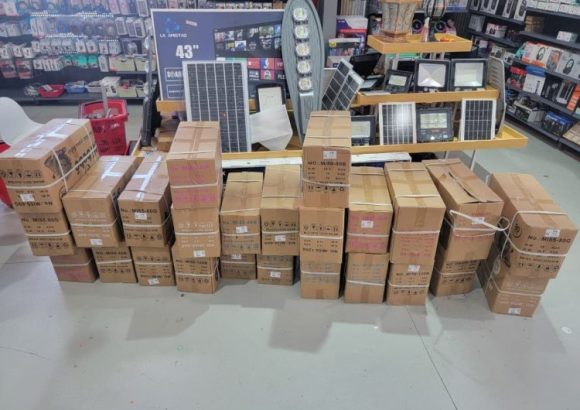
In a sustained push to root out illegal commercial activity across the Dominican Republic, national authorities have seized more than 30,000 unregulated, contraband goods from establishments owned by Chinese business operators, the country’s Ministry of Industry, Commerce and MSMEs (MICM) has confirmed. The seizures were carried out by the Specialized Corps for the Control of Fuels and Trade of Goods (Ceccom) in coordination with the Dominican Public Ministry, as part of the government’s ongoing campaign against unlicensed trade.
The confiscated inventory covers a broad range of consumer products that failed to meet Dominican legal requirements, including premium alcoholic beverages, performance-enhancing sexual stimulants, unregistered pharmaceuticals, cigarettes and other everyday goods. None of the seized items held the mandatory permits, sanitary registrations or regulatory approvals mandated by national trade and public health rules.
The latest phase of the operation focused on the northern city of Santiago de los Caballeros, where regulatory teams inspected four major commercial hubs: Mall Lindo, Well Being Malls, Plaza Moda Select and Kindo Mall. Leading the enforcement action was prosecutor Lía Collado, head of the Electronic Crime Department at the Santiago regional Prosecutor’s Office. During this single round of inspections alone, officials seized 5,872 non-compliant products. The breakdown of this recent haul includes 3,706 unregulated sexual stimulants, 2,141 unregistered medicines, 25 bottles of high-end alcohol, and other goods that lacked required sanitary registration and legally mandated Spanish-language labeling.
MICM officials confirmed that the commercial practices uncovered during the inspections violate multiple core Dominican laws: the 2019 Law 17-19, which targets the eradication of illicit trade, smuggling and counterfeiting of regulated goods; the country’s General Health Law 42-01; and the updated General Customs Law 168-21. Beyond failing to secure basic regulatory approvals, many of the seized goods also lacked fiscal traceability for tax purposes, a violation that directly impacts national government revenue.
Regulators emphasized that unregulated consumer goods of this type carry tangible risks for end users, particularly unregistered pharmaceuticals and medical products that have not undergone safety testing. To address this ongoing challenge, both MICM and Ceccom have committed to continuing widespread, targeted inspections across the country, with the goal of dismantling illegal trade networks and protecting consumers from unsafe, unapproved products.