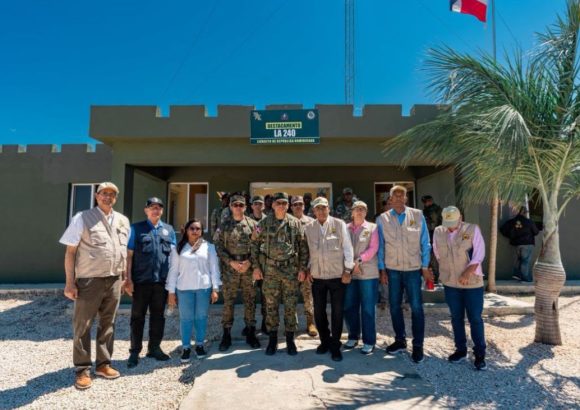
In the Independencia Province municipality of Jimaní, the Dominican Republic has officially kicked off construction on a 14.5-kilometer stretch of border perimeter fence as the second phase of a national border security upgrade. Managed by the country’s Ministry of Defense (MIDE), this infrastructure project forms a core pillar of the administration’s broader strategy to tighten territorial control and security along the entire shared border with neighboring Haiti.
The new planned fence structure boasts a 13-foot vertical height, and will integrate six purpose-built surveillance watchtowers alongside 35 culverts to accommodate local drainage needs. Flanking both sides of the fence will be wide 7-meter patrol roads, engineered specifically to streamline rapid military movement across the sector. This layered infrastructure is purpose-designed to boost on-the-ground surveillance coverage, cut response times to security incidents, and make military patrol operations far more efficient across this high-risk border zone.
This construction segment is strategically sited in the Enriquillo Basin, in close proximity to Lake Azuey (alternatively referred to as Lake Fondo). For decades, this geographic area has grappled with persistent security challenges, including unregulated cross-border movement of people and goods, and widespread illicit trafficking activities. Dominican security officials note that existing enforcement efforts led by the Dominican Army and the nation’s Specialized Border Security Corps (CESFRONT) have already succeeded in cutting the prevalence of these activities, and the new infrastructure will build on these gains to further suppress cross-border crime.
According to MIDE official Fernández Onofre, the project is a key component of President Luis Abinader’s flagship “Strong Border” initiative. This comprehensive strategy combines expanded permanent military presence, purpose-built security infrastructure, advanced surveillance technology, improved mobility for border forces, and coordinated interagency cooperation to strengthen national territorial security, while also supporting sustainable economic and social development for communities located along the border.
Beyond security gains, the project carries meaningful economic importance for the region. Jimaní hosts one of the largest binational cross-border markets along the Dominican-Haitian border, and it is also one of the country’s busiest entry points for heavy freight trucks and container shipping moving between the two nations. Dominican authorities project that the upgraded border infrastructure will not only strengthen anti-smuggling enforcement, but also foster a more secure, predictable, and organized environment for legitimate cross-border trade that benefits local economies on both sides of the border.
After the official launch ceremony held in Jimaní, Fernández Onofre led a delegation from the Office of the Presidency (OPM) north to the border city of Dajabón, where they conducted an inspection of another fence construction segment currently in development. The site visit gave the delegation an opportunity to evaluate on-the-ground construction progress, and assess how the new fence will integrate with existing surveillance, patrol, and security systems along the northern stretch of the shared border.
The Jimaní construction kickoff, paired with ongoing expansion work in Dajabón, forms part of the Dominican government’s wider national effort to upgrade the operational and technological capabilities of the country’s Armed Forces, strengthen national territorial control, and modernize the entire security infrastructure network running along the full length of the Dominican-Haitian border.