On September 4, 2026, Belize took a landmark step toward advancing disability rights with the official launch of the new National Commission for Persons with Disabilities, an initiative designed to turn the legal framework of the 2024 Disabilities Act into tangible, everyday change for disabled communities across the country.
Hosted by the Ministry of Human Development, Family Support and Gender Affairs under the unifying theme “Together Towards Inclusion,” the launch event drew a diverse cross-section of stakeholders: disabled people themselves, senior government leaders, civil society organization representatives, and delegates from key national institutions. The establishment of the commission marks the start of a critical new implementation phase for the 2024 Disabilities Act, which laid the legal groundwork for disability rights but lacked a coordinated body to drive cross-sector action.
The commission’s core mandate centers on pushing for equal rights and access for disabled people across five critical life domains: education, employment, healthcare, public space accessibility, and protection against systemic discrimination. Immediately following its official unveiling, the newly appointed commissioners convened their first working session to review the text of the 2024 Disabilities Act, formalize the body’s internal terms of reference, and open discussions on short and long-term strategic priorities. During the launch ceremony, all commissioners received their formal Instruments of Appointment, officially entrusting them with their responsibilities under the law.
Minister of Human Development Thea Garcia-Ramirez framed the commission as one of the most significant milestones in Belize’s journey to uphold disability rights. She emphasized that while the 2024 Act established a clear legal framework for protecting disabled people’s rights, meaningful change can only come through coordinated, collective action across all sectors of Belizean society. Without dedicated implementation and coordination, she noted, legal protections remain abstract principles rather than lived realities for disabled Belizeans.
Special Envoy for the Development of Families and Children Rossana Briceño, who opened the event with a powerful reminder that disability impacts not just individuals but entire families and the nation as a whole, called out the systemic failures that have long excluded disabled Belizean. “When persons with disabilities are excluded, the problem is not that they have failed to fit into society, the problem is that society has failed to remove the barriers that prevent them from participating fully,” Briceño said, challenging the common misconception that frames exclusion as a failure of disabled people rather than a failure of community and policy.
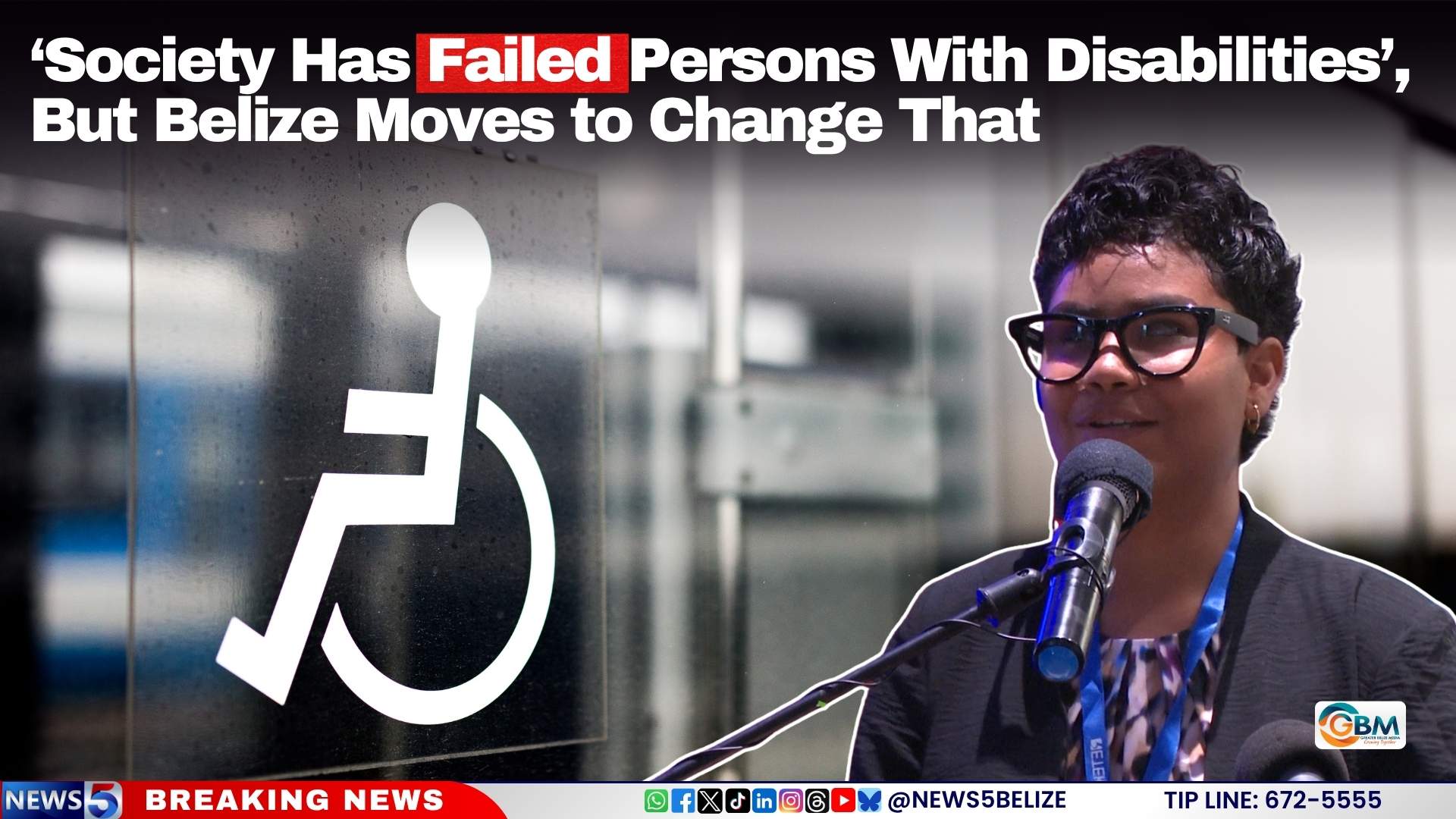
For disabled advocates on the ground, the launch represents a long-awaited shift toward tangible inclusion. Alison Fisher, a young blind Belizean activist, shared her vision for the commission’s work: moving beyond formal legal recognition to build a country where inclusion is experienced, not just written into policy. “Yes, I am blind, but blindness is only one part of who I am,” Fisher said. “I hope that this commission will help create a Belize where every child and young person with disability can confidently say I belong, I have a voice, I have opportunities, and I can achieve.”
Moving forward, the commission will serve as a central coordinating body for cross-government and cross-sector efforts to embed inclusion in all areas of Belizean public life, from primary schools and private workplaces to local communities and national public services.