A leading Caribbean substance abuse prevention authority has sounded a renewed alarm over a troubling trend: more children are experimenting with drugs and alcohol as young as 8 years old, a shift that experts link to the unique stress of developmental transitions and new social environments.
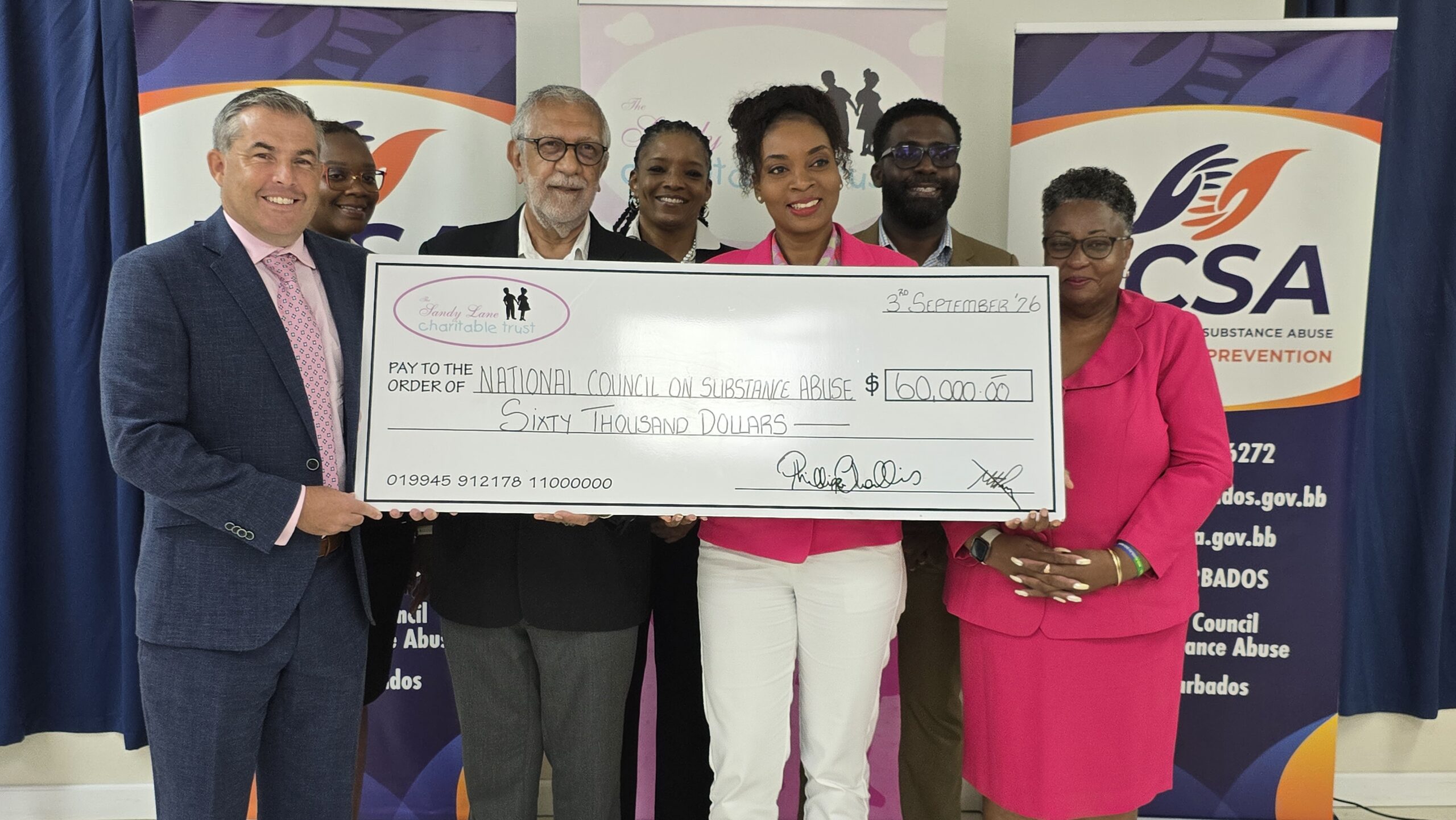
At a public ceremony held Thursday, Betty Hunte, general manager of the National Council of Substance Abuse (NCSA), made the remarks as the Sandy Lane Charitable Trust presented a $60,000 donation to mark 24 years of Project SOFT, the NCSA’s flagship early intervention program for youth transitioning from primary to secondary school. Designed to prevent youth substance use before it starts, the initiative has supported more than 900 children over its two-decade history, building life skills to navigate peer pressure and developmental challenges that can lead to harmful substance use.
Hunte pointed to recent national school survey data that revealed the deeply concerning pattern of early initiation, with some children trying substances alongside older peers or adults as early as age eight. Research has long linked early substance experimentation to a cascade of negative long-term outcomes that persist into adulthood, including underperformance in school, higher involvement in bullying (both as victims and perpetrators), increased school dropout rates, teenage pregnancy, higher likelihood of criminal engagement, and elevated risk of lifelong addiction.
For many young people, the shift from primary to secondary school represents an overwhelming period of change, Hunte explained. New social dynamics, increased academic pressure, and shifting peer relationships create a stressful transitional period that can push vulnerable youth to turn to substance use as an unhealthy coping mechanism. It was this specific gap that Project SOFT was created to fill, with a prevention-first model that engages both young people and their families to build protective factors early.
“Instead of intervening after substance abuse has already developed, we chose to act early to stop or delay the onset of harmful use,” Hunte said of the program’s core approach. “We don’t just lecture young people — we actively engage them to help them make intentional, healthy choices as they navigate this big life transition.”
Over 24 years of operation, Project SOFT has directly served 915 young participants, with the program capped at 40 new spots each year to ensure personalized support. The initiative’s family-centered model extends its reach beyond participants, creating hundreds of opportunities to engage family members and strengthen the home environment that supports healthy youth development during critical developmental stages.
The program’s success has now drawn regional attention, with officials from St. Lucia sending two staff members to study the model firsthand in hopes of replicating it in their own country. For the NCSA, this regional interest is a powerful validation of the program’s impact and value. “That they invested time and resources to come learn our model is a significant acknowledgement of what we’ve built here,” Hunte noted.
Hunte emphasized that Project SOFT’s achievements over the years would not have been possible without sustained cross-sector partnerships, stressing that addressing youth substance abuse is a shared responsibility that requires collaboration across public institutions, civil society, and private philanthropic groups. She specifically thanked the Sandy Lane Charitable Trust, which has served as the program’s primary sponsor for the past 17 years.
Mark Pendry, a trustee for the Sandy Lane Charitable Trust, echoed that sentiment, highlighting the transformative impact that targeted investment in youth prevention can have. “A single positive influence can change the entire trajectory of a young person’s life — whether that’s one conversation, a trusted mentor, a friend, or just someone who says ‘I believe in you,’” Pendry said. “That’s exactly what programs like Project SOFT deliver. They open the door for young people to make a different choice, to see that positive possibilities are within their reach. Even if this program changes just one young person’s path for the better, all of our support has been more than worthwhile.”
Pendry closed by encouraging the program’s latest cohort of participants to carry the life skills and connections they built through Project SOFT with them as they move into secondary school and beyond.