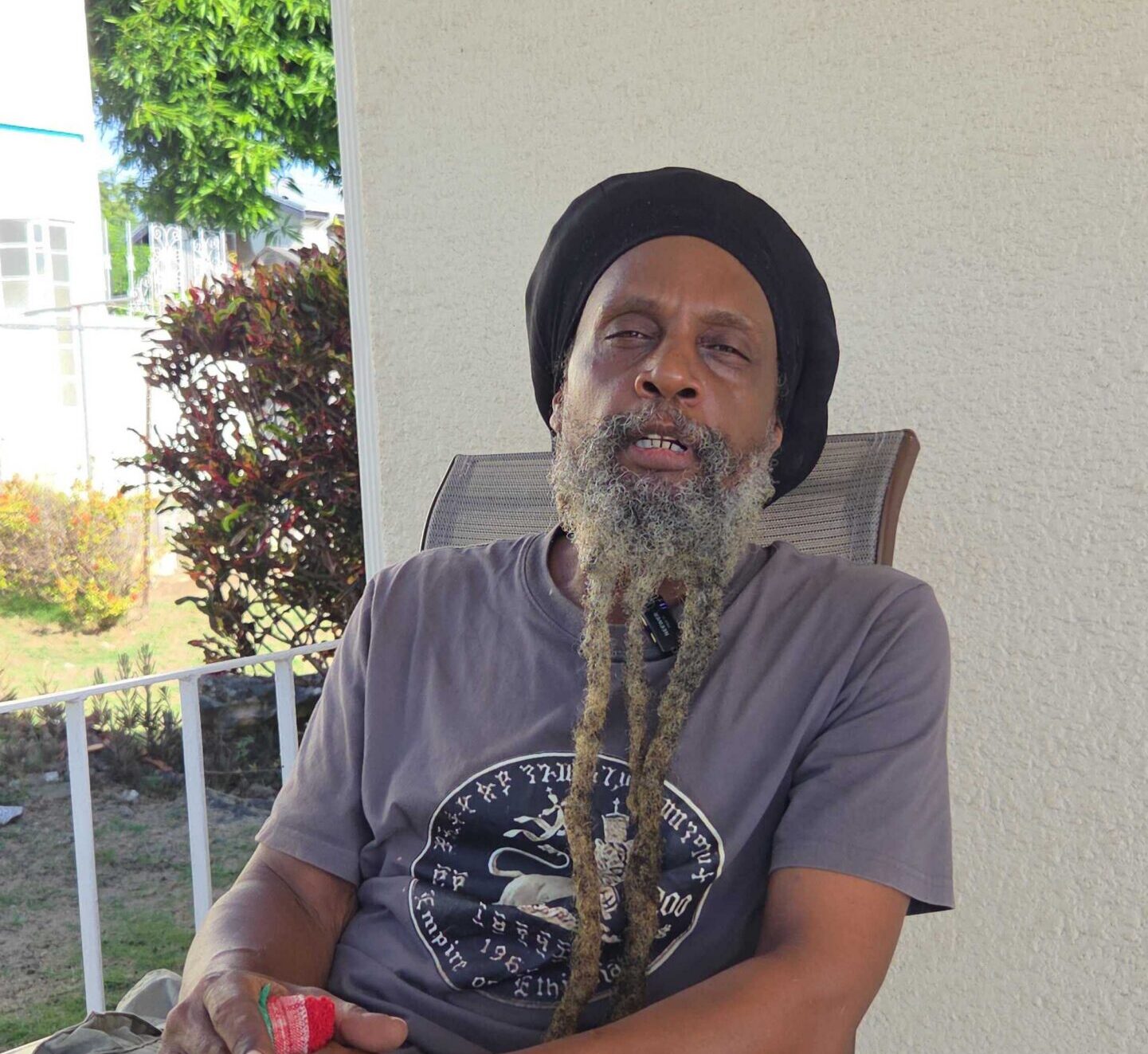
The president of the African Heritage Foundation, Paul Ras Simba Rock, has launched sharp criticism against Barbadian law enforcement following a large-scale anti-cannabis operation in the St. John district, arguing that the raid systematically stripped marginalized local small-scale growers of their livelihoods.
In the recent operation, police targeted growing areas in St. John, destroying more than 6,000 cannabis plants that authorities valued at an estimated $1.4 million on the street. As a longstanding advocate for full cannabis legalization, Ras Simba contends that the deliberate public disclosure of this high estimated value is a strategic tactic designed to turn public sentiment against small-scale, community-based cultivators.
“This pattern is nothing new,” Ras Simba explained in an interview. “Police have carried out these types of raids for as long as cannabis prohibition has been in place. What stands out in every recent operation is the repeated focus on publishing inflated street value estimates – this is a deliberate move to incite public opposition. Cannabis already carries an unfair stigma as a high-profit illicit trade, so attaching a huge price tag to seized plants shapes public perception in a deliberately negative way.”
He went on to emphasize that these raids drain critical income from low-income, marginalized communities, while well-funded wealthy corporations already reap the benefits of the island nation’s existing medicinal cannabis regulations. “For generations, ganja has been a core economic lifeline not just for the Rastafari community, but for disenfranchised poor people across Barbados,” Ras Simba noted. “To me, that $1.4 million figure represents revenue that has been directly taken out of the pockets of working poor people. If the same cultivation happened under current legal frameworks, it would be completely acceptable – because already wealthy, well-connected entities are already earning that much and more legally through licensed therapeutic dispensaries and regulated growing operations.”
When questioned about whether traditional small-scale growers face systemic barriers to entering the newly regulated legal cannabis market, Ras Simba confirmed that the current framework actively excludes ordinary smallholder farmers through embedded economic bias, unnecessarily strict licensing rules, and disproportionately harsh penalties for non-compliance. “The regulated industry was never built to accommodate the average grower,” he argued. “Current laws cap the number of licensed operators, locking out most small producers. Many of us only want access to the plant for traditional uses – we can process the roots and leaves to make traditional butters and remedies, and every Barbadian should have the right to grow at least seven to nine female plants for personal or community use.”
Ras Simba also drew attention to how excessive court fines push traditional small-scale growers into a repeating cycle of poverty that forces many further into informal activity. He highlighted a recent case from his own community to illustrate this harm: “Just a month ago, a young man from our community was arrested and fined $50,000 for cultivation. He spent a month in remand before his trial, and now he has to pay this massive fine within 18 months. The only way he can come up with that kind of money is to go back to growing more cannabis. This is how the system has always worked for poor people: they hand down fines they know working people can never afford, trapping them in a cycle of criminalization.”
Beyond the inequalities of enforcement and regulation, Ras Simba also criticized the current legal market for prioritizing mass-produced imported cannabis from North America over supporting traditional, locally grown organic cannabis that small Barbadian producers have cultivated for decades. “Right now, we’re seeing a flood of North American-grown herb entering the legal market,” he said. “The Rastafari community has real health concerns about these imports, because we know organically grown local product is far healthier than cannabis grown with heavy amounts of industrial pesticides and fertilizers.”
Despite ongoing aggressive police raids, ongoing criminalization, and a regulatory system that favors large corporate interests over small community producers, Ras Simba reaffirmed that Rastafarian and traditional small-scale cannabis farmers across Barbados will continue organizing and advocating for full legal access to the plant and the universal right for personal cultivation.