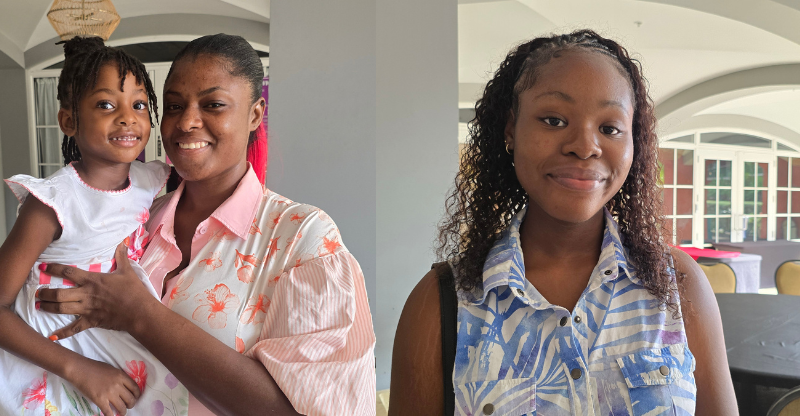
Across the Caribbean, regional math exam pass rates remain stubbornly below 50 percent even after marginal annual improvements, prompting two experienced Barbadian mathematics tutors to lay out actionable, student-centered changes they say can reverse ongoing underperformance, with a focus on addressing unrecognized barriers that hold learners back.
Dominique Yorke, one of the two tutors speaking exclusively to Barbados TODAY, pinpointed low student confidence as the single most impactful barrier to strong math performance. She explained that for many learners, encountering an unfamiliar problem on an exam or class assignment triggers immediate self-doubt, leading many to disengage and avoid attempting the question at all before they even begin to work through it.
Beyond psychological barriers, Yorke highlighted systemic gaps in traditional classroom structures that exacerbate learning loss. She noted that missed school days leave students with critical gaps in foundational knowledge, and overcrowded lesson schedules leave full-time classroom teachers with too little time to revisit missed material for individual learners. Many shy students also hesitate to ask questions or admit when they do not understand a concept, leading teachers to move forward with the curriculum under the assumption the whole class is following along.
Because math education is inherently cumulative, with every new concept building on all previously taught material, these small early gaps quickly snowball into major gaps by the time students reach secondary education. Yorke shared firsthand examples of fourth-form secondary students in her tutoring program who are still working at a primary school Class 4 math level, having never mastered the foundational skills taught at earlier grade levels. She pushed back against the common focus on cramming purely for exam passing, arguing that instruction should center on deep, lasting conceptual understanding to properly prepare students for the Caribbean Examinations Council (CXC) assessments.
Fellow tutor Janiya Harper echoed Yorke’s observation that low confidence is a widespread barrier, and added that cultural stigma around mathematics itself is a core contributor to this self-doubt. Harper explained that children grow up constantly hearing adults repeat the mantra that “math is hard,” which creates a self-fulfilling prophecy of underperformance before learners ever even encounter advanced material. To counter this, she recommends normalizing math as an everyday, accessible skill by connecting it to routine activities children already enjoy – such as calculating prices when buying snacks at a local shop – to help learners see math as approachable rather than intimidating.
Yorke also called for a systemic shift to smaller class sizes, arguing that overcrowded classrooms force teachers to split their time too thinly to address individual student needs. Smaller cohorts would allow educators to dedicate one-on-one time to struggling learners, identify knowledge gaps early, and adapt instruction to different learning needs.
She further emphasized the need to accommodate neurodivergent learners, noting that conditions such as dyslexia, autism, and ADHD change how students process mathematical concepts. For these learners, traditional lecture-style instruction from a whiteboard is rarely effective, and more interactive, hands-on learning activities are required to help them grasp core concepts.
Both tutors agree that combining these targeted changes with existing extra lesson support would create steady, sustained improvements in regional mathematics pass rates, helping more students master the skills they need for future academic and professional success.