On a landmark ruling delivered in The Hague, the five-judge panel of the Permanent Court of Arbitration (PCA) has unanimously ruled that the decades-old Indus Waters Treaty between India and Pakistan remains fully binding under international law, and India has no legal right to unilaterally suspend the agreement. This marks the first time an international judicial body has formally addressed the legal validity of India’s 2025 suspension of the treaty, a decision that has plunged downstream Pakistan into deep uncertainty over its most critical water resource.
The dispute traces back to April 2025, when New Delhi announced it would suspend the 60-year-old water-sharing pact in response to a deadly terrorist attack that killed 26 civilians in Indian-administered Kashmir. India framed the suspension as permanent until Pakistan takes “credible and irreversible” action to end cross-border militant attacks, a charge Islamabad has repeatedly and categorically denied. Following the suspension, Pakistan initiated arbitration proceedings at the PCA in March 2026, arguing it had no avenue to enforce compliance with the treaty without a formal international ruling on its standing.
India consistently rejected the PCA’s jurisdiction in the case, declined to participate in the proceedings, and did not respond to the court’s invitations to present its argument. Oral hearings were held at the Peace Palace in The Hague from April 26 to 28, 2026, with only Pakistan in attendance. The court’s panel examined every public argument New Delhi put forward to justify the suspension, including claims of sovereign right, Pakistan’s alleged refusal to renegotiate the treaty, ties to terrorism, and shifting circumstances such as population growth, rising demand for clean hydropower, and climate change.
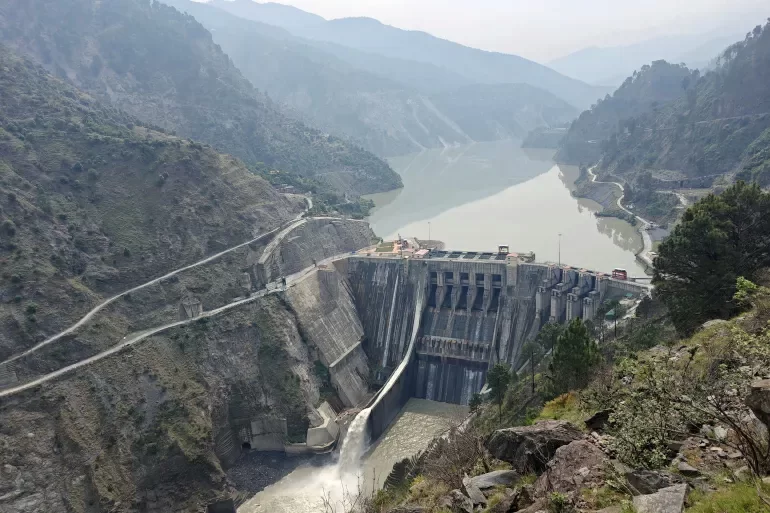
In its final ruling, the PCA rejected all of India’s claims, affirming that no provision of international law permits a state to unilaterally suspend a binding treaty on the basis of sovereign claims. The ruling explicitly reaffirms India’s obligation to adhere to all terms of the agreement, including regulations governing the construction and operation of hydropower projects along the Chenab, Indus and Jhelum rivers that flow from Indian-administered Kashmir into Pakistan. The Baglihar Dam, one of India’s most high-profile run-of-river hydropower projects on the Chenab River, has been a long-running point of contention between the two nations.
Within hours of the ruling being announced, India issued an official statement rejecting the judgment, calling the tribunal “illegally constituted” and confirming that its suspension of the treaty would remain in place until Pakistan meets its demands to end cross-border militant support. For Pakistan, the ruling delivers a clear diplomatic and legal victory, though its practical impact on the ground remains uncertain.
Pakistan’s Deputy Prime Minister and Foreign Minister Ishaq Dar welcomed the decision, and called on India to immediately implement the ruling and comply with all of its binding obligations under the treaty. Ahead of the ruling, Dar had already called for a resumption of technical dialogue and transparency on water sharing, a process India has halted since 2023. Pakistan’s formal demands for compliance include an immediate meeting of the Permanent Indus Commission, the bilateral body established by the treaty to manage water issues, the resumption of joint inspections of projects, and the sharing of hydrological data that India has ceased providing.
International law experts note that while the ruling strengthens Pakistan’s position significantly, there is no binding enforcement mechanism comparable to a United Nations Security Council resolution to compel India to comply. Ahmer Bilal Soofi, an international law expert and former Pakistani federal minister, pointed out that the ruling gives Pakistan a solid legal foundation to consider proportional countermeasures under international law. Sikander Ahmed Shah, a professor of international law at the Lahore University of Management Sciences, emphasized that India’s refusal to participate in the proceedings does not undermine the ruling’s legal weight, which carries significant normative standing in the international community.
For Pakistan, the suspension of the treaty has been framed as an existential threat to the country’s water and food security, which is heavily dependent on the waters of the Indus river system. Over 200 million Pakistanis rely on water from the Indus and its tributaries for irrigation and drinking water, making predictability of river flows a core part of the state’s survival framework, according to Commissioner Shah. Senior Pakistani politicians have framed the dispute as far more than a technical disagreement, labeling it the “weaponization of water” by India. Prime Minister Shehbaz Sharif has repeatedly stated that every drop of water rightfully allocated to Pakistan under the treaty is a red line, and warned that any action violating Pakistan’s water rights or sovereignty will meet a forceful response.
Not all analysts share the alarm, however. Hydrology expert Hassan Abbas has pushed back against the framing of an immediate existential threat, noting that geographic realities and the design of Indian hydropower projects limit India’s ability to cutoff water flows. Most Indian dams on the tributaries are run-of-river projects with limited water storage capacity, meaning India would face catastrophic domestic flooding if it attempted to block all downstream flow, Abbas explained. He also criticized Pakistan’s long-standing focus on large mega-dam projects, and argued that more efficient irrigation management would be a cheaper and more effective solution to boost the country’s water security amid growing demand and climate change. The dispute leaves the future of one of the world’s most critical transboundary water agreements hanging in the balance, with no clear path forward to resolve the impasse.